

- Stock: In Stock
- Product code: 00-00015227

Unitree As2-W Edu Standard for Education and R&D
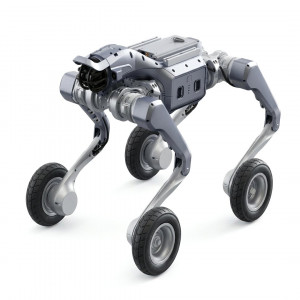
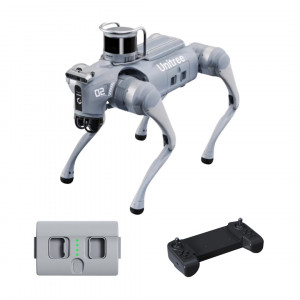
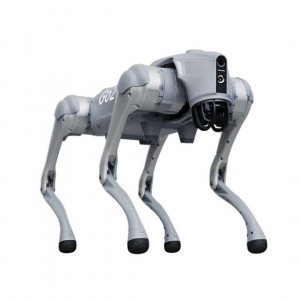
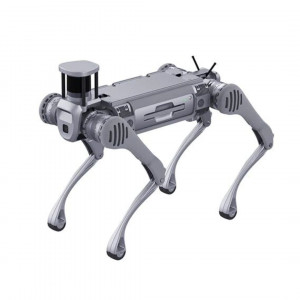
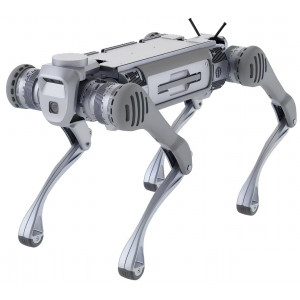
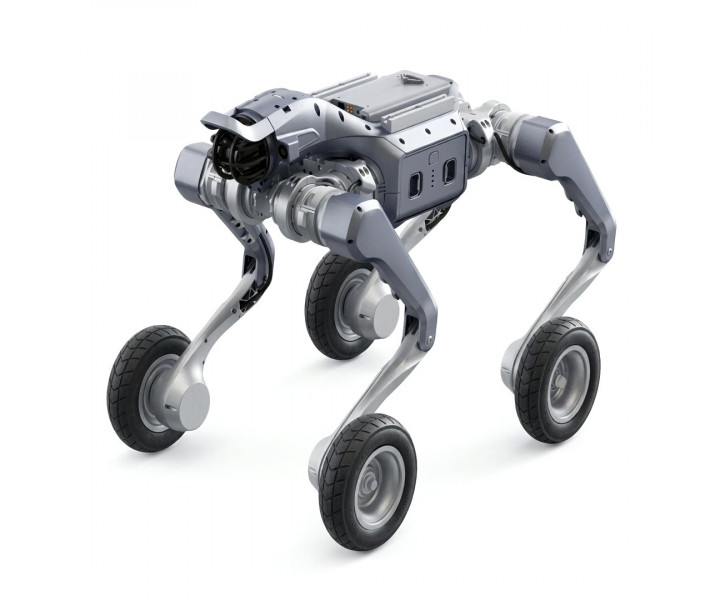
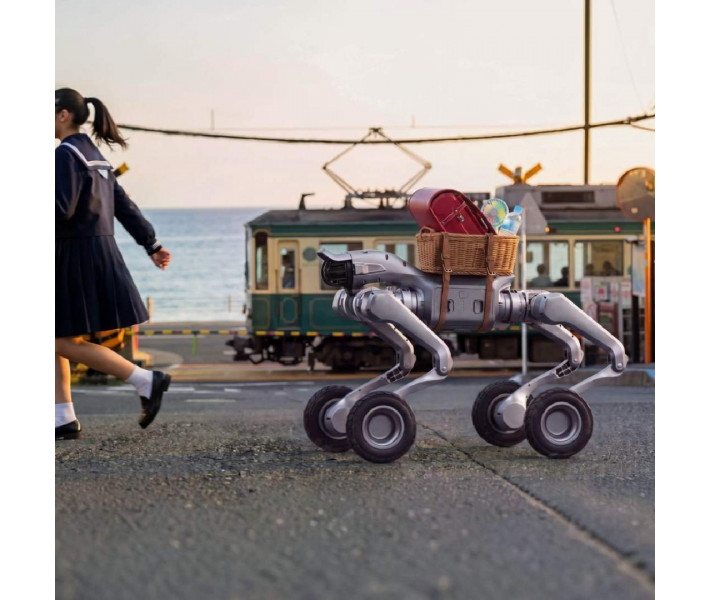
Unitree As2-W Edu Standard is a wheeled robotic dog designed as a versatile platform for educational, scientific, and research tasks. The model features 16 degrees of freedom and a wheeled design that ensures high maneuverability and fast movement. The robot is equipped with an industrial LiDAR, high-resolution camera, and an 8-core processor. The platform supports the development of custom programs and algorithms, including those for autonomous navigation, computer vision, artificial intelligence, and other robotics tasks.
Advantages of Unitree As2-W Edu Standard
- Wheeled design. The robot is equipped with wheels with a diameter of 178 mm, providing high maneuverability and fast movement across various surface types.
- High torque. Powerful drives help the robot overcome challenging terrain and maintain balance during movement. The maximum torque reaches about 95 Nm.
- High movement speed. The robot can operate at a wide range of speeds. The working speed is 0–3.7 m/s, and the maximum speed is up to 6 m/s.
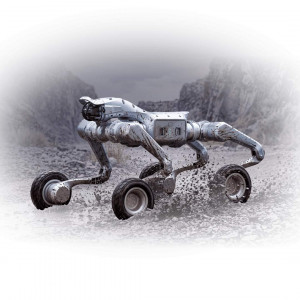
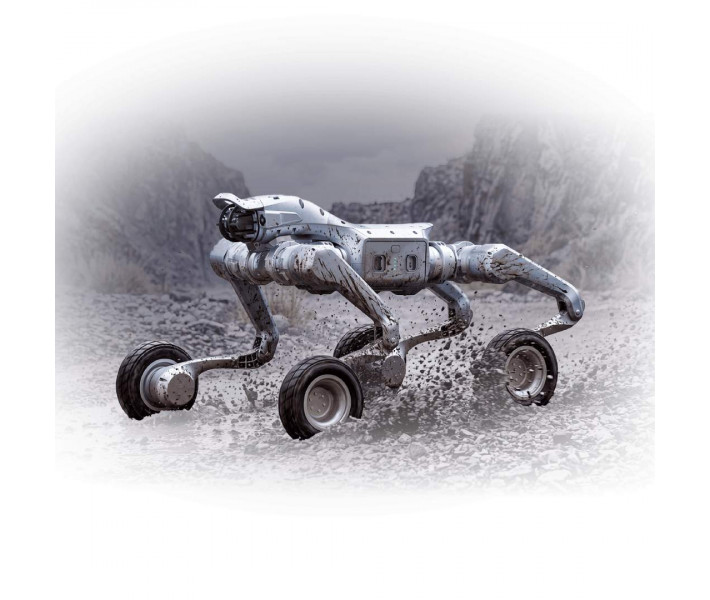
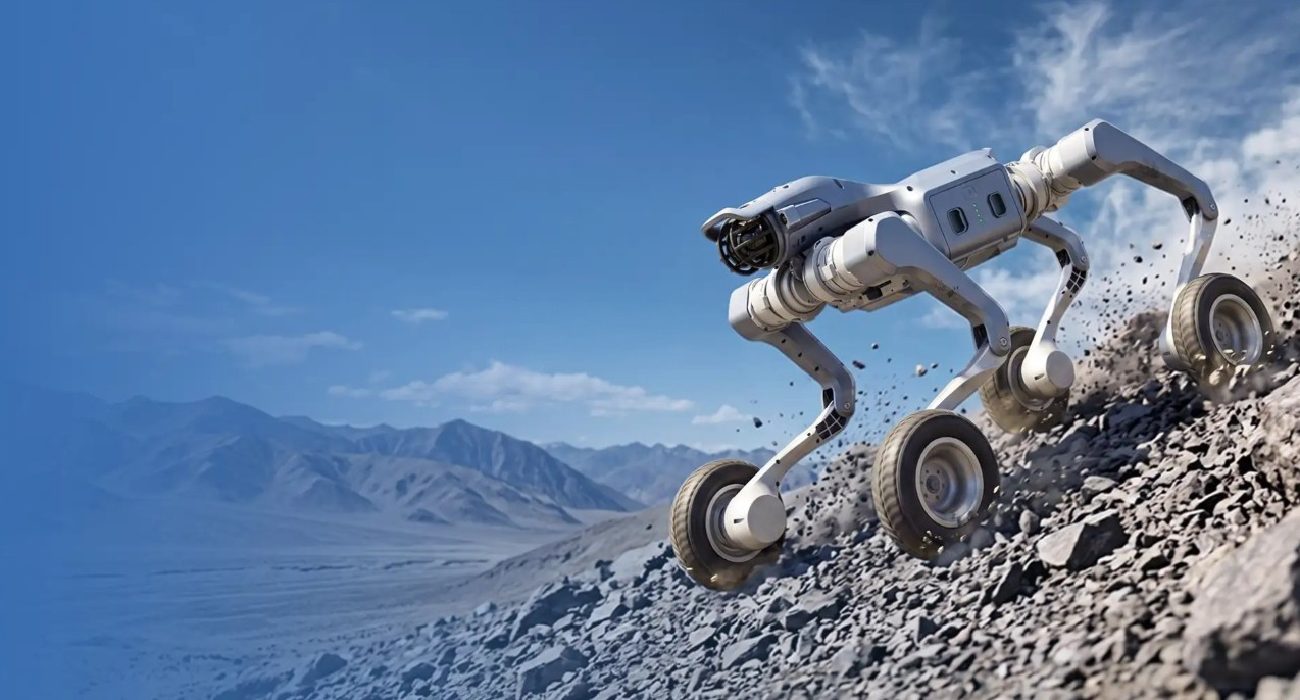
- Ability to navigate complex terrain. The robot's design allows it to overcome various obstacles and uneven surfaces. It can move on slopes with an incline angle of about 45° and overcome steps up to 30 cm high.
- High load capacity. The design allows for the installation of additional equipment. The maximum static load is about 150 kg, and the load during continuous movement is about 16 kg.
- Long autonomous operation. The battery provides over 3 hours of movement without additional load, and the range can reach about 30 km.
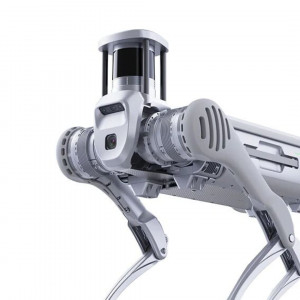
- Industrial LiDAR. The system helps the robot perceive the surrounding space and create a 3D map of it. The model is equipped with an industrial multi-beam LiDAR with 64–128 lines.
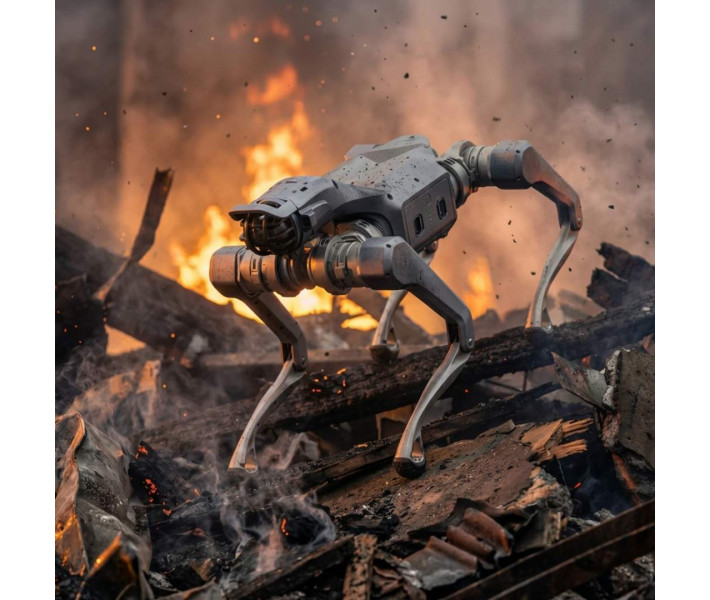
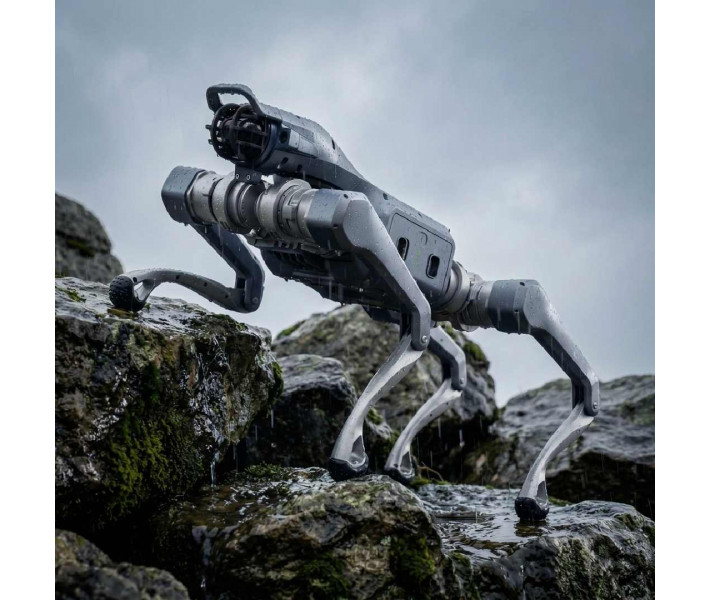
- Protected body. The design is intended for operation in challenging conditions. The IP54 protection rating ensures protection against dust and water.
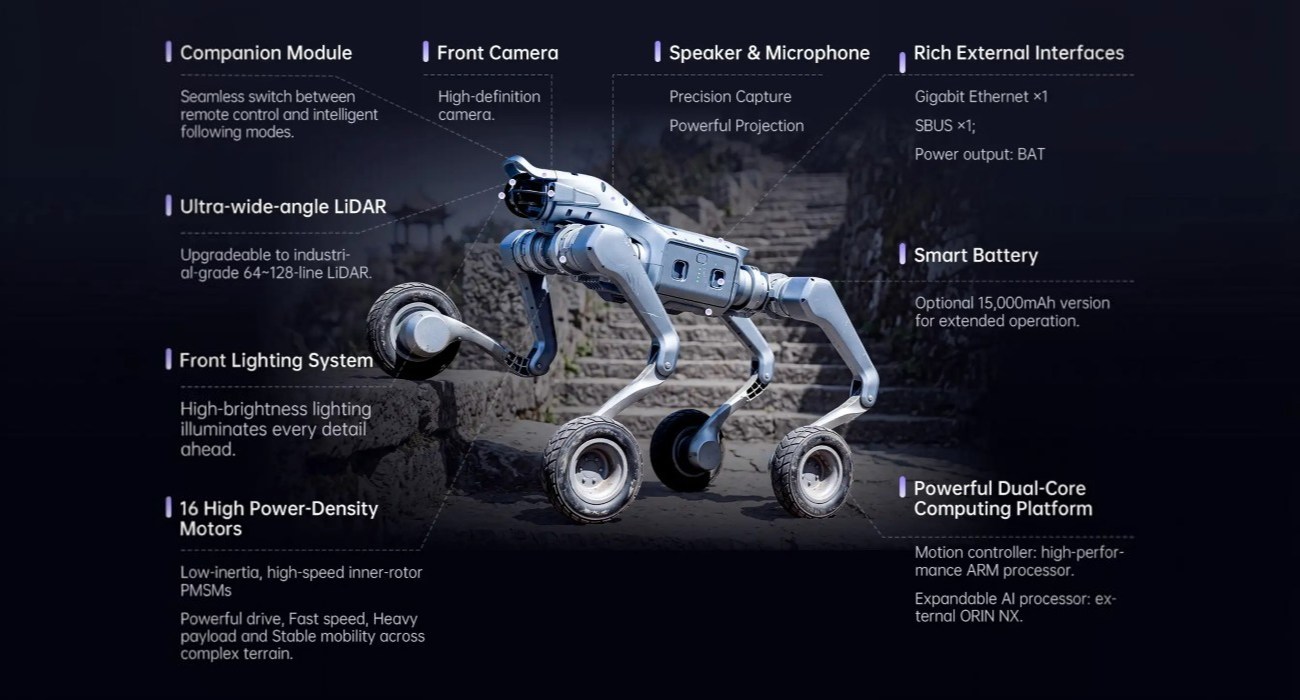
Wheeled Design of the Robotic Dog and 16 Drives
The design of the Unitree As2-W combines jointed legs with wheeled drives. The 178 mm diameter wheels ensure fast movement on flat surfaces, while 16 degrees of freedom allow for changing the body position, maintaining balance, and overcoming steps and other obstacles.
The joints are equipped with high-speed motors with low inertia and industrial cross-roller bearings designed for significant loads. The precision of movements is ensured by dual position sensors, and a local air cooling system maintains a stable temperature of the drives. The maximum torque of the joints reaches about 95 Nm.
Speed and Obstacle Overcoming
The wheeled base significantly enhances the dynamics of movement compared to classic walking robots. The platform's working speed ranges from 0 to 3.7 m/s, and the peak speed reaches about 6 m/s.
Load Capacity of Unitree As2-W
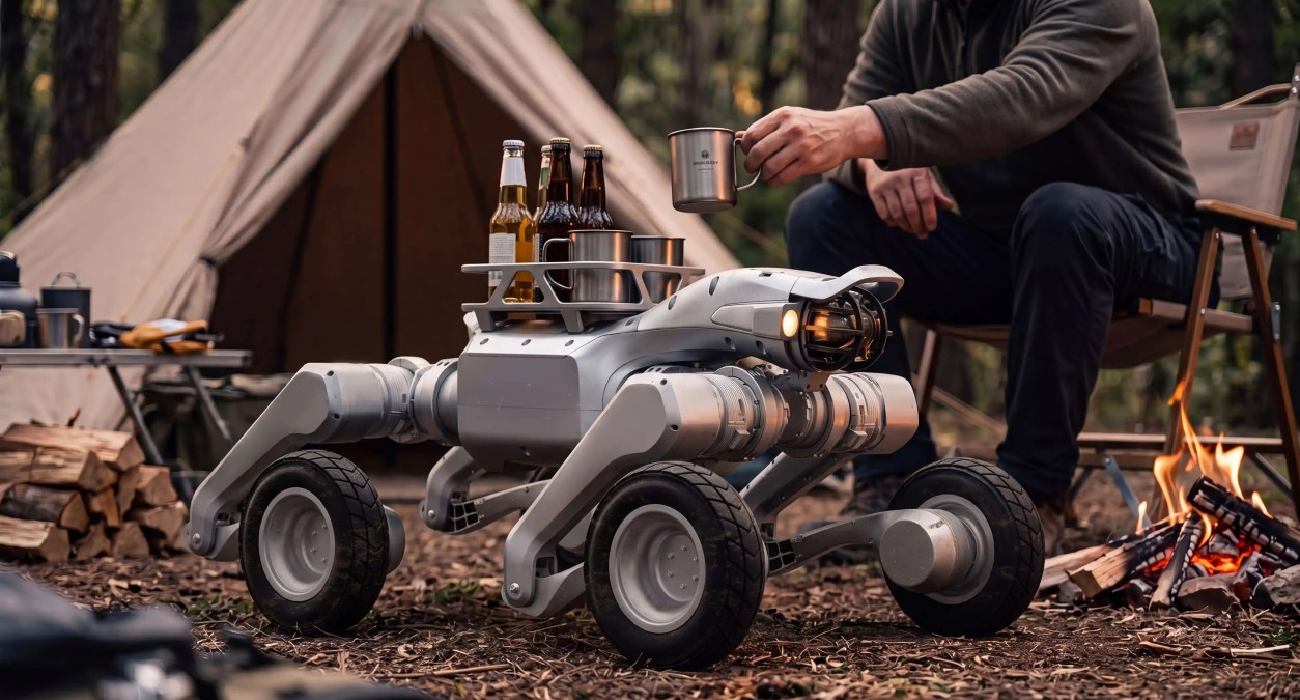
The Unitree As2-W robotic dog is designed for the installation of additional sensors, computing modules, and measuring equipment. The load capacity depends on the operating mode. In a stationary position, the robot can hold a load of about 150 kg. During continuous movement and maneuvering, the recommended payload is about 16 kg, allowing for stability, controllability, and declared dynamic characteristics.
Camera and Perception System
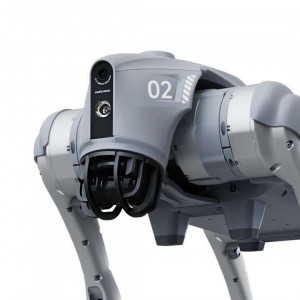
The standard sensor suite provides platform orientation in space and spatial data collection.
The perception system of the Edu Standard configuration includes:
- Industrial-grade 64–128-line LiDAR for precise point cloud creation and SLAM navigation;
- HD camera for video streaming and computer vision;
- Microphone array and speaker for working with audio signals;
- Front lighting for working in low-light conditions.
ISS 3.0 and Follow Function
The robotic dog supports the intelligent follow system ISS 3.0, which allows it to automatically follow the operator from the side. The system uses sensor data to determine the person's position, maintain a set distance, and adjust the movement trajectory in real-time.
Secondary Development and Development Opportunities
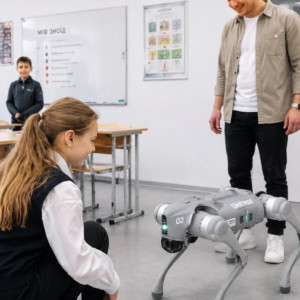
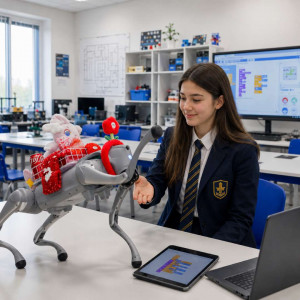
The Edu Standard configuration is aimed at scientific institutions, educational institutions, and software developers. The platform provides access to the official set of Unitree tools and software interfaces for creating custom algorithms and integrating additional features.
Developers have access to:
- Creating custom motion control algorithms and processing data from sensors.
- Software integration through the UniStore service.
- Software and component updates using Smart OTA.
- Access to official technical documentation and developer manuals.
Tasks Suitable for Unitree As2-W Edu Standard
- Robotics education. Studying the theory of automatic control, kinematics of wheeled-walking systems, and the development of robotic platforms.
- R&D laboratory research. Testing new adaptive motion, balancing, and complex terrain overcoming algorithms.
- Autonomous navigation algorithm development. Building maps (SLAM), trajectory planning, and obstacle avoidance based on LiDAR and camera data.
- Projects in the field of Embodied AI. Integrating artificial intelligence with a physical platform for executing autonomous scenarios.
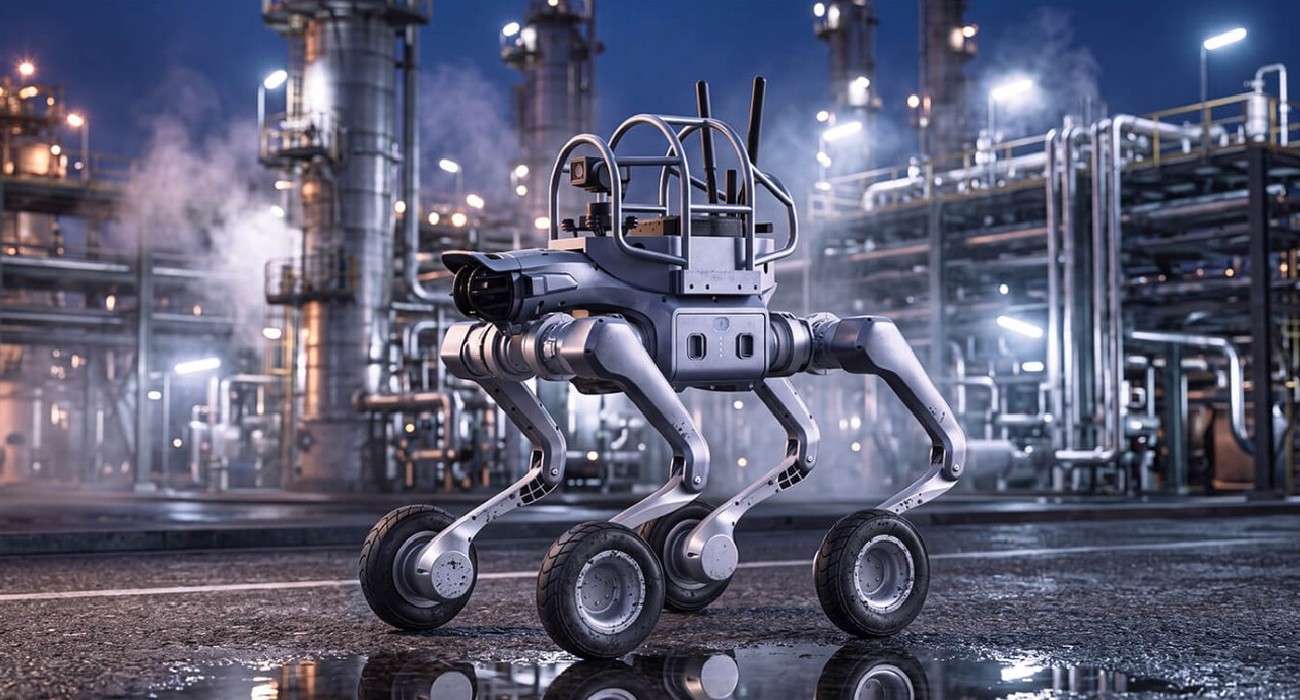
- Object inspection. Conducting test inspections of territories and enterprises using additional equipment.
What is Included in Unitree As2-W Edu Standard
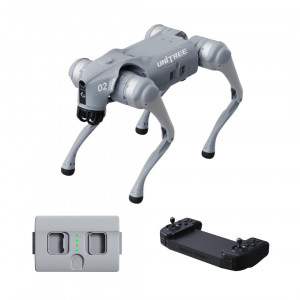
The basic package includes everything needed to launch the platform and start software development: the Unitree As2-W EDU wheeled robot, a Long-Endurance battery with a capacity of 15000 mAh, a fast charger 50.4 V / 7.4 A, a remote control, a set of cables for connection and charging, as well as user documentation and developer instructions.
Note: the actual configuration of Unitree As2-W Edu Standard may vary depending on the configuration and selected additional options. Please clarify the exact package contents with the manager before ordering.
Technical Specifications of Unitree As2-W Edu Standard
Motion Mechanics and Operational Capabilities
| Characteristic | Value |
| Body materials | Aluminum alloy, high-strength engineering plastic |
| Degrees of freedom | 16 joint and wheel drives |
| Motor type | Low-inertia PMSM with internal rotor |
| Bearings | Industrial cross-roller |
| Feedback and cooling | Dual encoders, local air cooling |
| Maximum torque | About 95 Nm |
| Movement angles | Body: −45°…+45°; thigh: −115°…+200°; shin: −159°…−47° |
| Working movement speed | 0–3.7 m/s |
| Maximum speed | About 6 m/s |
| Maximum slope angle | About 45° |
| Maximum step height | Up to 30 cm |
| Obstacle clearance height | About 0.4–0.8 m |
| Static load | About 150 kg |
| Load during movement | About 16 kg |
| Protection class | IP54 |
| Operating temperature | From −20 °C to +50 °C |
Control and Power Supply
| Characteristic | Value |
| Battery | 15,000 mAh |
| Autonomy without load | Over 3 hours |
| Autonomy with 16 kg load | Over 2 hours |
| Charger | Fast Charger 50.4 V / 7.4 A |
| Perception sensors | HD camera, industrial 64–128-line LiDAR, microphone array, lighting |
| System processor | High-performance 8-core processor |
| Wireless communication | Wi-Fi 6, Bluetooth 5.2 |
| Physical interfaces | Gigabit Ethernet ×1, SBUS ×1, BAT Power Output |
| Follow system | ISS 3.0 |
| Development environment | Secondary Development SDK / API, UniStore, Smart OTA |
| Net size standing | 721 × 493 × 521 mm |
| Net size folded | 768 × 602 × 211 mm |
| Wheel size | Diameter 178 mm |
| Net weight | About 25 kg |
Practical Recommendations
- Control the mass of the payload. When installing additional sensors or computing modules, ensure that the total mass of the equipment does not exceed 16 kg to maintain the stability and dynamic characteristics of the robot.
- Plan the duration of operation. Keep in mind that maximum load and intensive movement through complex terrain may reduce the autonomous operation time to approximately 2 hours.
- Adhere to operating conditions. The IP54 protection rating allows operation in dusty and humid conditions, but the robot is not designed for immersion in water or exposure to high-pressure water jets.
- Check optical sensors. Before each launch, clean the protective glass of the LiDAR and cameras from dust, dirt, and fingerprints for the correct operation of the navigation and mapping system.
- Test algorithms. Before running custom algorithms on the real robot, test and debug them in the software environment.
Order Unitree As2-W Edu Standard
The Unitree As2-W Edu Standard configuration is aimed at research institutes, university laboratories, R&D centers, and system integrators creating autonomous solutions based on Embodied AI. Our specialists will assist with order processing and provide detailed technical consultation on the exact configuration and extended platform capabilities.