- Stock: In Stock
- Product code: 00-00014548

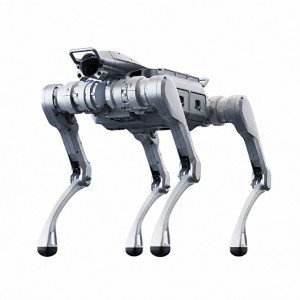
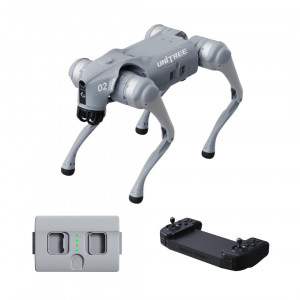
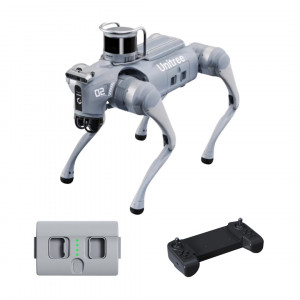
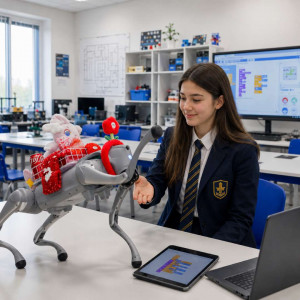
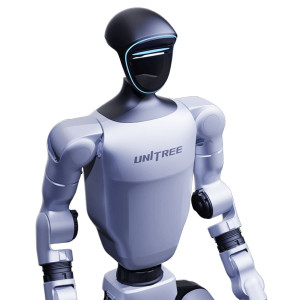
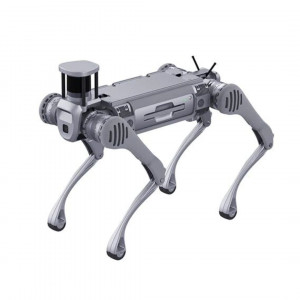
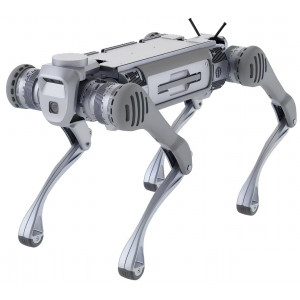
Industrial Robot Dog Unitree A2 Standard
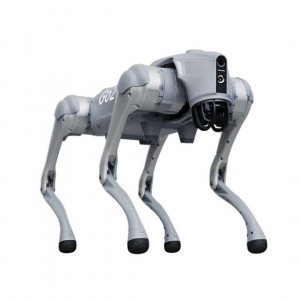
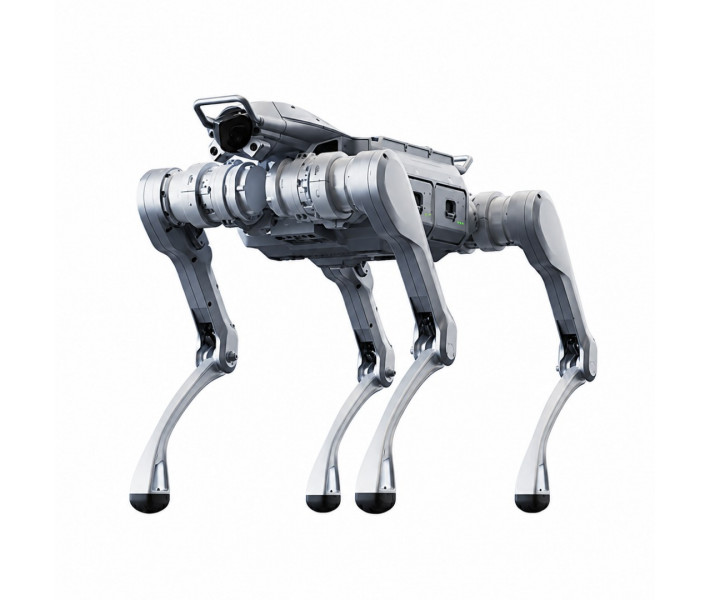
Unitree A2 Standard is a robotic quadruped platform designed for patrolling, object inspection, and scientific research, with a maximum static load capacity of up to 100 kg, peak motor torque of 180 Nm, and two battery compartments with hot-swap capability. For user development, the robotic platform operates under the control of an embedded computer based on the Intel Core i7 processor. The robot is capable of reaching a boosted speed of up to 5 m/s.
Technical Advantages and Operational Parameters
- Load Capacity and Kinematics. The robot can hold up to 100 kg in a static position and steadily transport a load weighing 25 kg during continuous movement. For the user, this means the ability to integrate additional equipment: manipulators, laser scanners, measuring instruments, without losing the stability and dynamics of the platform's movement.
- Drive Parameters and Architecture. The chassis is equipped with 12 degrees of freedom based on low-inertia high-speed synchronous motors with an internal rotor, generating a torque of 180 Nm. This solution provides high limb positioning accuracy, instant response to terrain changes, and sufficient power to overcome complex obstacles under load.
- Computational Architecture. The platform is based on a dual system: an 8-core central processor handles basic functions such as stabilization, locomotion, drive operation, while the Intel Core i7 processor is dedicated to secondary development. The user gets a fully isolated environment for integrating their own artificial intelligence or SLAM algorithms, eliminating the risk of movement system failures during third-party software testing.
- Energy Efficiency and Autonomy. Power is provided by two batteries with a total capacity of 18000 mAh, guaranteeing over 5 hours of autonomous operation without a payload. This allows for extended patrolling or data collection operations on large sites without the need for frequent returns to the charging station.
- Climatic Performance and Protection. The body is certified to IP56 standard, and the operating temperature range is -20 °C to 55 °C. This provides the user with the ability to operate the robot outdoors during dust storms, heavy rain, or in extreme temperature conditions of industrial workshops.
Technologies and Hardware Solutions
- Construction Materials. Durable aluminum alloy and impact-resistant engineering plastic.
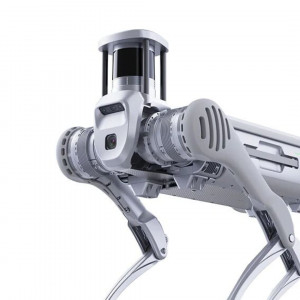
- Limb Support. Industrial crossed roller bearings are installed in the leg joints. They allow the nodes to withstand high radial and axial loads during jumps or heavy load transportation.
- Position Control. Each joint is equipped with dual encoders to track the spatial position of the limbs in real-time.
- Cooling. Drive cooling is provided by a local air system. It prevents thermal overload of the motors during prolonged operation at maximum speed or in high ambient temperatures.
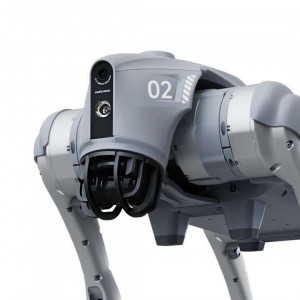
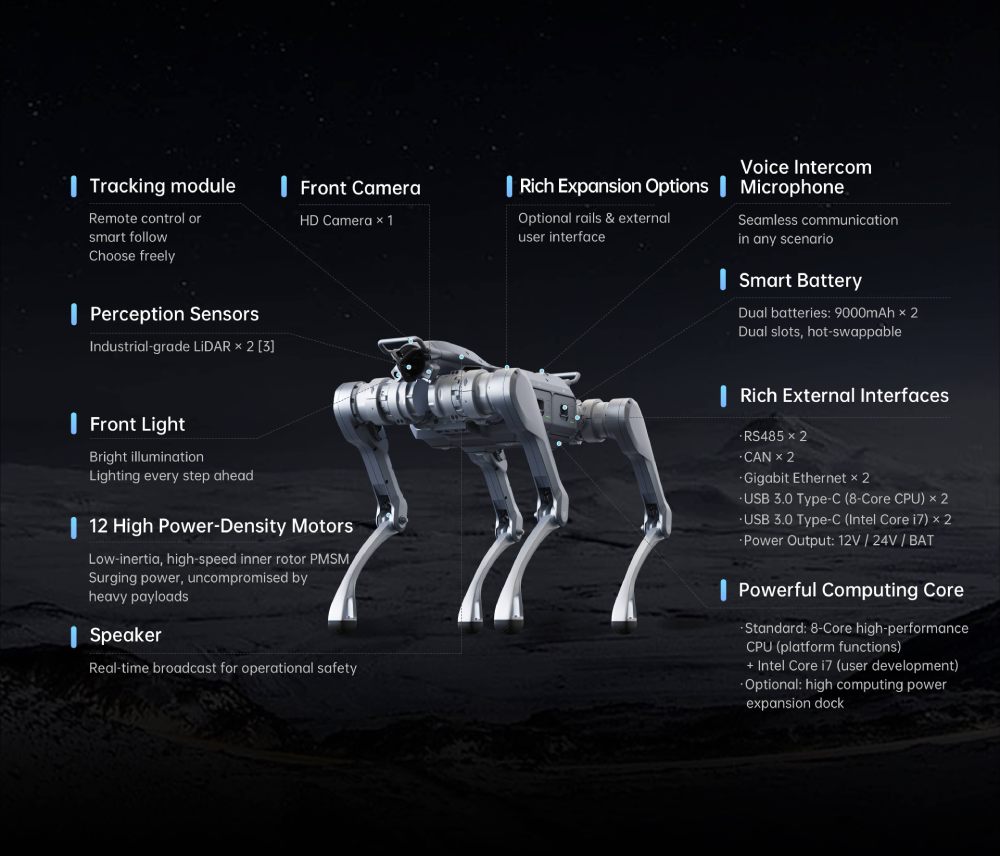
- Perception Sensors. For navigation and mapping of the environment, the platform is equipped with one 4D-LiDAR laser rangefinder and one HD camera. This allows for the implementation of obstacle avoidance algorithms, object recognition, and the construction of three-dimensional space maps.
- Chassis Modification. The support platform design supports the replacement of standard limbs with modules with wheels for alternative movement. Wheel chassis are supplied separately as an additional option.
Interfaces, Automation, and Control
- Communication Interfaces. Onboard connectors include industrial ports 2 × RS485, 2 × CAN, and 2 × Gigabit Ethernet. USB 3.0 Type-C ports are provided for both the main system processor and the Intel Core i7 development processor. A DP video output is provided for connecting a monitor.
- System Updates. The robot supports automatic wireless software and firmware updates OTA. This simplifies device fleet maintenance, as critical fixes and new features are installed remotely without physically connecting to a computer.
- Wireless Communication. Wi-Fi 6 and Bluetooth 5.2 modules are used for communication and telemetry transmission. This ensures high bandwidth, minimal control signal latency, and stable high-definition video stream transmission in interference conditions. There is also the possibility to additionally install separate GPS satellite navigation modules and 4G modems.
- Peripheral Devices. The design includes a microphone array, speaker, and front LED lighting. They allow the robot to be used for two-way audio communication, warning sound signals, and performing tasks in complete darkness or poorly lit rooms.
Applications
- Industrial Monitoring. Patrolling factory workshops, oil and gas facilities, and mines. The ability to install sensors, thermal imagers, or gas analyzers allows for automated safety audits, detecting gas leaks or equipment overheating at early stages without risk to personnel.
- Logistics. Carrying tools or equipment weighing up to 25–35 kg over rough terrain. The user can use the robot as an autonomous transporter on construction sites, quarries, or military ranges where wheeled vehicles cannot pass.
- Search and Rescue Operations. Thanks to high passability and chassis protection, the robot can penetrate areas dangerous for rescuers to search for victims and assess damage.
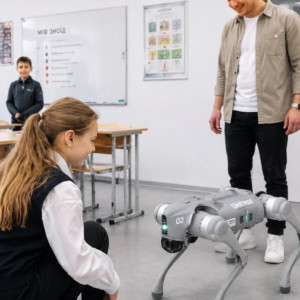
- Scientific Research. Use as a mobile bionic platform for testing artificial intelligence algorithms, SLAM navigation, and autonomous movement. Universities and R&D centers receive a ready reliable base, allowing them to focus directly on software research without spending resources on developing robotic hardware from scratch.
Specifications
| Parameter | Value |
| Dimensions in standing position | 820 × 440 × 570 mm |
| Dimensions in lying position | 720 × 550 × 220 mm |
| Weight without batteries | ~35 kg |
| Weight with two batteries | ~42 kg |
| Standard maximum speed | 3.7 m/s |
| Boosted maximum speed | up to 5 m/s |
| Static load | up to 100 kg |
| Nominal dynamic load | 25 kg |
| Maximum dynamic load | up to 35 kg |
| Obstacle overcoming | up to 45° / up to 30 cm |
| Wheel module | Replacement supported |
| Maximum climbing height | 0.5 – 1 m |
| Autonomous operation time without load | >5 hours, ~20 km |
| Autonomous operation time with load | >3 hours, ~12.5 km |
| Batteries | 2 × 9000 mAh, 907.2 Wh |
| Perception sensors | 1 × 4D-LiDAR + 1 × HD camera |
| Control and computing system | 8-core processor + Intel Core i7 for user development |
| External communication interfaces | RS485 × 2; CAN × 2; Gigabit Ethernet × 2; USB 3.0 Type-C (8-Core CPU) × 2; USB 3.0 Type-C (Intel Core i7) × 2 |
| Secondary development | Supported |
| System updates | Supported |
| Wireless interfaces | Wi-Fi 6 / Bluetooth 5.2 |
| Body protection class | IP56 |
| Output power voltage | 12V / 24V / battery voltage 50.4V |
| Operating temperature | -20 °C – 55 °C |
| Cooling system | Local air cooling |
| Front lighting | Available |
| Audio system | Microphone array |
| Warranty period | 12 months |
Review of the Unitree A2 Standard Robot Dog
Order the Industrial Robot Dog Unitree A2 Standard
Do you want to automate security processes, inspections, or deploy a research laboratory based on advanced technologies? We supply official equipment directly from the manufacturer and provide initial setup. To order the Unitree A2 Standard, leave a request or contact our specialists. We deliver across Ukraine.