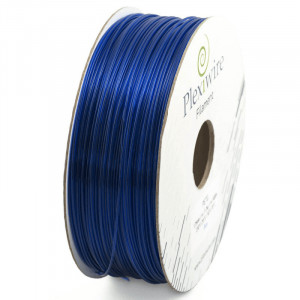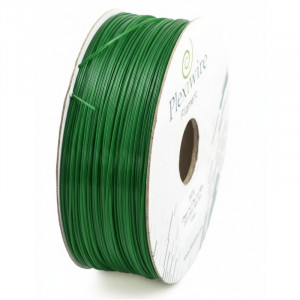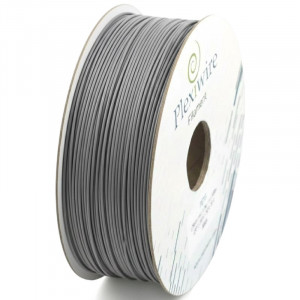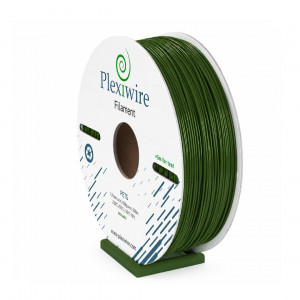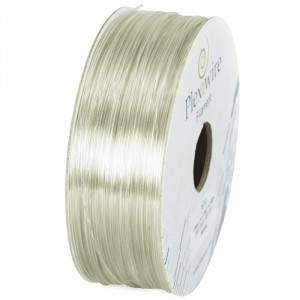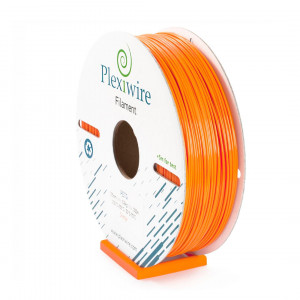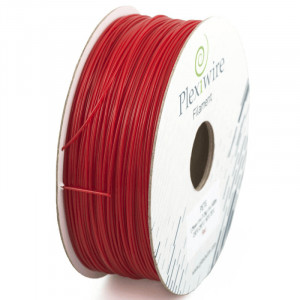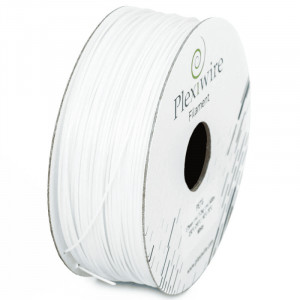
- Stock: In Stock
- Product code: 00-00000417

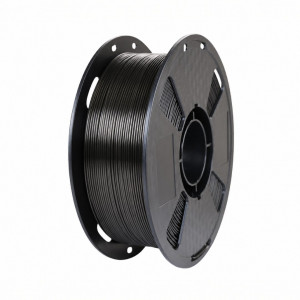
PETG Plastic KLEMA for 3D Printing Functional Parts and Structural Elements
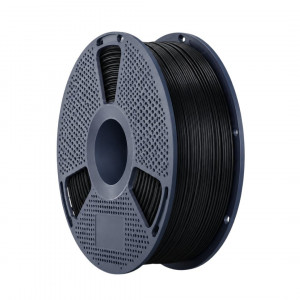
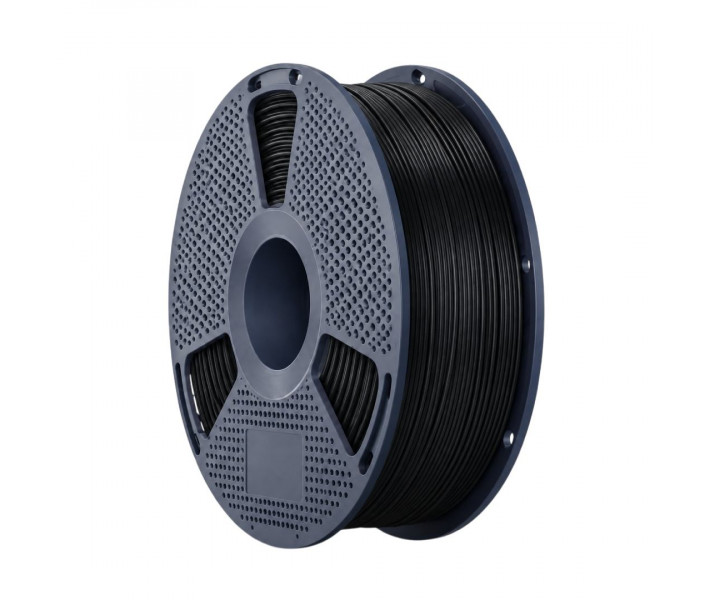
PETG Plastic KLEMA 1.75 mm 1 kg Black is a thermoplastic filament for FDM 3D printing of enclosures, mounts, assembly fixtures, and functional prototypes. The material combines mechanical strength, rigidity, and the ability to deform under load. PETG can be used on 3D printers with an open working chamber and a heated platform, allowing the production of technical products without the mandatory use of a closed chamber.
Material Advantages
- Mechanical strength and rigidity. PETG resists tensile and bending loads, allowing it to be used for manufacturing structural elements, mounting components, and parts of technical equipment. The material is suitable for products that need to maintain a given geometry under the loads provided by the design.
- 3D printing technology. The plastic does not require the mandatory use of a closed working chamber and can be printed on FDM printers with a heated platform. This expands the possibilities of using the material for manufacturing functional parts and prototypes on equipment of various configurations.
- Ability to deform under load. This filament combines rigidity with the ability to deform under mechanical load, which can be considered when designing functional parts. This property can be taken into account when designing parts that undergo bending or other mechanical influences. The allowable deformation of the finished product depends on its geometry, layer orientation, and load conditions.
- Resistance to water and certain chemicals. PETG is suitable for manufacturing parts used in humid environments or that periodically come into contact with water. The material is also resistant to weak acids and alkalis, which expands its application possibilities for auxiliary equipment and technical components. Suitability for contact with a specific substance depends on its composition, concentration, and operating conditions.
Features of Working with Filament
- Melt behavior. During the movement of the print head between individual sections of the model, the melted PETG can stretch into thin threads. This is especially noticeable when manufacturing products with a large number of separate elements. To reduce string formation, it is important to coordinate the nozzle temperature, retraction parameters, and the speed of the print head movement.
- Impact of moisture on extrusion. This plastic can absorb moisture from the environment. When heating a moist filament, the water turns into steam, which can cause bubbles, uneven melt flow, and surface defects. Drying the material before use helps eliminate these problems if they are caused by moisture.
- Interaction with solvents. The resistance of PETG to chemicals depends on their composition and contact conditions. The material has low resistance to acetone, which should be considered when choosing cleaning agents for finished products and designing parts that will come into contact with solvents.
Features of 3D Printing with PETG
PETG can be printed on a heated platform without the mandatory application of glue or other additional surface treatment. At the same time, the adhesion of the material depends on the type of coating and its condition. On certain surfaces, PETG may adhere too strongly, so it is necessary to consider recommendations for using a specific plate before printing to avoid damaging it when removing the finished part.
When manufacturing parts with complex geometry, it is important to correctly select the cooling intensity. Blowing affects the formation of overhangs, bridges, and small structural elements. Excessive cooling can worsen the bonding between layers, so the fan operation mode should be coordinated with the model's features.
For PETG, a nozzle temperature range of 240–260 °C with a printing speed of up to 300 mm/s is provided. The upper speed limit is not a universally recommended mode: actual settings should be selected according to the capabilities of the 3D printer, model geometry, and quality requirements of the finished product.
Recommendations for Drying and Storage
The recommended drying temperature for PETG is 60–65 °C. The duration of the procedure should be selected considering the degree of filament moisture and the characteristics of the drying equipment.
After opening the package, store the spool in a hermetic container with a desiccant. This helps limit moisture absorption and maintain stable storage conditions for the material. The storage location for the spool should also be protected from direct sunlight.
Application Areas
- Mounting and structural components. Brackets, mounting plates, holders, and other elements for installing and securing individual parts of equipment.
- Enclosures of technical devices. Covers, panels, casings, and internal mounting elements for placing electronic and mechanical components.
- Production equipment. Jigs, positioning fixtures, trays, dividers, and guides for organizing assembly operations and working with small parts.
- Functional prototyping. Experimental samples of mechanisms, assembly units, and structural elements for checking geometry, mutual arrangement of components, and product operation before serial production.
Physical and Thermal Characteristics
| Parameter | Value |
| Material | PETG (Polyethylene Terephthalate Glycol-modified) |
| Density | 1.27 g/cm³ |
| Glass transition temperature (Tg) | 79.4 °C |
| Heat deflection temperature (HDT), 0.45 MPa | 70 °C |
| Melting temperature | 195 °C |
| Melt flow index, 210 °C / 2.16 kg | 5.7 g/10 min |
| Shrinkage during molding, ISO 294 | 0.1–0.5 % |
| Flammability class, UL 94, sample thickness 1.5 mm | HB |
Mechanical Characteristics
| Parameter | Value |
| Tensile strength | 48 MPa |
| Elongation at break | 11 % |
| Flexural strength | 70 MPa |
| Flexural modulus | 2,100 MPa |
| Izod impact strength, notched sample | 3 kJ/m² |
| Izod impact strength, unnotched sample | 5 kJ/m² |
3D Printing Parameters
| Parameter | Value |
| Printing technology | FDM |
| Filament diameter | 1.75 ± 0.02 mm |
| Filament mass on spool | 1 kg |
| Nozzle temperature | 240–260 °C |
| Printing speed | Up to 300 mm/s |
| Platform temperature | 70–80 °C |
| Platform preparation | No additional treatment needed |
| Retraction distance | 0.8–1.2 mm |
| Retraction speed | 30–40 mm/s |
| Cooling | Fan on |
| Recommended support material | PVA |
| Drying temperature | 60–65 °C |
The provided modes are initial settings that can be adjusted depending on the 3D printer design, model geometry, and requirements for the finished product.
Buy PETG Plastic KLEMA on Our Website
Order PETG Plastic KLEMA 1.75 mm 1 kg Black on our website. Need help choosing the material for a specific product, checking compatibility with your 3D printer, or selecting printing parameters? Contact 3DDevice managers — we will help you select the filament according to your technical tasks. We deliver across Ukraine.