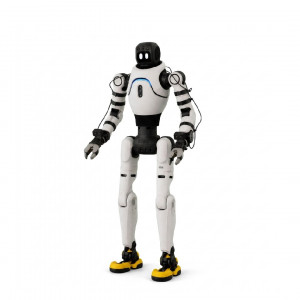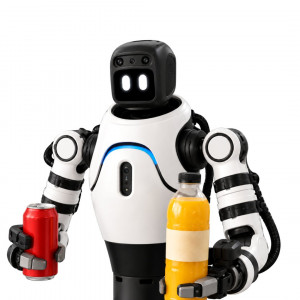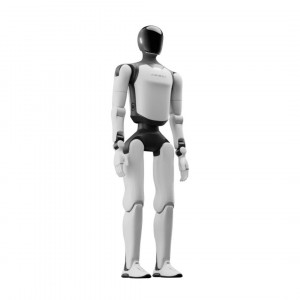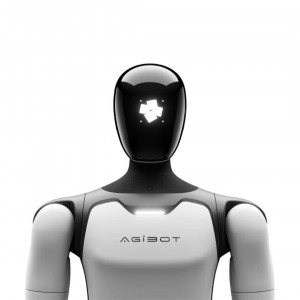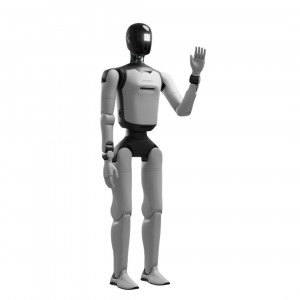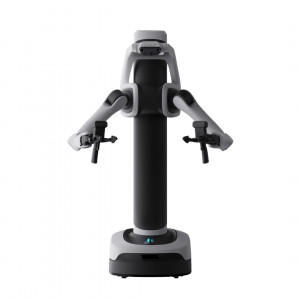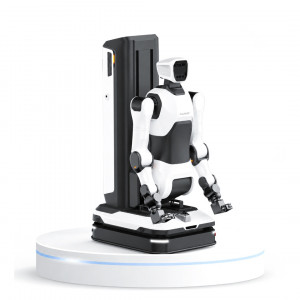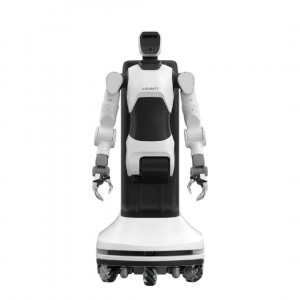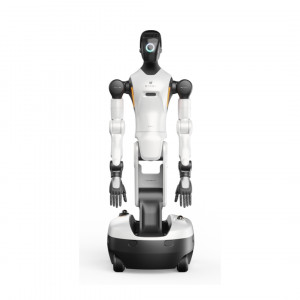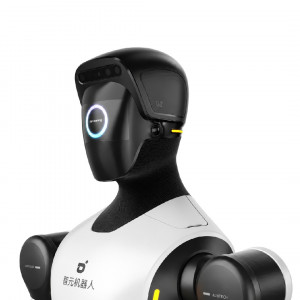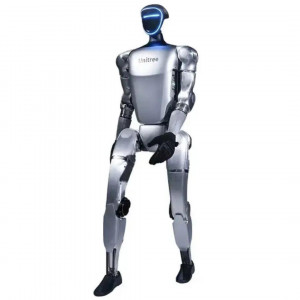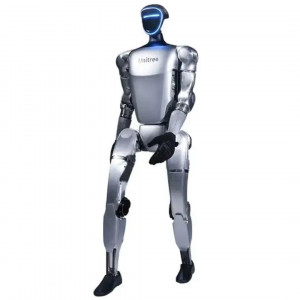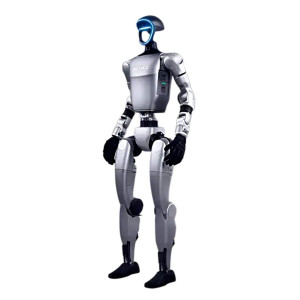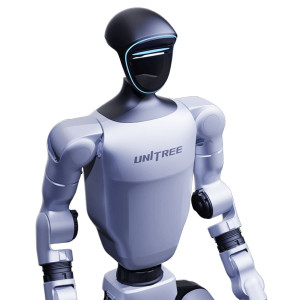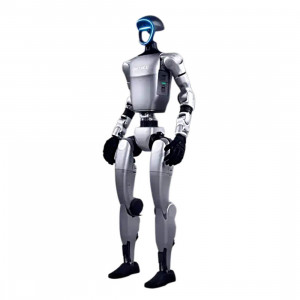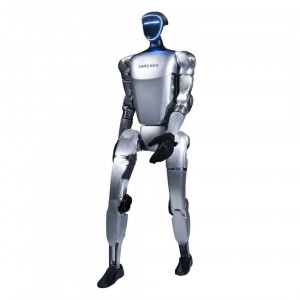


AgiBot X2 REC humanoid robot for data collection and research and development work
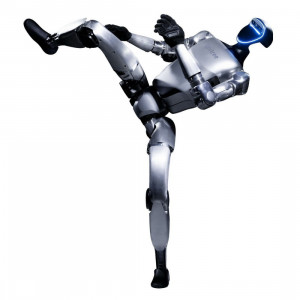
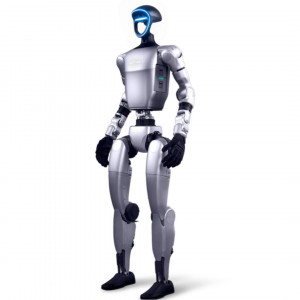
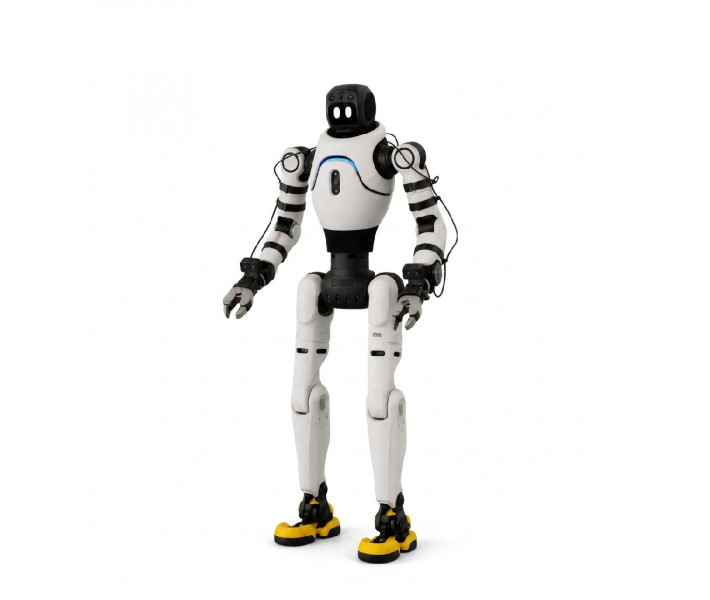
AgiBot X2 REC — a humanoid robot designed for remote control of movements, data collection, and exploration of robotic models. The REC version is focused on scenarios where it is necessary to record and use data about the robot's movements and interactions for further algorithm training. The model has a height of 131 cm, a weight of about 40 kg, and 30 degrees of freedom. The sensor system covers several visual perception zones and includes LiDAR and IMU. X2 REC supports full-body teleoperation and works with Genie Studio, where data can be used at all stages of working with VLA models from collection and preparation to training, testing, and deployment.
Main Features of AgiBot X2 REC
- Data collection in real conditions. The configuration is suitable for recording robotic demonstrations and forming datasets for research tasks. The manufacturer directly positions X2 REC as a humanoid for obtaining real-world data.
- Remote control of full-body movements. The operator can set the humanoid's movements during demonstration recording and task testing. VR, controller, and motion tracking are declared for teleoperation.
- 30 degrees of freedom. The kinematics allow recording full-body movements and working with complex action sequences. The manufacturer specifies 30 degrees of freedom for X2 REC.
- Arms with 7 degrees of freedom. The manipulators are suitable for experiments with hand movements and working with various end effectors. Each arm has 7 degrees of freedom, and the declared payload is 3 kg.
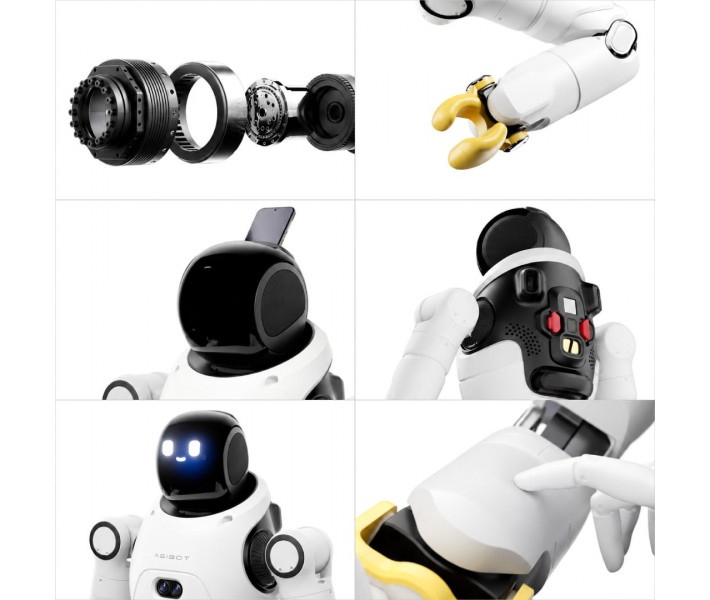
- Enhanced visual perception. Multiple viewpoints provide data for computer vision, manipulation, and teleoperation research. REC materials mention RGB, RGB-D, stereo vision, visual modules on the head, chest, back, and wrists.
- LiDAR and IMU. These sensors provide spatial and inertial data for research algorithms. The presence of sensors does not imply ready-made autonomous navigation without the appropriate software scenario.
- Working with different end effectors. The configuration can be tailored for manipulation tasks and demonstration collection. REC materials mention OmniHand and OmniPicker 3.
- Data workflow in Genie Studio. The obtained demonstrations can be included in further work with robotic models. For REC, a cycle of obtaining, training, testing, and deploying own VLA models is declared.
Structural Scheme and Kinematics of AgiBot X2 REC
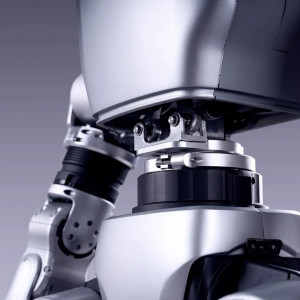
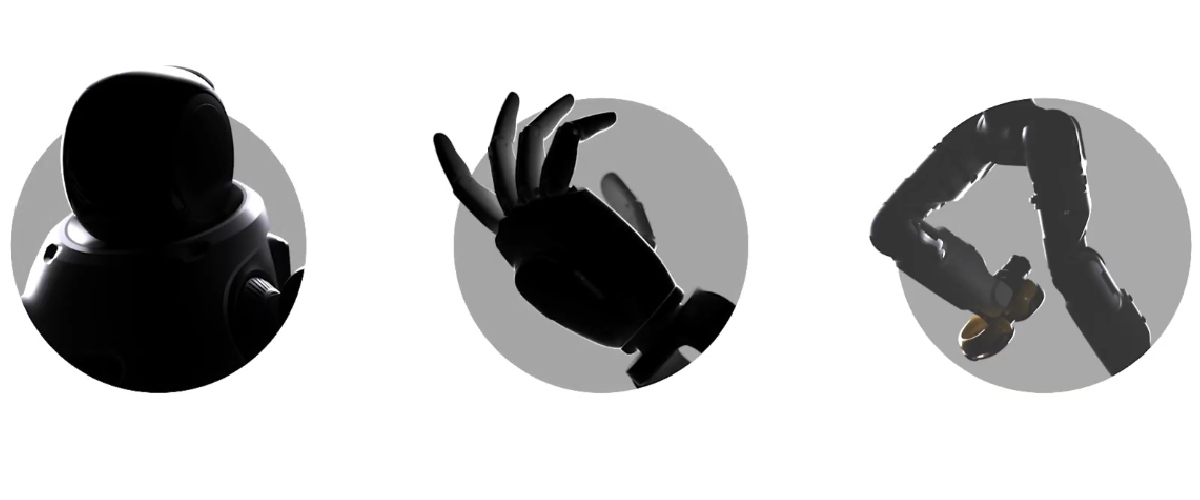
The humanoid robotic platform AgiBot X2 REC has a height of 131 cm and a weight of 40 kg. The overall kinematic scheme is designed for 30 degrees of freedom, with 7 degrees of freedom for each of the two upper limbs. This architecture is designed for full-body motion control and precise fixation of action sequences in teleoperation mode. The REC modification specification separately highlights the functionality of synchronized control of the entire body.
Manipulation Complexes and Object Handling
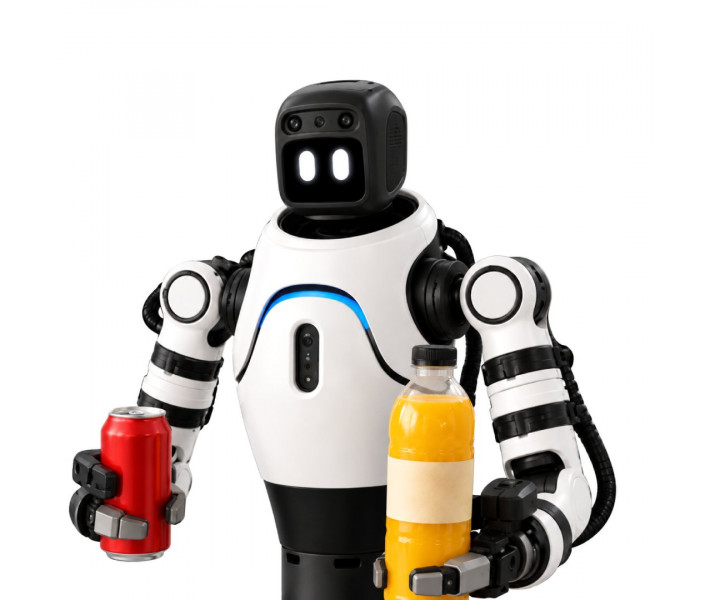
Each X2 REC manipulator is equipped with 7 degrees of freedom. The calculated payload for this configuration is 3 kg per arm. As end effectors, the manufacturer specifies OmniHand and OmniPicker 3 systems. The mentioned modules are adapted for different manipulation scenarios, so the choice of a specific gripper is made according to the experiment tasks and data structure requirements.
The X2 REC platform is designed for recording demonstration scenarios of object movement, studying manipulator kinematics, and forming training datasets for robotic models. The parameters of the number of fingers, the presence of tactile sensors, and the force control functionality are determined by the configuration of the chosen effector and are not standardized for all types of hands.

Sensors and Perception System
The REC modification is equipped with an extended set of sensory tools for primary data collection during movement and manipulation. The hardware stack includes RGB cameras, RGB-D sensors, stereo vision systems, an optical rangefinder LiDAR, and an inertial measurement unit IMU.
The creation of a visual data array is carried out from several observation zones: the head, chest segment, back, and wrists. The multi-angle fixation scheme ensures scene recording from different angles during teleoperation and object manipulation. The LiDAR module provides the construction of three-dimensional spatial data, while the IMU sensor registers dynamic parameters of body movement. Final localization, autonomous navigation, and object recognition algorithms are determined by the software and are not rigidly tied to the basic sensor composition.
Programming and Secondary Development
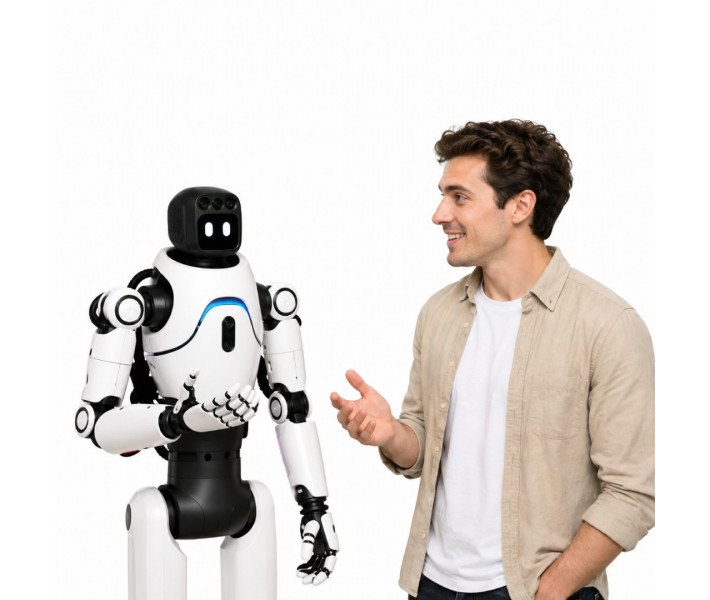
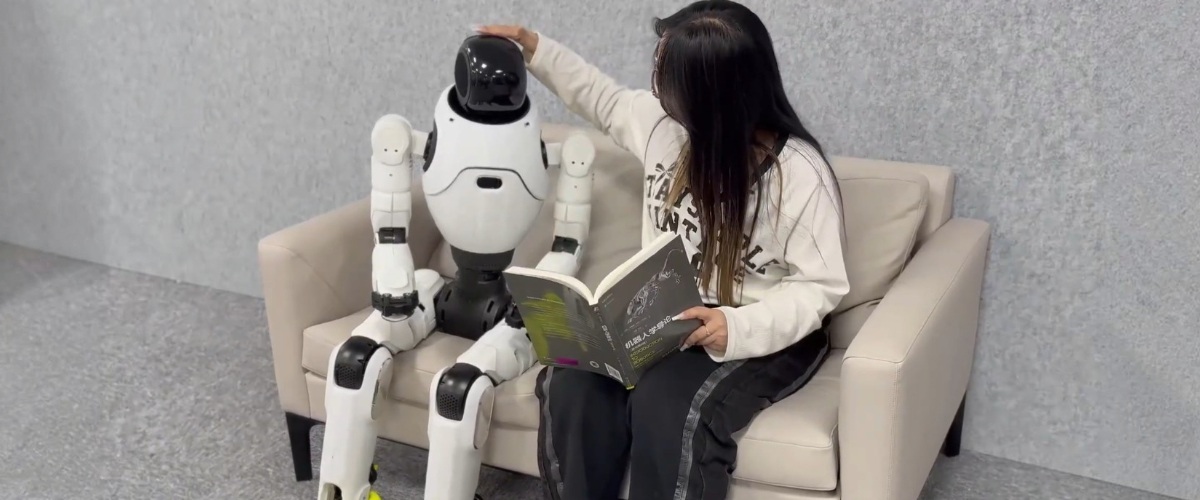
For X2 REC, NVIDIA Orin NX with 16 GB memory is declared. This module works with perception data and computational tasks related to robotic algorithms. REC is also focused on full-body teleoperation and working with Genie Studio. The operator can control movements via VR, controller, or motion tracking, and the obtained data can be transferred to the further cycle of working with models.
The specific list of SDK, API, Python, C++, DDS, GStreamer, USB, Ethernet, or other software and hardware interfaces is not provided in the separate X2 REC specification. Their composition should be checked with the documentation of the specific configuration, without transferring parameters from X2 Ultra, EDU, or other versions.
Data Collection and Use for Model Training
Data collection is the main purpose of AgiBot X2 REC. The model is designed to obtain arrays of real data through full-body teleoperation, multimodal perception, and a closed-loop workflow via Genie Studio. During remote control, the system records body movement trajectories, manipulations, and sensor complex data. Visual modules, LiDAR, and IMU form synchronized information streams for further algorithm training.
The research process is built on a cycle: data acquisition, training, testing, deployment. The platform is adapted for creating and working out own VLA models that combine vision, language, and action. This architecture allows forming training samples on a physical robot with operator participation, followed by using the obtained demonstrations for autonomous task execution.
Application Areas of AgiBot X2 REC
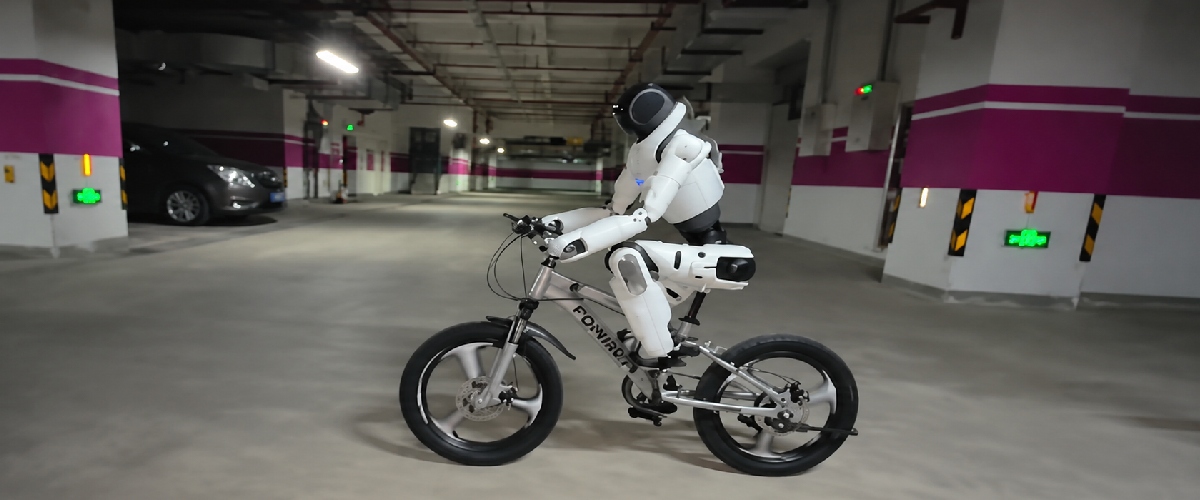
X2 REC is primarily oriented towards working with real robotic data. The main scenarios are related to teleoperation, manipulation, and behavior model research.
- Collection of robotic data. Recording movements, sensor information, and demonstrations on a real humanoid.
- Working with VLA models. Obtaining data for further training, testing, and deployment of such models.
- Manipulation research. Recording actions with hands and end effectors during object handling.
- Computer vision. Experiments with data from multiple visual modules and different types of cameras.
- R&D in humanoid robotics. Testing control, perception, and behavior algorithms on physical equipment.
- Research laboratories. Forming own datasets and testing robotic scenarios in real conditions.
Technical Specifications of AgiBot X2 REC
Construction and Movement
| Parameter | Value |
| Net dimensions | 1310 × 460 × 210 mm |
| Net weight | 40 kg |
| Total degrees of freedom | 30 |
| Degrees of freedom per arm | 7 |
| Payload | 3 kg |
| Motion control | Full-body motion control |
Manipulators, Sensors, and Computing
| Parameter | Value |
| End effectors | OmniHand, OmniPicker 3 |
| Visual perception | RGB, RGB-D, stereo vision |
| Location of visual modules | Head, chest, back, wrists |
| LiDAR | Declared |
| Inertial measurement unit | IMU |
| Computing module | NVIDIA Orin NX |
| Memory of computing module | 16 GB |
| Working with models | Own VLA models |
| Software ecosystem | Genie Studio |
| Model workflow cycle | Data acquisition, training, testing, deployment |
Communication and Interfaces
| Parameter | Value |
| Remote control | VR, controller, motion tracking |
| Remote control mode | Full-body motion control |
Buy Humanoid Robot AgiBot X2 REC
AgiBot X2 REC is designed for data collection in real conditions, teleoperation, research of robotic models, and R&D projects. Our specialists will help select the configuration for specific tasks, clarify the type of end effectors, computing module, configuration, current price, and delivery terms, and place an order.