We use cookies and other tracking technologies to improve the website, personalize content, and analyze traffic. You can adjust your settings in the settings.
Necessary cookies enable core functionality of the website. Without these cookies the website can not function properly.
Statistic cookies help website owners to understand how visitors interact with websites by collecting and reporting information anonymously.
A set of cookies to collect information and report about website usage statistics without personally identifying individual visitors to Google.
Marketing cookies store user data and behavior information, which allows advertising services to target more audience groups.
PLA Plastic KLEMA for Fast 3D Printing of Prototypes, Layouts, and Models
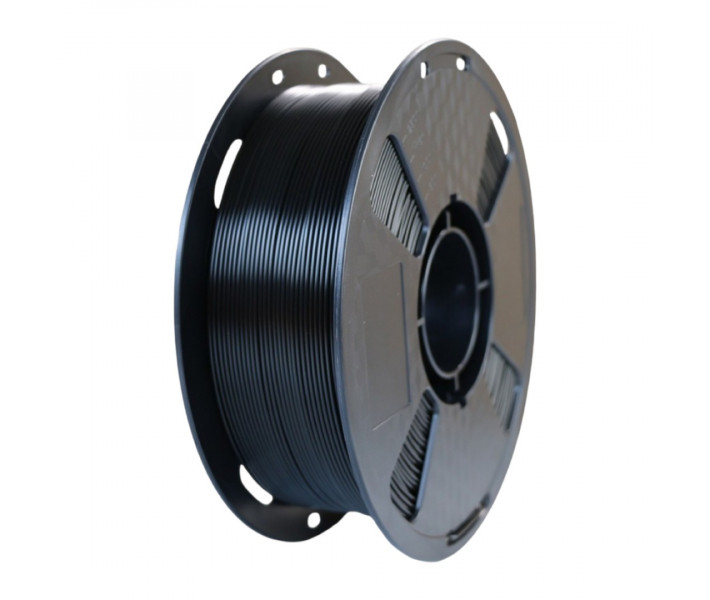
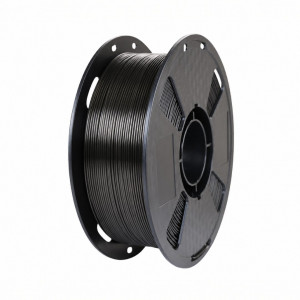
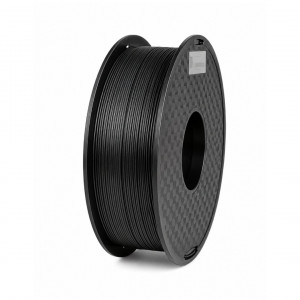
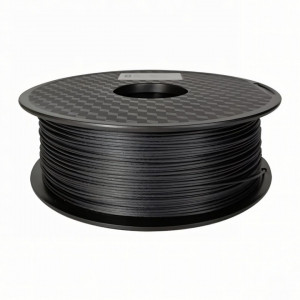
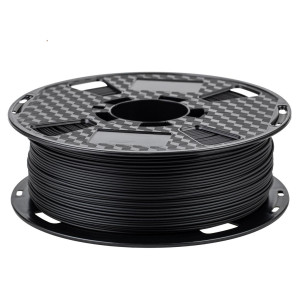
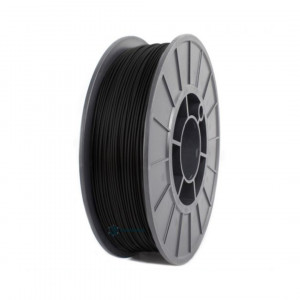
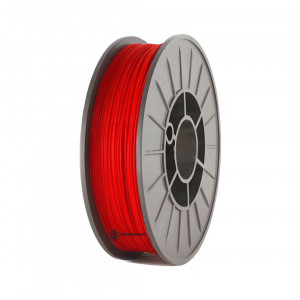
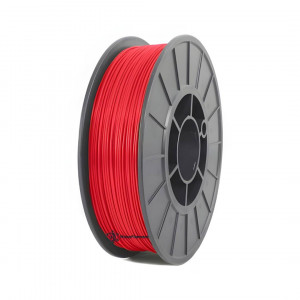
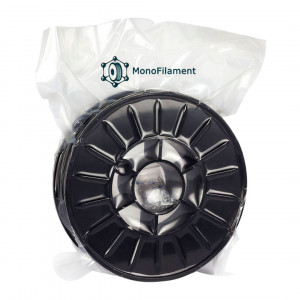
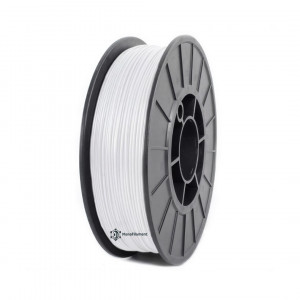
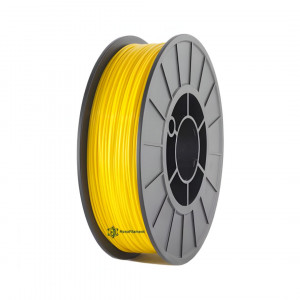
PLA HS Plastic KLEMA 1.75 mm 1 kg Black is a high-speed PLA filament for FDM 3D printing of prototypes, layouts, models, and series of identical parts. The material is designed for stable extrusion at an increased printing pace and has sufficient rigidity to maintain the shape of printed parts. PLA HS is advisable to use where reducing manufacturing time is an important part of the workflow.
Material Advantages
Faster prototype production. The recommended printing speed is up to 250 mm/s. This allows reducing the duration of model production during successive iterations of design, geometry testing, and layout preparation.
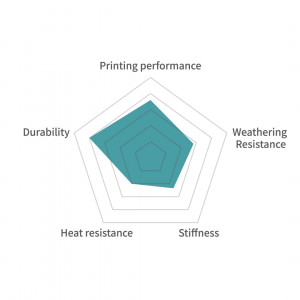
Material rigidity. For the tested sample, the flexural modulus is 3,200 MPa, and the flexural strength is 70 MPa. This allows considering PLA HS for layouts, casing parts, and prototypes where maintaining the specified geometry is important.
Suitable for repetitive part production. The high-speed mode is especially useful when printing several identical models or small batches, where reducing the time of one cycle affects overall productivity.
Controlled filament diameter. The diameter of 1.75 mm has a tolerance of ±0.02 mm, which contributes to the uniform feeding of the material during the operation of the extrusion system.
Considerations for High-Speed Printing with PLA HS
250 mm/s is the upper limit of the recommended mode. It should not be used for every model. The actual speed should be determined taking into account the performance of the hotend, printer accelerations, layer height, and product geometry.
High speed requires sufficient melting performance. If the hotend cannot melt the required volume of material in time, increasing the movement speed will not provide the corresponding reduction in printing time and may worsen the quality of extrusion.
PLA HS remains a material with limited heat resistance. The heat distortion temperature is 57 °C under a load of 0.45 MPa, and the Vicat softening temperature is 54 °C. Therefore, high-speed positioning of the material does not imply the suitability of finished parts for operation at high temperatures.
Speed should be aligned with model requirements. For prototypes where the main goal is to quickly check the shape and fit, more productive modes can be used. For models with small elements or increased surface requirements, it is advisable to reduce the speed.
Features of 3D Printing with PLA HS
The recommended nozzle temperature is 210–230 °C. For the working platform, a temperature of 50–60 °C and a textured PEI plate are used. Additional surface treatment before printing is not required.
The recommended speed is up to 250 mm/s. When setting up a high-speed profile, it is worth first checking whether the extrusion system can stably feed and melt the required volume of filament.
The cooling fan should be turned on during printing. For geometries that require supports, PVA can be used.
Recommendations for Drying and Storage
For drying PLA HS, the recommended temperature is 50 °C. A fixed drying duration for the material is not established.
During storage, the filament should be protected from direct sunlight, as exposure to ultraviolet radiation can cause the material to yellow.
Application Areas
Iterative prototypes. Models for quick verification of dimensions, layout, fit, and mutual arrangement of parts.
Architectural and industrial layouts. Demonstration objects where it is necessary to quickly obtain a physical model of the specified geometry.
Batches of identical models. Printing several identical parts, educational samples, kits, or demonstration products.
Cases and non-load-bearing structural elements. Covers, panels, brackets for layouts, and other parts where rigidity is important, but increased heat resistance is not required.
Figurines and decorative models. Products with complex geometry, accessories, decorative elements, and educational models.
Physical and Thermal Characteristics
Parameter
Value
Material
PLA HS
Density
1.28 g/cm³
Glass transition temperature (Tg)
67.2 °C
Heat distortion temperature (HDT), 0.45 MPa
57 °C
Vicat softening temperature
54 °C
Melting temperature
165.3 °C
Decomposition temperature at 5% mass loss
≥375 °C
Melt flow index, 190 °C / 2.16 kg
7 g/10 min
Flammability class according to UL 94
HB for a sample thickness of 1.5 mm
Mechanical Characteristics
Parameter
Value
Tensile strength
39 MPa
Elongation at break
12%
Flexural strength
70 MPa
Flexural modulus
3,200 MPa
Izod impact strength, notched sample
4.5 kJ/m²
Izod impact strength, unnotched sample
6 kJ/m²
3D Printing Parameters
Parameter
Value
Printing technology
FDM
Filament diameter
1.75 ± 0.02 mm
Filament mass on spool
1 kg
Nozzle temperature
210–230 °C
Printing speed
Up to 250 mm/s
Platform temperature
50–60 °C
Platform surface
Textured PEI plate
Platform preparation
No additional treatment required
Retraction distance
0.8–1.2 mm
Retraction speed
30–40 mm/s
Distance between model and raft
0.2–0.4 mm
Cooling
Fan on
Recommended support material
PVA
Drying temperature
50 °C
To switch to high-speed mode, start with parameters compatible with the capabilities of a specific 3D printer, and then increase the speed while controlling the stability of extrusion and model quality.
Order PLA HS Plastic KLEMA on Our Website
Planning to speed up prototype printing or switch to producing series of identical models? Contact the managers at 3DDevice — we will help you check the capabilities of your 3D printer and select working parameters for PLA HS. We deliver across Ukraine.
PLA Plastic KLEMA for Fast 3D Printing of Prototypes, Layouts, and ModelsPLA HS Plastic KLEMA 1.75 mm 1 kg Black is a high-speed PLA filament for FDM ..
3D printer KLEMA 180Many users have already appreciated the high-tech 3D printer KLEMA 250 and the two-extruder KLEMA 250 Twin. Now we present to your..
3D printer KLEMA 250 main featuresThere are many models of 3D printers in the 3D printing market and each of them has its own advantages and disadvant..
3D printer KLEMA SCHOOL for schools and educational institutionsKLEMA School 3D printer is ideal for the School, Educational Institutions due to its a..
3D printer KLEMA 250 PROKLEMA 250 PRO is an advanced high-tech 3D printer made in Ukraine. High-level technology, quality, reliability and optimal pri..
Features of the Ukrainian 3D printer KLEMA 250 TwinUkrainian 3D printer KLEMA 250 Twin is a high-quality Ukrainian 3D printer equipped with two extrud..
Features of the 3D printer KLEMA 250 Twin ProKLEMA 250 Twin Pro is a high-quality 3D printer equipped with two extruders. An improved version of the K..
3D printer KLEMA 500 order from the manufacturer3D printer KLEMA 500 is the printer of choice when you need to print large parts.Many users, when prin..
Buy a professional 3D printer KLEMA 700The professional 3D printer KLEMA 700 has an enlarged construction area with dimensions of 530×700×500 mm. Such..
3D Printer KLEMA SCHOOL | Educational Kit is specially designed for Ukrainian schools, lyceums, and extracurricular STEM centers. It's not just equipm..
KLEMA 700 | Premium Set — is a ready-made kit for learning and launching 3D printing in your STEM lab. This set is designed to create a modern educati..
Farm 3D Black PLA Filament for 3D Printing FarmWhen the task is to produce a large batch of parts quickly and without equipment issues, the black fila..
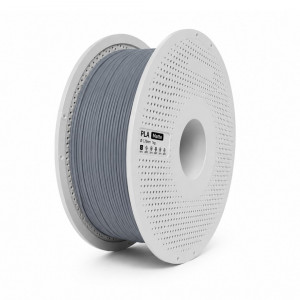
PLA Plastic Bambu Lab Matte 1.75 mm Ash Grey for High-Quality and Aesthetic 3D PrintingBambu Lab PLA Matte is a matte plastic for 3D printing, designe..
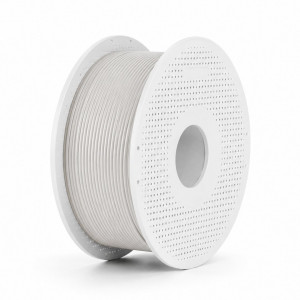
PLA Plastic Bambu Lab Matte 1.75 mm Ivory White for High-Quality and Aesthetic 3D PrintingBambu Lab PLA Matte is a matte plastic for 3D printing, desi..