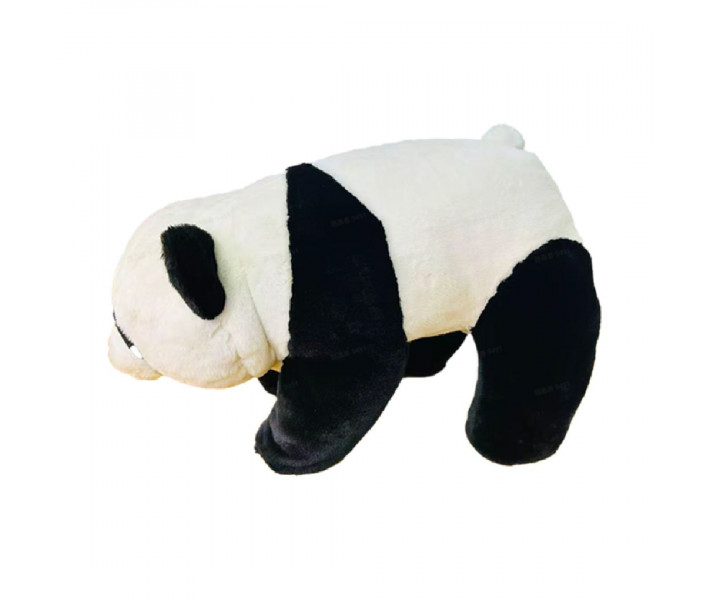
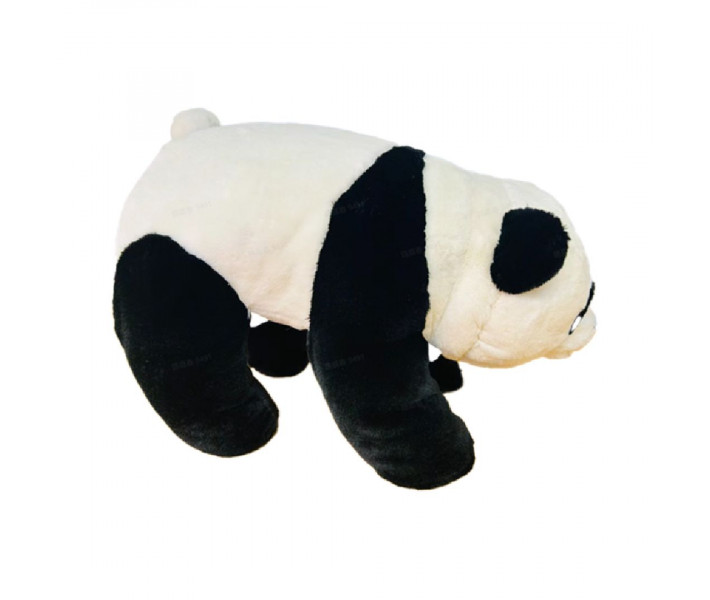


AgiBot D1 EDU Panda Quadruped Robot for Educational and Research Tasks
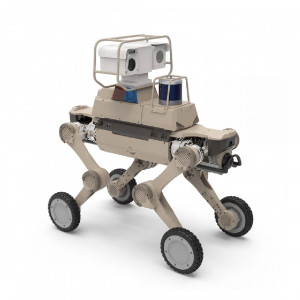
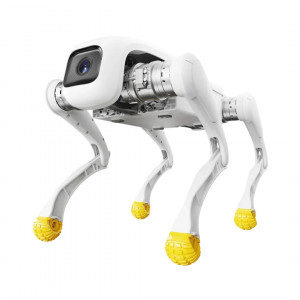
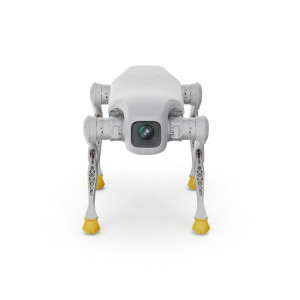
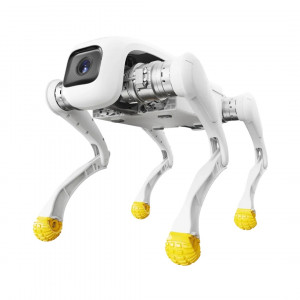
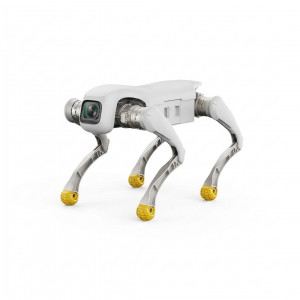
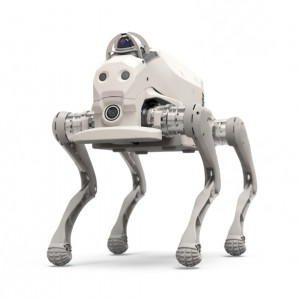
AgiBot D1 EDU Panda is a 12-DoF quadruped robot designed for robotics education, researching motion control algorithms, and developing custom software solutions. The model features an aluminium alloy and high-strength engineering plastic frame, 12 precision motors with up to 48 N·m torque, an IMU, and a wide-angle camera, reaching speeds up to 3.5 m/s and supporting a payload of up to 3.3 kg. The platform supports secondary development via an open SDK and includes interfaces for connecting external modules.
Advantages of the AgiBot D1 EDU Panda
- 12 degrees of freedom. Each of the four legs has three articulated joints. This kinematic layout allows adjusting torso posture, controlling limb placement, and executing complex motion commands.
- Movement speed up to 3.5 m/s. The robot supports rapid traversal across uneven and inclined surfaces. A reinforcement-learning gait control system adapts movements to changes in terrain and ground support.
- Balancing and fall-protection system. Motion control algorithms support self-balancing, tip-over resistance, and compensation for external pushes, which is essential when researching quadruped platform stability.
- Motors with up to 48 N·m torque. The structure is equipped with 12 precision motors in aluminium housings. Peak torque per joint reaches 48 N·m, providing the force required for dynamic movements and jumps.
- Obstacle and step traversal. The platform climbs steps up to 16 cm high and ascends slopes up to 30°, with a vertical jump height of up to 35 cm.
- Payload up to 3.3 kg. Compatible add-on equipment can be mounted on the chassis, making it suitable for experiments with external sensors and computing modules.
- Support for secondary development. The platform features an open SDK alongside Ethernet, USB, Power Port, SBUS, and UART interfaces for motion programming, connecting external devices, and expanding functionality.
- Control via a handheld controller. A joystick controller is included in the box, enabling manual movement control and triggering built-in motion commands without a PC.
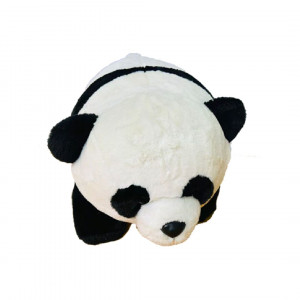
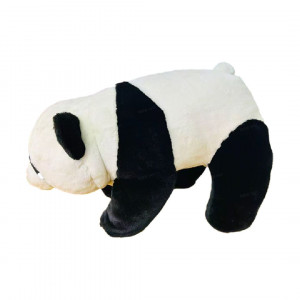
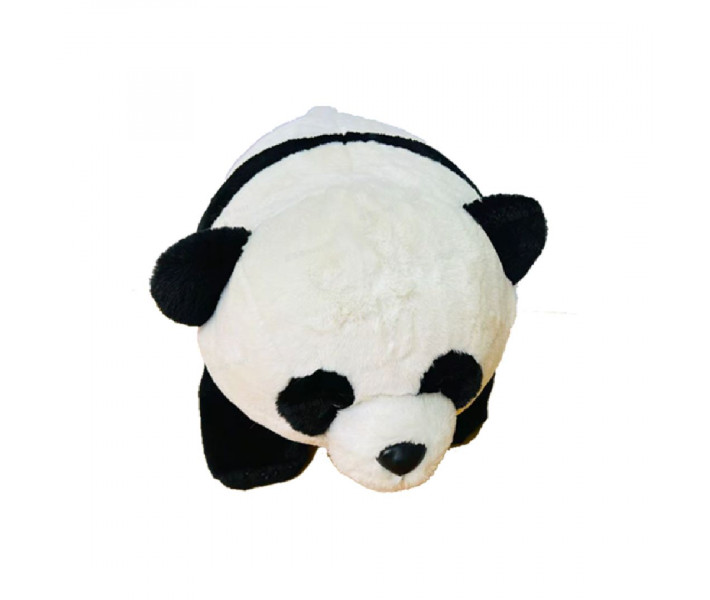
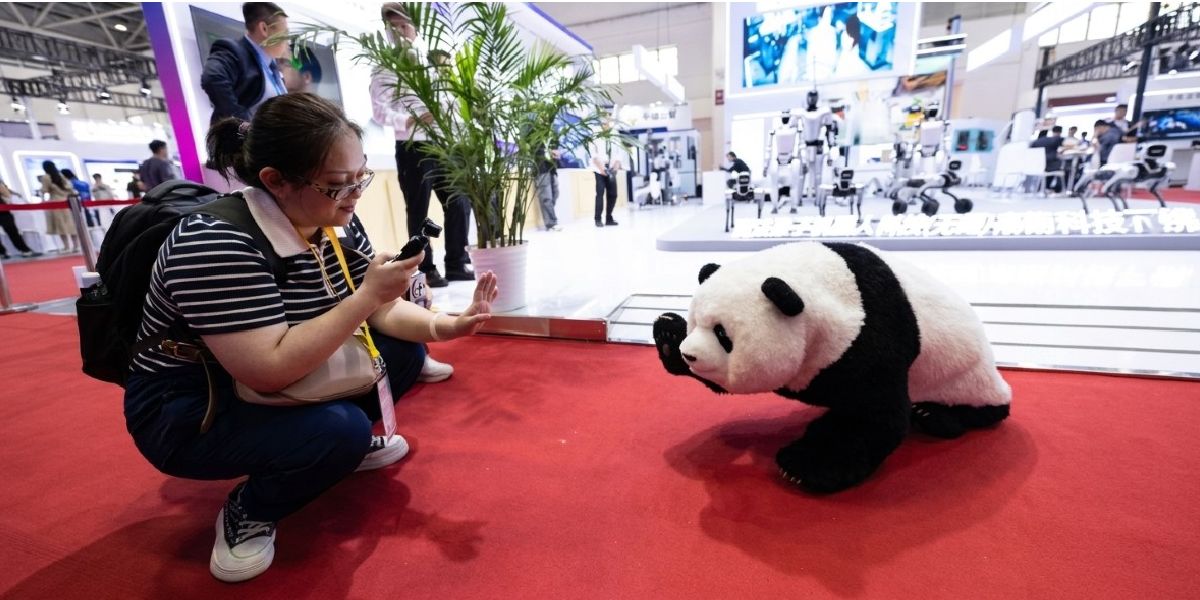
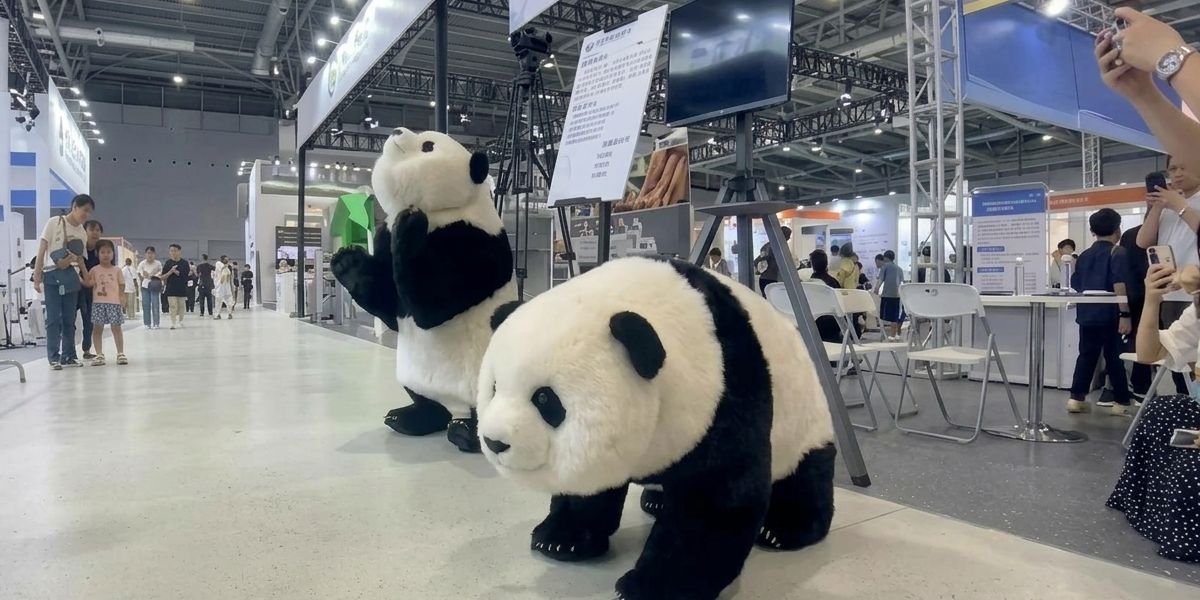
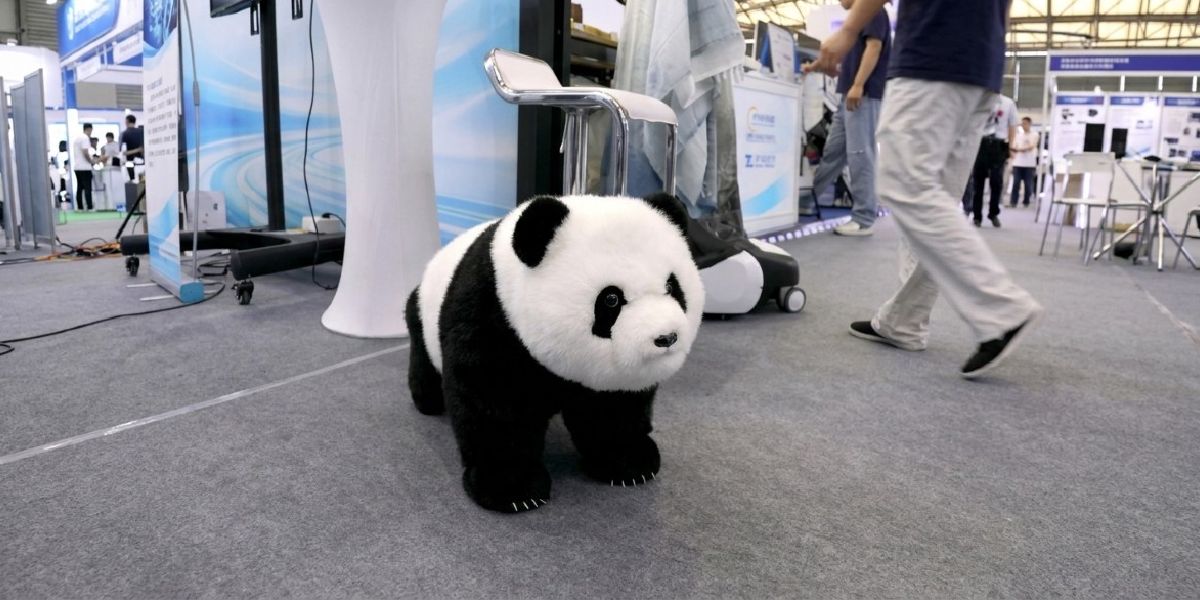
- Special Panda design. A plush panda skin makes the platform approachable for audiences, suiting STEM classrooms, exhibitions, presentations, and public demonstrations.
Design and Kinematic System of the Robot
The AgiBot D1 EDU Panda chassis is built from aluminium alloy and high-strength engineering plastic. The locomotion system consists of four legs, each with three degrees of freedom, totalling 12 precision joint motors with aluminium housings. The actuators use high-power-density drive modules with dual encoders, eliminating the need for zero-position calibration prior to startup. Peak torque for each joint is 48 N·m.
Joint ranges of motion:
- Body: -28° to +28°.
- Hip joint: -170° to +66°.
- Knee / Shin joint: +35° to +156°.
Actuator placement enables changing limb positions relative to the body, adjusting platform height, and tilting the torso. Individual joint control allows programming leg trajectories and researching quadruped kinematics.
Mobility and Locomotion Capabilities
The AgiBot D1 EDU Panda supports basic locomotion modes and specialised acrobatic commands, operated via the handheld controller or SDK software interfaces.
Key Locomotion Parameters
- Maximum speed: 3.5 m/s.
- Step height: up to 16 cm during sequential climbing.
- Maximum incline angle: up to 30°.
- Vertical jump height: up to 35 cm.
- Range: 6 ± 1 km.
- Operating time: 1–2 hours depending on payload and movement mode.
Body Posture Commands
- Standing: transitioning into an upright standing posture.
- Lying: transitioning into a lying posture.
- Damping Mode: passive state mode for drive actuators.
- Pitch Adjustment: adjusting forward or backward body tilt.
- Height Adjustment: changing body height.
- Horizontal Turning: rotating in the horizontal plane.
Specialised movements include jumping forward, jumping upwards, standing on two hind legs, backflipping, and waving a paw. These commands are used when testing balancing algorithms and limb coordination. High- and low-level software interfaces are available for creating custom motion scenarios.
Sensors, Camera, and Control System
An inertial measurement unit (IMU) provides data on the robot's posture, recording acceleration, angular velocity, and body orientation in space. IMU data is accessible via the SDK for software experiments in balancing and gait stabilisation.
A wide-angle camera is mounted on the chassis with the following field-of-view parameters:
- DFOV: 122°.
- HFOV: 111°.
- VFOV: 70°.
The camera streams real-time video to an external device for visual monitoring during remote control. The computing system is built around an eight-core processor, and the platform's maximum output power is 3,500 W.
Secondary Development and Programming
The AgiBot D1 EDU Panda educational platform is engineered for comprehensive software and hardware customisation. The robot comes equipped with an open SDK, communication protocol, and physical interfaces for integrating external sensors and computing modules.
SDK Software Suite
- High-level control. Commands for moving forward and backward, adjusting speed, turning, lying down, and standing on all fours.
- Low-level control. Direct command transmission to motors specifying position, speed, and torque for each joint.
- IMU data acquisition. Real-time reading of acceleration, angular velocity, and body orientation metrics.
- Motor monitoring. Retrieving telemetry on current position, rotational speed, and joint torque.
- Programmatic video stream access. Routing the robot's camera feed to an external computer for computer vision processing.
- Control switching. Programmatically transferring control priority between the handheld controller and the SDK.
Code examples in Python and C++ are available for development. The environment supports Ubuntu 22.04, CMake 3.8 or later, GCC 11 or later, Eigen3, Boost 1.74, and Python 3.10, with a physical computer running Ubuntu 22.04 recommended for secondary development.
Expansion Interfaces
- Ethernet, 1 port. RJ45 network interface for data transmission, network connectivity, and remote monitoring.
- USB, 2 ports. USB connectors for attaching external storage, cameras, sensors, and other compatible devices.
- Power Port, 2 ports. Power interfaces for external modules (12 V up to 36 W and BAT up to 100 W outputs).
- SBUS, 1 port. Connector for attaching remote control receivers and equipment supporting the SBUS protocol.
- UART, 1 port. Serial interface for data exchange with embedded systems and communication modules.
The platform supports connecting LiDAR, depth cameras, positioning modules, RTK receivers, 4G/5G communication devices, and video transmission modules. A URDF digital model format is provided with simulation and algorithm testing support in NVIDIA Isaac Sim and MuJoCo prior to deployment on the physical unit.
Applications
The educational robotic platform is suited for teaching laboratories, university robotics departments, public presentations, and mobile robotics research projects:
- Mobile robotics experiments. Validating locomotion algorithms, actuator control, and platform behaviour on uneven and inclined surfaces.
- Celebrations, grand openings, and promotional events. Involving the panda-suited robot in ribbon-cutting ceremonies, wedding and festive photo zones, venue openings, and guest events, where it can escort visitors, offer a paw, dance, and pose for photos.
- Robotics training and STEM education. Studying quadruped robot structure, actuator principles, kinematics, and motion control algorithms in schools, clubs, STEM laboratories, and universities, with a friendly panda design that engages children and teenagers.
- Rehabilitation, children's, and inclusive spaces. Hosting interactive demonstrations and developmental activities in children's centres, where a soft plush panda appearance eases apprehension towards complex technology.
- Social media and media content creation. Filming short videos, reviews, and interactive clips featuring the panda robot to promote brands, educational platforms, or technology channels online.
- Student and research projects. Building software solutions, experimenting with hardware modules, and researching quadruped control systems.
- Interactive events and demonstrations. Running workshops, exhibitions, and presentations at educational institutions and technology centres.
What's in the Box
- AgiBot D1 EDU Robotic Platform - 1 pc. The primary programmable quadruped robot in its educational edition with SDK support and open expansion interfaces.
- Removable Panda Skin Suit - 1 pc. A plush panda shell made from faux fur, nylon lining, mesh fabric, and PU leather that secures over the robot's chassis and limbs.
- Battery Pack - 1 pc. A proprietary 4.6 Ah, 43.2 V battery for 1–2 hours of autonomous platform operation.
- Power Adapter - 1 pc. Standard mains power supply unit for connecting to the charging dock.
- Charging Station - 1 pc. Dock module for charging the battery from 10% to 90% in approximately 1 hour.
- Adapter Power Cable - 1 pc. Mains power cable for connecting the power adapter to an electrical outlet.
- Handheld Controller - 1 pc. Joystick remote for controlling the robot's movement remotely and triggering built-in motion commands.
- Mounting Tool Kit - 1 set. L-shaped hex keys in 2 mm, 2.5 mm, and 3 mm sizes for chassis maintenance.
- User Manual - 1 pc. Official technical documentation with startup and safe operation instructions.
- Certificate of Conformity - 1 pc. Document confirming factory equipment quality.
Technical Specifications of the AgiBot D1 EDU Panda
General Specifications
| Parameter | Value |
| Device type | Quadruped robot |
| Chassis material | Aluminium alloy, high-strength engineering plastic |
| Suit material | Faux fur, nylon lining, mesh fabric, PU leather, filling |
| Degrees of freedom | 12 |
| Maximum speed | 3.5 m/s |
| Operating time | 1–2 hours |
| Travel range | 6 ± 1 km |
| Payload | up to 3.3 kg |
| Step height | 16 cm |
| Maximum incline angle | 30° |
| Vertical jump height | 35 cm |
| Maximum output power | 3,500 W |
| Net dimensions | 950 × 480 × 550 mm standing; 950 × 480 × 330 mm lying |
| Net weight | 17.2 kg |
Motors, Sensors, and Computing Module
| Parameter | Value |
| Actuator type | High-power-density drive modules |
| Maximum joint torque | 48 N·m |
| Number of motors | 12 |
| Body range of motion | -28° to +28° |
| Hip joint range of motion | -170° to +66° |
| Shin joint range of motion | +35° to +156° |
| Camera DFOV | 122° |
| Camera HFOV | 111° |
| Camera VFOV | 70° |
| Inertial module | IMU |
| Computing module | High-performance 8-core CPU |
| Real-time video streaming | Supported |
Software Interfaces and Power
| Parameter | Value |
| SDK secondary development | Supported |
| Ethernet | 1 port |
| USB | 2 ports |
| Power Port | 2 ports |
| SBUS | 1 port |
| UART | 1 port |
| URDF simulation | Supported |
| NVIDIA Isaac Sim | Supported |
| MuJoCo | Supported |
| Battery type | Rechargeable battery pack |
| Nominal voltage | 43.2 V |
| Nominal capacity | 4.6 Ah |
| Charging time | Approximately 1 hour from 10% to 90% |
| Operating temperature | 0 °C to +40 °C |
| Warranty | 1 year |
Order the AgiBot D1 EDU Panda Robot Dog
The AgiBot D1 EDU Panda platform is well suited for teaching laboratories, research centres, presentations, and software development in robotics. Our specialists will advise on SDK configuration and help select compatible sensors and expansion modules for your specific tasks.