We use cookies and other tracking technologies to improve the website, personalize content, and analyze traffic. You can adjust your settings in the settings.
Necessary cookies enable core functionality of the website. Without these cookies the website can not function properly.
Statistic cookies help website owners to understand how visitors interact with websites by collecting and reporting information anonymously.
A set of cookies to collect information and report about website usage statistics without personally identifying individual visitors to Google.
Marketing cookies store user data and behavior information, which allows advertising services to target more audience groups.
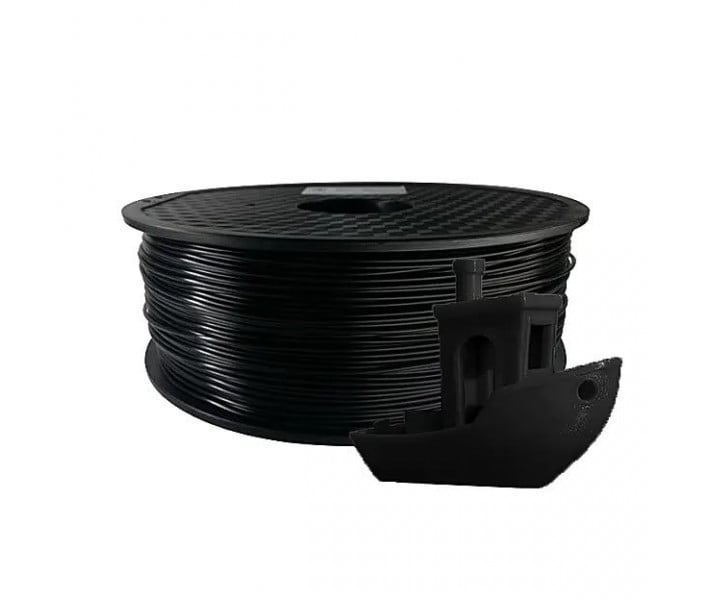
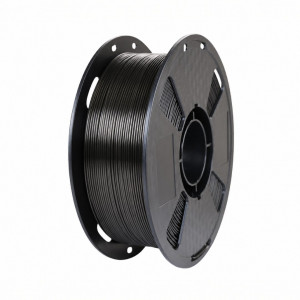
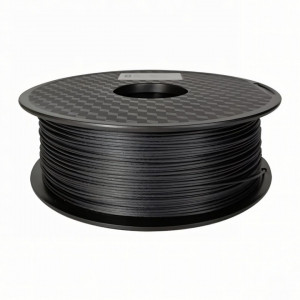
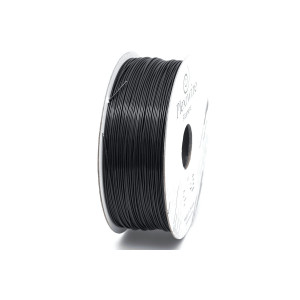
ABS Plastic KLEMA Black for 3D Printing Mechanical Components and Industrial Prototypes
ABS Plastic KLEMA 1.75 mm 1 kg Black is a thermoplastic filament for FDM 3D printing of mechanical components, casing parts, mounting fixtures, and functional prototypes. The material combines rigidity, impact resistance, and the ability to withstand heating, allowing it to be used for manufacturing parts with various mechanical property requirements. ABS is also amenable to mechanical processing, enabling printed components to be refined and adapted for assembly with other structural elements.
Material Advantages
Impact Resistance. ABS combines a rigid polymer base with an elastomeric component that aids in absorbing impact energy. This allows the material to be used for manufacturing protective covers, lids, and other components that may experience accidental impacts during use.
Rigidity During Bending. The flexural modulus is 2,000 MPa. This indicator characterizes the material's resistance to elastic deformation under bending load and helps assess its suitability for manufacturing structural elements that need to maintain a given shape.
Heat Resistance. ABS can be used to manufacture parts that undergo heating during equipment operation. The heat deflection temperature is 95°C under a load of 0.45 MPa. This indicator should be considered when designing products that operate under simultaneous exposure to temperature and mechanical loads.
Possibility of Mechanical Refinement. Printed parts can be drilled, threaded, machined on seating surfaces, and other operations can be performed to prepare products for assembly. This allows combining additive manufacturing with traditional processing methods and using ABS to create mounting and assembly components.
Features of Working with ABS
Manufacturing Parts with Specified Dimensions. During the transition from molten to solid state, ABS undergoes thermal shrinkage. Uneven cooling can lead to changes in the product's geometry, so for parts with precise seating surfaces, it is important to consider possible dimensional deviations. Before manufacturing a series, it is advisable to check the dimensions of a test part and, if necessary, adjust the 3D model or printing parameters.
Features of Polymer Bonding. ABS belongs to materials that can be bonded using appropriate solvents or special adhesive compositions for ABS. This allows for the creation of structures from several printed parts, including products that cannot be placed in the printer's working area as a single model. The bonding method should be selected according to the geometry of the contact surfaces and the intended loads.
Interaction with Chemical Substances. ABS is resistant to water, weak acids, and weak alkalis, but its properties may change under the influence of organic solvents, including acetone. When manufacturing parts that will come into contact with chemical substances, it is necessary to consider the composition of the environment, concentration, and duration of contact.
Safety During Processing. During heating, ABS may release volatile organic compounds and ultrafine particles. The workplace should be equipped with proper ventilation or an air extraction and filtration system. During drilling, grinding, and other mechanical processing operations, it is also necessary to prevent the accumulation of plastic dust in the work area.
Features of 3D Printing with ABS
For printing with ABS, it is recommended to use a 3D printer with an enclosed case and a heated platform. The enclosed working chamber helps reduce temperature fluctuations around the model, and applying glue to the platform improves the adhesion of the first layer during part manufacturing.
Unlike materials for which intensive model cooling is used, it is recommended to turn off the cooling fan when printing with ABS. This helps avoid a sharp decrease in the temperature of the applied layers and reduces the risk of delamination.
When choosing a printing mode, it should be considered that as the filament feed speed increases, the need for rapid material heating also increases. For ABS, two nozzle temperature ranges are provided depending on the printing speed, as shown in the table below.
Recommendations for Drying and Storage
The recommended drying temperature for ABS is 80°C. The duration of the procedure should be determined based on the condition of the filament and the characteristics of the drying equipment.
During storage, it is important to limit the material's contact with moisture. For this, use airtight packaging or a special container with a desiccant. The recommended relative humidity of the environment during storage and printing is below 20%.
Store the spool away from direct sunlight and heat sources. After prolonged exposure in open packaging, the filament should be checked for signs of moisture and dried if necessary before use.
Application Areas
Mounting and Assembly Equipment. Drilling jigs, positioning elements, clamps, and special fixtures for assembling products and performing production operations.
Mechanism Components. Levers, control handles, guides, and auxiliary parts of mechanical assemblies, whose geometry can be adapted to a specific design.
Casing Elements of Technical Devices. Covers, panels, protective housings, and internal mounting components for placing electronic and mechanical units of equipment.
Research Samples and Functional Mockups. Prototypes with moving elements, assembly models, and experimental parts for testing design solutions, mutual arrangement of components, and mechanism operation.
Physical and Thermal Characteristics
Parameter
Value
Material
ABS (Acrylonitrile Butadiene Styrene)
Density
1.02 g/cm³
Glass Transition Temperature (Tg)
109°C
Heat Deflection Temperature (HDT), 0.45 MPa
95°C
Vicat Softening Temperature
86°C
Melt Flow Index, 220°C / 10 kg
20 g/10 min
Shrinkage During Molding, ISO 294
0.4–0.8%
Coefficient of Linear Thermal Expansion
60.7 μm/(m·°C)
Mechanical Characteristics
Parameter
Value
Tensile Strength
35 MPa
Elongation at Break
10%
Flexural Strength
60 MPa
Flexural Modulus
2,000 MPa
Izod Impact Strength, Notched Specimen
15 kJ/m²
Izod Impact Strength, Unnotched Specimen
6 kJ/m²
3D Printing Parameters
Parameter
Value
Printing Technology
FDM
Filament Diameter
1.75 mm
Filament Mass on Spool
1 kg
Nozzle Temperature at Speed 50–100 mm/s
250–270°C
Nozzle Temperature at Speed 100–200 mm/s
270–290°C
Platform Temperature
80–100°C
Platform Preparation
Applying Glue
Retraction Distance
0.8–1.2 mm
Retraction Speed
30–40 mm/s
Cooling
Fan Off
Recommended Printer Type
With Enclosed Case
Drying Temperature
80°C
The provided modes are initial settings that can be adjusted according to the 3D printer design, model geometry, and finished product requirements.
Where to Buy ABS Plastic KLEMA?
Order ABS Plastic KLEMA 1.75 mm 1 kg Black on our website. Need help choosing the material for a specific product, checking compatibility with your 3D printer, or selecting printing parameters? Contact 3DDevice managers — we will help you choose the filament according to your technical tasks. We deliver across Ukraine.
ABS Plastic KLEMA Black for 3D Printing Mechanical Components and Industrial PrototypesABS Plastic KLEMA 1.75 mm 1 kg Black is a thermoplastic filamen..
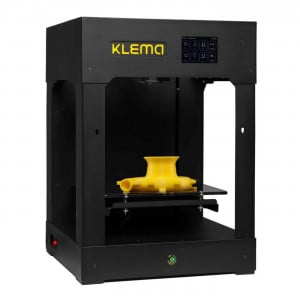
3D printer KLEMA 180Many users have already appreciated the high-tech 3D printer KLEMA 250 and the two-extruder KLEMA 250 Twin. Now we present to your..
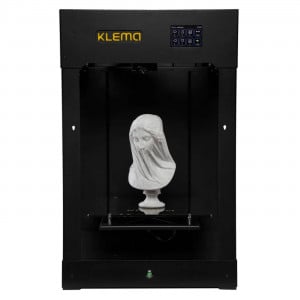
3D printer KLEMA 250 main featuresThere are many models of 3D printers in the 3D printing market and each of them has its own advantages and disadvant..
3D printer KLEMA SCHOOL for schools and educational institutionsKLEMA School 3D printer is ideal for the School, Educational Institutions due to its a..
3D printer KLEMA 250 PROKLEMA 250 PRO is an advanced high-tech 3D printer made in Ukraine. High-level technology, quality, reliability and optimal pri..
Features of the Ukrainian 3D printer KLEMA 250 TwinUkrainian 3D printer KLEMA 250 Twin is a high-quality Ukrainian 3D printer equipped with two extrud..
Features of the 3D printer KLEMA 250 Twin ProKLEMA 250 Twin Pro is a high-quality 3D printer equipped with two extruders. An improved version of the K..
3D printer KLEMA 500 order from the manufacturer3D printer KLEMA 500 is the printer of choice when you need to print large parts.Many users, when prin..
Buy a professional 3D printer KLEMA 700The professional 3D printer KLEMA 700 has an enlarged construction area with dimensions of 530×700×500 mm. Such..
3D Printer KLEMA SCHOOL | Educational Kit is specially designed for Ukrainian schools, lyceums, and extracurricular STEM centers. It's not just equipm..
KLEMA 700 | Premium Set — is a ready-made kit for learning and launching 3D printing in your STEM lab. This set is designed to create a modern educati..
ABS Plastic Plexiwire 1.75 mm 0.75 kgABS plastic Plexiwire 1.75 mm is one of the most popular plastics for 3D printing. It is very suitable for printi..
ABS Plastic Plexiwire 1.75 mm 0.75 kg Light BlueABS plastic Plexiwire 1.75 mm is one of the most popular plastics for 3D printing. It is very suitable..