

- Stock: In Stock
- Product code: 00-00014528

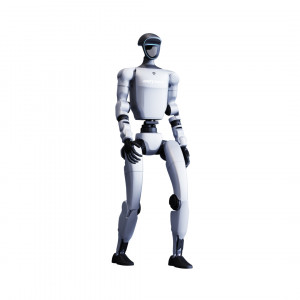
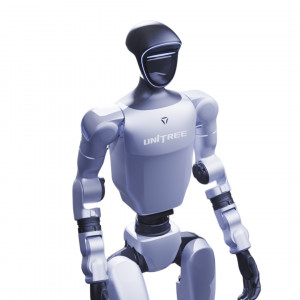
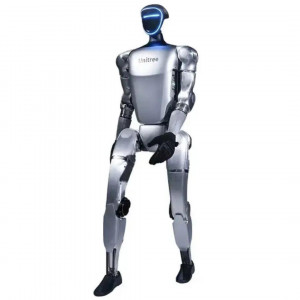
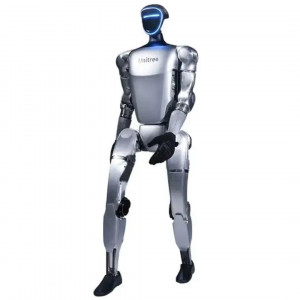
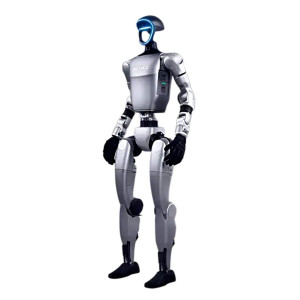
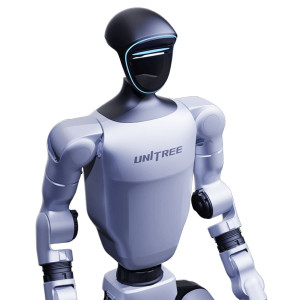
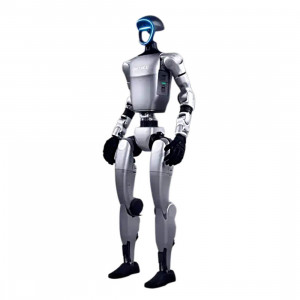
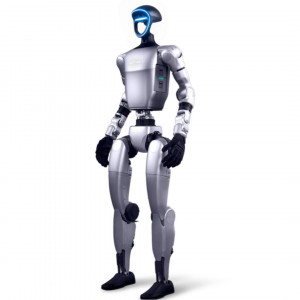
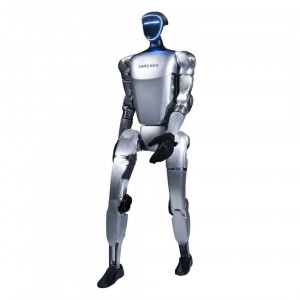
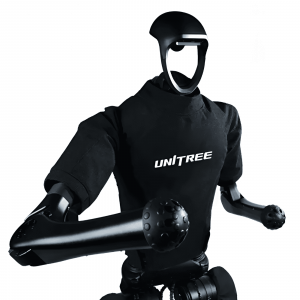
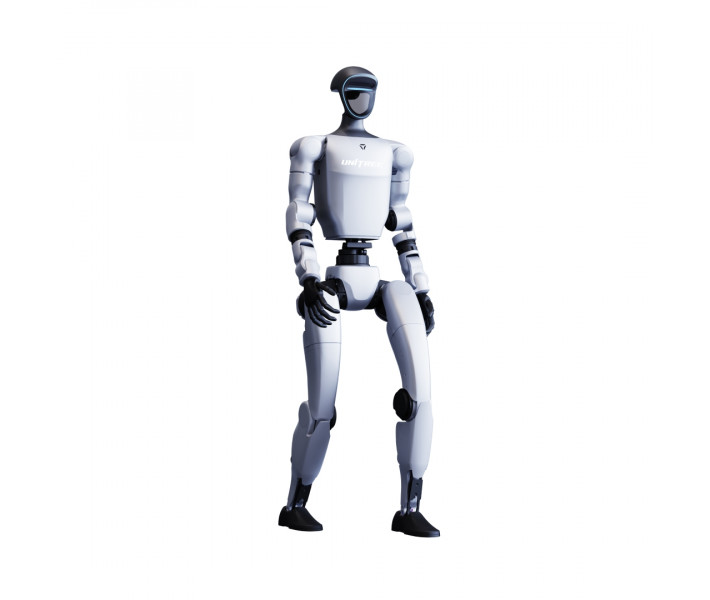
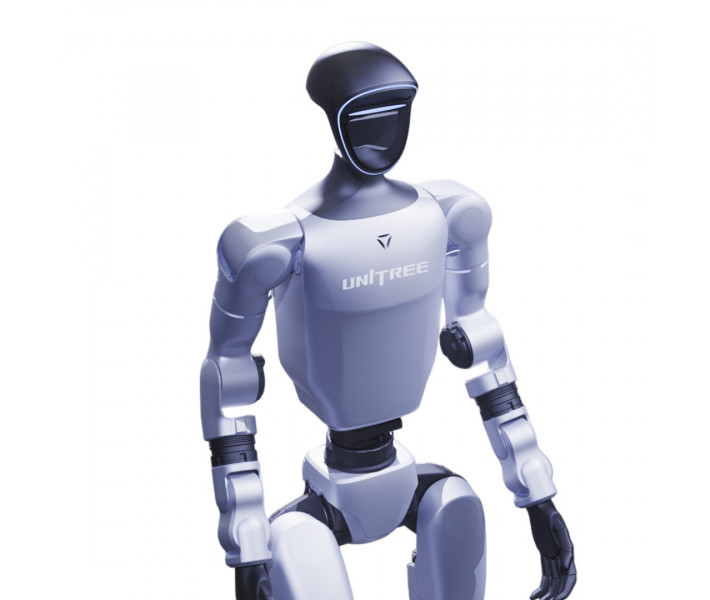
Research Platform with Force-Controlled Hands Unitree G1 Edu Pro A-U9
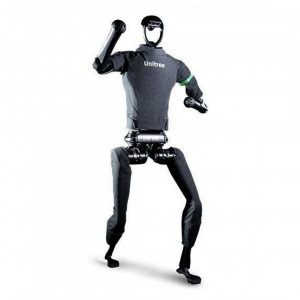
Unitree G1 Edu Pro A-U9 is a humanoid robot for education, scientific research, and algorithm development for robotic systems, equipped with 37 degrees of freedom, two three-fingered Dex3-1 hands with force control, a depth camera, and 3D LiDAR. The configuration supports secondary development, has an octa-core processor, and is designed for experiments with movement, environmental perception, and object manipulation.
Features of Unitree G1 Edu Pro A-U9
- 37 degrees of freedom for working with complex movements. Movable joints of the legs, arms, body, and hands allow working with body positioning, limb coordination, and object manipulation. This configuration can be used to study humanoid robot control systems.
- Two hands with force control Dex3-1. Each three-fingered hand has 7 active degrees of freedom: 3 in the thumb and 2 each in the index and middle fingers. Force and position control allows for the development of algorithms for gripping, holding, and moving objects with finger movement and applied force control. In the A-U9 configuration, the hands are supplied without tactile sensor matrices.
- Platform for custom development. The G1 EDU version supports secondary development, so the robot can be used not only for demonstrations but also for creating and testing custom algorithms. Developers can work with movement systems, environmental perception, limb control, and behavioral scenarios.
- Depth camera and 3D LiDAR. Built-in sensors provide data about the surrounding space. This data can be used when creating custom perception and robot control systems.
- Dual joint encoders. The movable joints of the G1 EDU use dual encoders to obtain joint position data.
- Quick-release 9000 mAh battery. The operating time is about 2 hours and depends on the intensity of movements and load. The removable battery design simplifies its replacement without disassembling the robot's body.
Functional Capabilities
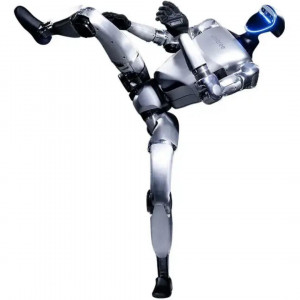
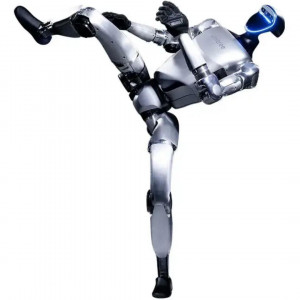
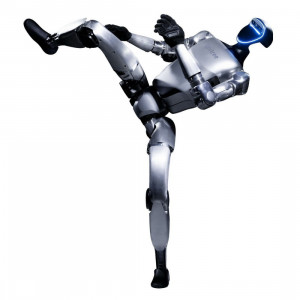
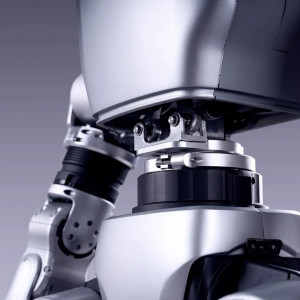
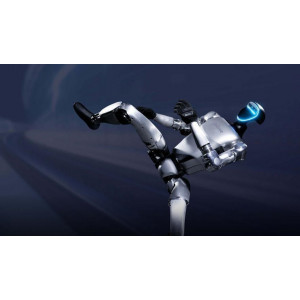
- Control of humanoid platform movements. Each leg has 6 degrees of freedom, each arm without the hand has 5, and the body has 1 degree of freedom. The knee joint moves in a range from 0 to 165°, and the body can rotate around the vertical axis within ±155°.
- Gripping and moving objects. The two Dex3-1 hands allow for the development of scenarios for gripping, holding, and changing the position of objects. The maximum load on one arm is about 3 kg, but it depends on the position and degree of arm extension.
- Collection of spatial data. The depth camera and 3D LiDAR provide information about the surrounding space for further processing in custom software solutions.
- Audio interaction. The robot is equipped with an array of four microphones and a 5 W speaker. Audio equipment can be used in custom user interaction scenarios.
- Manual control. The G1 EDU is equipped with a manual controller used for controlling the robot and performing manufacturer-provided operations.
- Wireless updates. The platform supports software updates via wireless connection.
- Local air cooling. The robot's design uses a local air cooling system.
- Protected cable routing. Electrical cables are routed inside the hollow elements of the joints, reducing the number of external wires in the moving parts of the design.
Applications
- Scientific research. Study of humanoid system kinematics, movement coordination, actuator operation, and balance maintenance methods.
- Robotics education. Practical training of students in robotics, mechatronics, programming, and automated control.
- Development of object manipulation algorithms. Creation of programs for gripping, holding, moving, and positioning objects using Dex3-1 hands.
- Machine perception. Processing data from the depth camera and 3D LiDAR when creating custom systems for analyzing the surrounding space.
- Learning through imitation and reinforcement. Using the robot as a physical platform for testing developed machine learning models and algorithms.
- Human-machine interaction. Development of scenarios using robot movements, microphones, speakers, and sensor system data.
- Prototyping robotic operations. Testing custom algorithms before their further application in research or applied projects.
Compatibility
- Additional computing modules. The G1 EDU platform supports the installation of high-performance computing modules from various manufacturers and models, including NVIDIA Orin series solutions. The specific module is selected according to the project's configuration and tasks.
- Wireless interfaces. Wi-Fi 6 and Bluetooth 5.2 are provided for network connection and compatible peripheral equipment.
- Custom software. Support for secondary development allows for the creation and testing of custom algorithms according to Unitree documentation.
- Dex3-1 hands without tactile matrices. The A-U9 modification includes two three-fingered Dex3-1 hands with force control, but tactile sensor matrices are not included in this configuration.
Package Contents
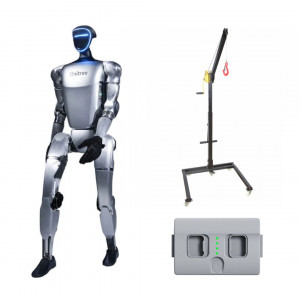
- humanoid robot Unitree G1 Edu Pro A-U9;
- two three-fingered Unitree Dex3-1 hands with force control, without tactile sensor matrices;
- quick-release battery with a capacity of 9000 mAh;
- 54 V, 5 A charger;
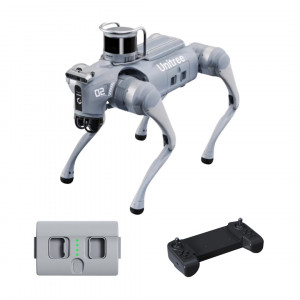
- manual controller.
The final delivery package should be clarified when placing an order.
Technical Specifications of Unitree G1 Edu Pro A-U9
| Specification | Value |
| Dimensions in working position | 1320 × 450 × 200 mm |
| Dimensions in folded position | 690 × 450 × 300 mm |
| Weight with battery | ~35 kg |
| Total number of degrees of freedom | 37 |
| Degrees of freedom of one leg | 6 |
| Degrees of freedom of the body | 1 |
| Degrees of freedom of one arm without hand | 5 |
| Hands | 2 × Unitree Dex3-1 |
| Type of hands | Three-fingered, with force control |
| Degrees of freedom of one hand | 7 active |
| Thumb | 3 active degrees of freedom |
| Index finger | 2 active degrees of freedom |
| Middle finger | 2 active degrees of freedom |
| Tactile sensor matrices of hands | Not included in A-U9 configuration |
| Output joint bearings | Industrial cross-roller |
| Type of joint motors | Synchronous motors with permanent magnets and internal rotor |
| Maximum torque of knee drive | 120 N·m |
| Maximum load on one arm | ~3 kg |
| Total length of thigh and shin | 0.6 m |
| Arm length | ~0.45 m |
| Body movement range | Z ±155° |
| Knee joint movement range | 0–165° |
| Hip joint movement range | P ±154°, R from −30° to +170°, Y ±158° |
| Cable routing inside joints | Yes |
| Joint encoders | Dual |
| Cooling system | Local air cooling |
| Power supply | Lithium battery with 13 serially connected cell groups |
| Basic computing system | Octa-core high-performance processor |
| Perception system | Depth camera and 3D LiDAR |
| Microphones | Array of 4 microphones |
| Speaker | 5 W |
| Wireless connection | Wi-Fi 6, Bluetooth 5.2 |
| Computing module | Optional, not included in the basic package. Various models supported, including Orin |
| Battery | Quick-release |
| Battery capacity | 9000 mAh |
| Operating time | ~2 hours |
| Charger | 54 V, 5 A |
| Manual controller | Yes |
| Wireless software updates | Yes |
| Custom development | Supported |
| Warranty period | 18 months |
Actual operating time, arm load, and other parameters may depend on the installed configuration, limb position, and usage scenario.
Video Demonstrating Robot Capabilities
Order Unitree G1 Edu Pro A-U9 for Educational and Research Projects
You can buy the Unitree G1 Edu Pro A-U9 humanoid robot in Ukraine on our website. Our specialists will help clarify the configuration, package contents, and requirements for additional computing equipment. To get a price list or order the Unitree G1 Edu Pro A-U9 with delivery across Ukraine, please contact our managers.