We use cookies and other tracking technologies to improve the website, personalize content, and analyze traffic. You can adjust your settings in the settings.
Necessary cookies enable core functionality of the website. Without these cookies the website can not function properly.
Statistic cookies help website owners to understand how visitors interact with websites by collecting and reporting information anonymously.
A set of cookies to collect information and report about website usage statistics without personally identifying individual visitors to Google.
Marketing cookies store user data and behavior information, which allows advertising services to target more audience groups.
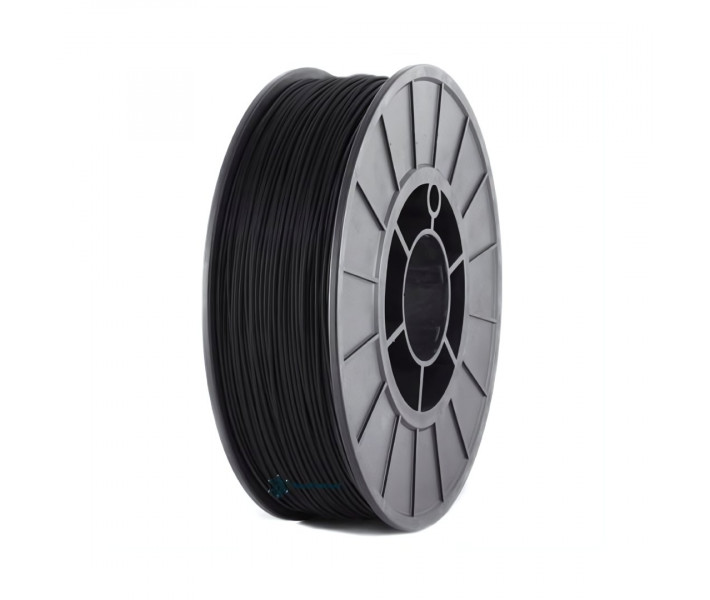
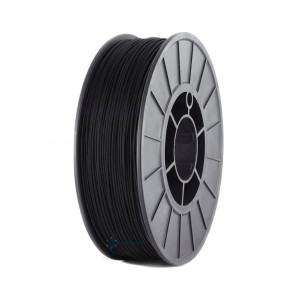
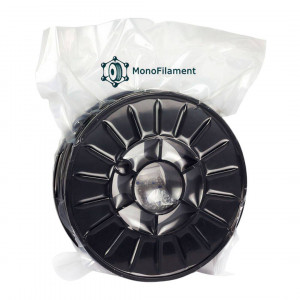
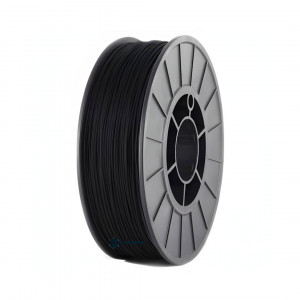
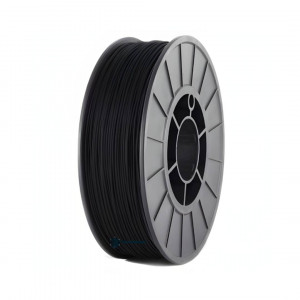
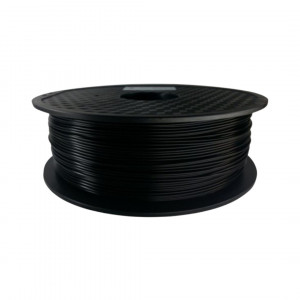
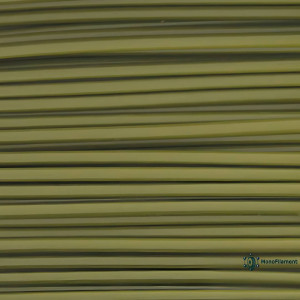
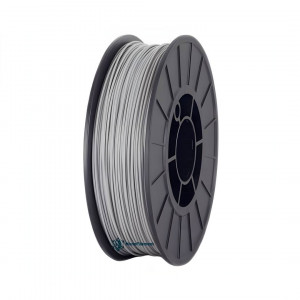
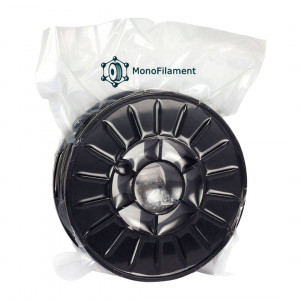
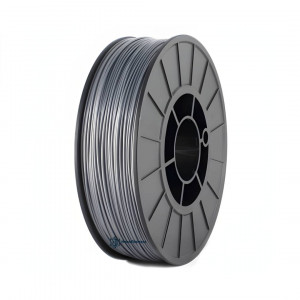
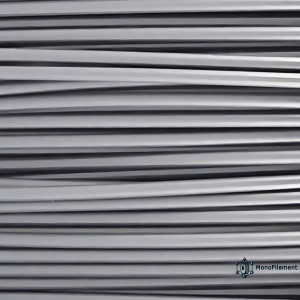
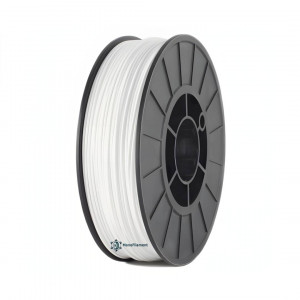
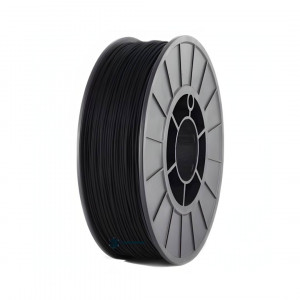
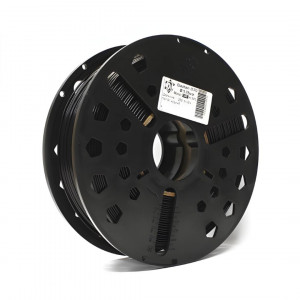
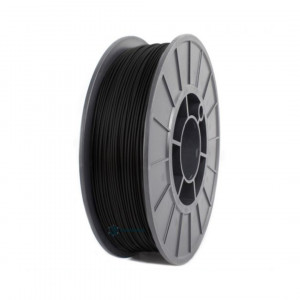
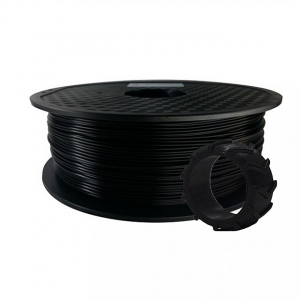
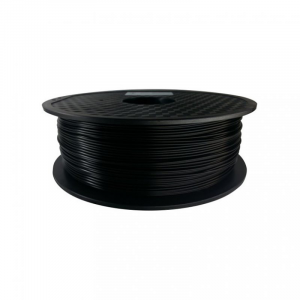
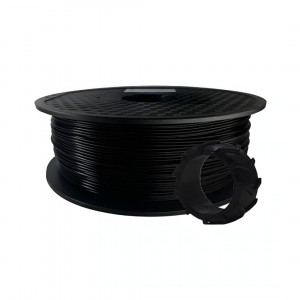
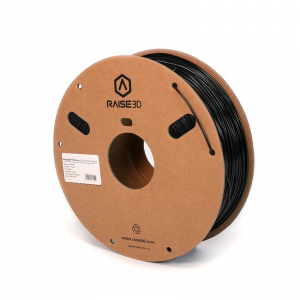
TPU 80A Monofilament Black Filament for flexible parts
TPU filament 80A MonoFilament is a flexible and wear-resistant plastic for 3D printing elastic parts. With a Shore hardness of 80A, this filament combines high elasticity with excellent layer adhesion, ensuring stable printing of dampers, seals, and protective covers. Finished products withstand repeated bending, impact loads, and exposure to lubricants, making this filament an optimal choice for engineering and household tasks.
Main Advantages of TPU 80A Plastic from MonoFilament
Wear and abrasion resistance. It has protection against mechanical abrasion, significantly extending the service life of parts under friction conditions.
Chemical resistance. It does not degrade under the influence of technical fats, lubricants, fuels, and most solvents.
Wide operating temperature range. Finished parts made from TPU 80A retain their working characteristics at temperatures from -40 °C to +140 °C.
Aesthetics and printing comfort. The filament has a smooth, glossy texture that is transferred to the finished product, and the printing process itself is comfortable and almost odorless.
Application Options
TPU 80A is one of the most flexible materials in the TPU MonoFilament range and is suitable for 3D printing parts that need to withstand constant bending, vibrations, and deformations:
Automotive and technical elements: seals, dampers, anti-vibration inserts, flexible couplings, and protective pads;
Moving and elastic mechanisms: drive belts, rollers, flexible connections, and parts working under load;
Protective products and accessories: cases, cushioning elements, housings, and soft protective components for electronics and tools;
Sports and household products: shoe elements, elastic fasteners, flexible clamps, and functional parts with high abrasion resistance.
Technical Specifications
For stable results, it is recommended to print TPU 80A at a speed of 20–30 mm/s and use a Direct extruder for even material feeding. For large or complex models, it is advisable to use 3D printers with a closed chamber, which helps ensure more stable cooling of the product.
3D Printing Settings
Parameter
Value
Printing Technology
FDM
Printer Type
Open / Closed
Extruder Temperature
225–245 °C
Printing Speed
20–30 mm/s
Platform Temperature
20–60 °C
Model Cooling
Required
Mechanical Characteristics
Parameter
Value
Density, g/cm³
1.20
Operating Temperature, °C
-40 – +140
Water Absorption, % 24h/23 °C
0.6
Physical Characteristics
Parameter
Value
Filament Diameter
1.75 ± 0.05 mm
Ovality
± 0.02 mm
Linear Mass, m/kg
325–340
Operating Conditions
Store the plastic properly. TPU is very hygroscopic (actively absorbs moisture from the air), so spools should be stored in vacuum containers. If the material has absorbed moisture, to avoid the appearance of bubbles, excessive stringing, and brittleness of parts, dry the filament for 12–16 hours at a temperature of 60–70 °C.
Protect the table surface during printing. TPU has extremely strong adhesion to glass and PEI platforms. We recommend using heat-resistant glue as a separating layer to avoid possible damage to the coating when removing the finished model. For stable platform fixation, it is sufficient to heat it to 20–60 °C.
For printing flexible parts, order TPU 80A from MonoFilament in the 3DDevice online store or call for consultation. We will help you choose the optimal filament for your tasks and suggest the correct printing parameters. We provide professional consultation and fast delivery across Ukraine.
Buy TPU Plastic 40D MonoFilament in UkraineTPU Plastic 40D MonoFilament is a flexible thermoplastic elastomer with a Shore hardness of 45D and an elon..
Elastan D100 Flexible Plastic MonoFilament 1 kg 1.75 mm BlackElastan D100 is a highly elastic structural plastic of medium hardness, developed for 3D ..
Flexible Filament TPU 90A MonoFilamentFlexible TPU filament 90A MonoFilament, designed for 3D printing of elastic and flexible products. This material..
TPU Plastic KLEMATPU KLEMA plastic is a high-quality thermoplastic elastomer with polyurethane. It is a special type of TPE and is itself a popular fi..
Elastan D100 Flexible Plastic MonoFilament 0.75 kg 1.75 mm BlueElastan D100 is a highly elastic structural plastic of medium hardness, developed for 3..
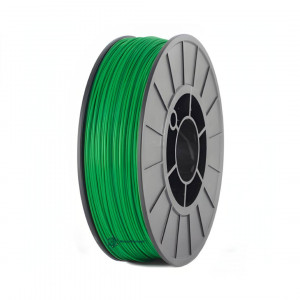
Elastan D100 Flexible Plastic MonoFilament 0.75 kg 1.75 mm GreenElastan D100 is a highly elastic structural plastic of medium hardness, developed for ..
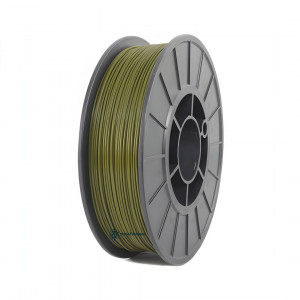
Elastan D100 Flexible Plastic MonoFilament 0.75 kg 1.75 mm KhakiElastan D100 is a highly elastic structural plastic of medium hardness, developed for ..
Elastan D100 Flexible Plastic MonoFilament 0.75 kg 1.75 mm MetallicElastan D100 is a highly elastic structural plastic of medium hardness, developed f..
Elastan D100 Flexible Plastic MonoFilament 0.75 kg 1.75 mm RedElastan D100 is a highly elastic structural plastic of medium hardness, developed for 3D..
Elastan D100 Flexible Plastic MonoFilament 0.75 kg 1.75 mm WhiteElastan D100 is a highly elastic structural plastic of medium hardness, developed for ..
Elastan D100 Flexible Plastic MonoFilament 0.75 kg 1.75 mm YellowElastan D100 is a highly elastic structural plastic of medium hardness, developed for..
TPU plastic KLEMA blackTPU plastic KLEMA black is a high-quality thermoplastic elastomer with polyurethane. It is a special type of TPE and is itself ..
TPU Plastic KLEMATPU KLEMA plastic is a high-quality thermoplastic elastomer with polyurethane. It is a special type of TPE and is itself a popular fi..
TPU 98A Plastic KLEMA 1 kg 1.75 mm BlackTPU 98A is a high-quality thermoplastic elastomer based on polyurethane, which is a popular choice for 3D prin..
Buy TPU Plastic 40D MonoFilament in UkraineTPU Plastic 40D MonoFilament is a flexible thermoplastic elastomer with a Shore hardness of 45D and an elon..
Buy TPU Plastic 40D MonoFilament in UkraineTPU Plastic 40D MonoFilament is a flexible thermoplastic elastomer with a Shore hardness of 45D and an elon..
Buy TPU Plastic 40D MonoFilament in UkraineTPU Plastic 40D MonoFilament is a flexible thermoplastic elastomer with a Shore hardness of 45D and an elon..
Buy TPU Plastic 40D MonoFilament in UkraineTPU Plastic 40D MonoFilament is a flexible thermoplastic elastomer with a Shore hardness of 45D and an elon..
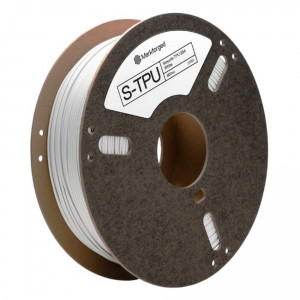
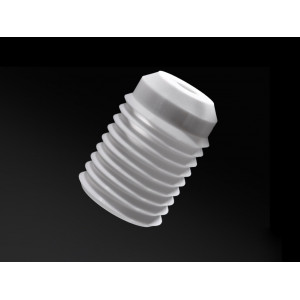
Markforged Smooth TPU 95A White: for 3D Printing Functional Parts
The filament Markforged Smooth TPU 95A White is a high-quality thermoplastic polyure..
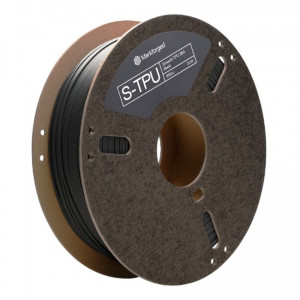
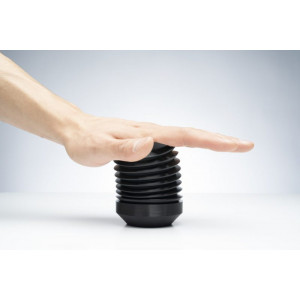
Flexible Filament Smooth TPU 95A Black for 3D Printing
The Markforged Smooth TPU 95A Black 800cc filament is a revolutionary material that provides ne..