We use cookies and other tracking technologies to improve the website, personalize content, and analyze traffic. You can adjust your settings in the settings.
Necessary cookies enable core functionality of the website. Without these cookies the website can not function properly.
Statistic cookies help website owners to understand how visitors interact with websites by collecting and reporting information anonymously.
A set of cookies to collect information and report about website usage statistics without personally identifying individual visitors to Google.
Marketing cookies store user data and behavior information, which allows advertising services to target more audience groups.
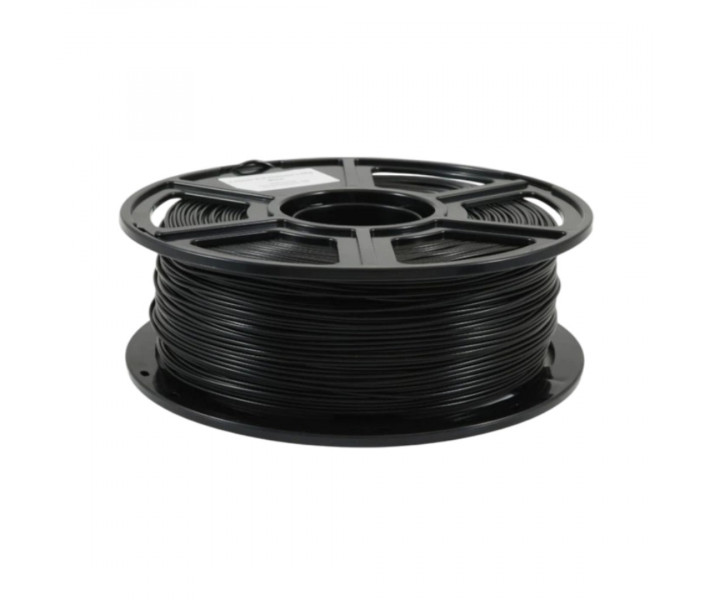
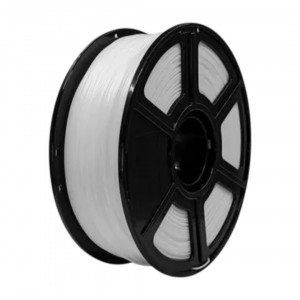
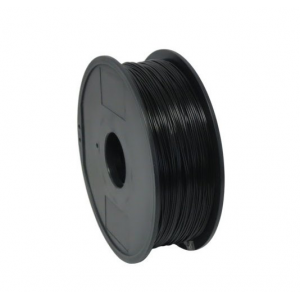
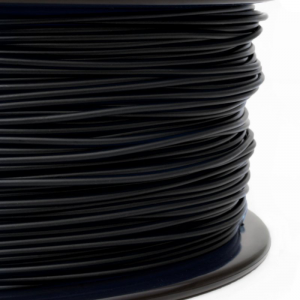
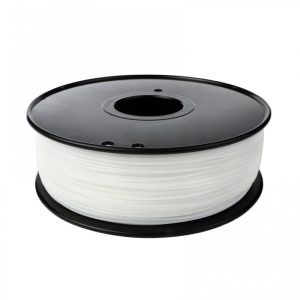
HIPS Plastic Flashforge for Prototypes, Models, and Support Structures
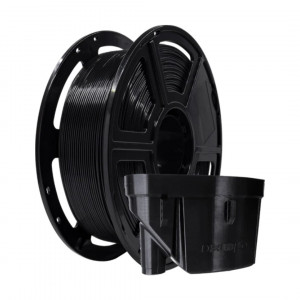
HIPS Plastic Flashforge 1.75 mm 1 kg Black is an HIPS filament for FFF 3D printing of products, prototypes, models, and support structures, with high impact resistance, moderate thermal resistance, density of 1.04–1.06 g/cm³, and solubility in limonene. The material is suitable for tasks requiring a combination of stable geometry, moderate weight, and the ability to remove supports without mechanical breakage.
Material Advantages
withstands short-term impact loads better than brittle materials for basic printing;
allows printing of rigid products with moderate weight;
maintains geometry under moderate thermal load;
can be used for support structures that are removed by dissolving in limonene;
suitable for models with complex geometry where mechanical removal of supports is inconvenient.
Mechanical and Operational Properties
HIPS Flashforge is based on HIPS 1180. The material density is 1.04–1.06 g/cm³, so finished products have moderate weight without transitioning to foamed or specialized lightweight materials.
Tensile strength in the X–Y direction is 28.5–29.5 MPa, modulus of elasticity is 1500–1650 MPa, and flexural strength is 46.5–49 MPa. This combination of parameters allows for printing rigid products that maintain their shape under normal mechanical load.
Izod impact strength is 7–8 kJ/m². This indicator is important for parts that may experience short-term impact loads or contact with other structural elements.
Heat deflection temperature HDT under a load of 0.455 MPa is 88°C. This allows the material to maintain geometry under moderate thermal load.
Water absorption after 24 hours at a temperature of 23°C is 1%, so the condition of the filament before printing affects extrusion stability and surface quality.
3D Printing Modes
HIPS Flashforge is printed at a nozzle temperature of 220–240°C. A value of 230°C can be used as a starting point for profile adjustment, after which the temperature is adjusted depending on the printer, material feed rate, and interlayer adhesion quality.
The platform should be heated within 80–110°C. A heated work surface helps reduce the risk of base deformation and first layer delamination, which is especially important for materials with thermal shrinkage.
A nozzle of 0.4 or 0.6 mm can be used for printing. A 0.4 mm nozzle is suitable as a basic option for standard tasks, while 0.6 mm may be appropriate for larger products or tasks where productivity is more important than fine detail.
Layer height of 0.12–0.3 mm allows for adjusting the balance between detail and manufacturing speed. A smaller layer height is suitable for a more precise surface, while a larger one is for faster printing of simpler or larger models.
Cooling within 0–50% should be adjusted depending on the model's geometry. Lower cooling helps maintain layer stability, and partial cooling can be useful for small elements or overhanging areas.
Drying and Storage
The filament is recommended to be dried before use at a temperature of 80°C for at least 5 hours in a drying cabinet with hot dry air supply.
After opening the packaging, the filament should be stored in airtight conditions, protecting it from moisture, dust, and other contaminants. A partially used spool should be tightly closed again or stored in a dry container to maintain stable material quality.
Post-processing
HIPS dissolves in limonene. This property can be used when printing models with support structures that need to be removed without mechanical breakage.
This approach is useful for geometries with internal cavities, overhangs, or hard-to-reach areas where conventional support removal may damage the surface or small elements of the model.
Compatibility
The material is intended for FFF 3D printing. For stable operation, the equipment must support a nozzle temperature of 220–240°C, platform heating to 80–110°C, and work with the appropriate platform surface.
As a working surface, tempered glass, BuildTak, or a carbon fiber plate can be used.
Applications
HIPS Flashforge can be used for:
prototypes of casing elements, housings, and outer panels;
demonstration models and visual mock-ups;
test samples for checking shape, fit, and dimensions;
rigid support parts with moderate mechanical load;
elements that may experience short-term impact loads;
products where a combination of moderate weight and stable geometry is important;
models with complex geometry, internal cavities, or hard-to-reach areas;
support structures for ABS that need to be removed by dissolving in limonene.
Specifications
Parameter
Value
Material
HIPS 1180
Density
1.04–1.06 g/cm³
Melt Flow Rate MFR, 220°C / 5 kg
6–9 g/10 min
Water Absorption, 23°C / 24 hours
1%
Tensile Strength, X–Y
28.5–29.5 MPa
Elongation at Break, X–Y
6–6.5%
Modulus of Elasticity, X–Y
1500–1650 MPa
Flexural Strength, X–Y
46.5–49 MPa
Izod Impact Strength, X–Y
7–8 kJ/m²
Heat Deflection Temperature HDT, 0.455 MPa
88°C
Nozzle Temperature
220–240°C
Platform Temperature
80–110°C
Nozzle Diameter
0.4 / 0.6 mm, recommended 0.4 mm
Layer Height
0.12–0.3 mm
3D Printing Speed
40–60 mm/s
Travel Speed
60–120 mm/s
Cooling
0–50%
Retraction Length
1–3 mm
Retraction Speed
30–50 mm/s
Printing Environment Temperature
from room temperature to 40°C
Working Surface
tempered glass, BuildTak, carbon fiber plate
Drying Before Use
80°C, at least 5 hours
Buy HIPS Plastic Flashforge on Our Website
To get a consultation and find out if the plastic is suitable for your projects, contact our managers. We deliver across Ukraine.
HIPS Plastic Flashforge for Prototypes, Models, and Support StructuresHIPS Plastic Flashforge 1.75 mm 1 kg Black is an HIPS filament for FFF 3D printi..
Buy Flashforge Adventurer 5M Pro 3D PrinterIn the 3DDevice company store, you can buy the Flashforge Adventurer 5M Pro — a versatile 3D printer that c..
Buy Flashforge AD5X – 3D printer with continuous multi-color printing
Looking for a high-speed, precise, and user-friendly 3D printer that supports lo..
Flashforge Guider 3 Ultra Price in Ukraine
Introducing the high-speed professional 3D printer Flashforge Guider 3 Ultra, whose price maintains a good ..
Flashforge Creator 3 Pro 3D Printer
On this page you can purchase the Flashforge Creator 3 Pro 3D printer, which offers excellent value for money.
Thi..
Flashforge Creator 4-A — 3D Printing for Any Task
Flashforge Creator 4 is a versatile, adaptive, and productive 3D printer, designed for professional ..
Flashforge Creator 4-S - a powerful tool for production
The powerful and versatile high-temperature 3D printer Flashforge Creator 4 is ideal for a pro..
Flashforge Creator Pro 3D Printer
Introducing the new generation of Creator Pro 3D printers from Flashforge. This is an almost ideal option for home 3..
Flashforge Guider 3 3D Printer — Price in Ukraine
Introducing the new generation of industrial-level printers with a lightweight structure, the Flashf..
Professional 3D Printer Flashforge Guider II
Flashforge Guider II is a high-class device that combines reliability, excellent quality, and modern func..
Flashforge Guider IIS Large-Format 3D Printer
Professional 3D printer Flashforge Guider IIS with a large build volume of 280*250*300 mm.
This modifica..
Flashforge PETG Plastic for High-Speed 3D Printing of Functional PartsFlashforge PETG Plastic 1.75 mm 1 kg Black is a high-speed filament for FFF 3D p..
TPU 95A Flashforge Plastic for Flexible and Elastic PartsTPU 95A Flashforge Plastic 1.75 mm 1 kg Black is a flexible filament for printing of function..
HIPS Plastic KLEMA 1.75 mmHIPS plastic is also a water-soluble plastic, a strong polystyrene, dissolves in d-Limonene.Features:Excellent impact resist..
HIPS Plastic KLEMA 1.75 mmHIPS plastic is also a water-soluble plastic, strong polystyrene, dissolves in d-Limonene.Features:Excellent impact resistan..
Impact-resistant HIPS plastic for 3D printerImpact-resistant HIPS plastic polystyrene is widely used in a variety of fields due to its ease of use,low..
Buy HIPS Plastic from MonoFilamentYou need to buy HIPS plastic if you plan to actively use printed products under stress over 1 kV. This material can ..