

- Stock: In Stock
- Product code: 00-00015214

Unitree As2-W Edu Plus for Development and Autonomous Navigation
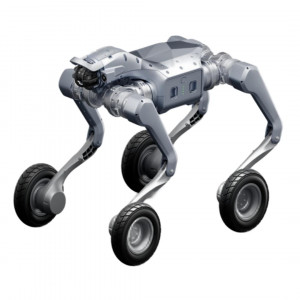
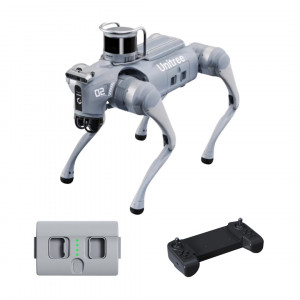
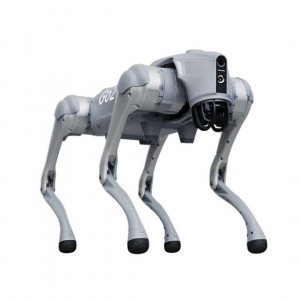
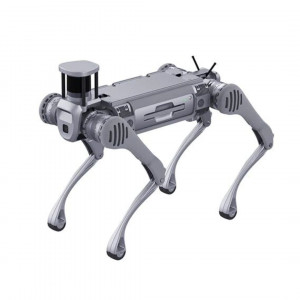
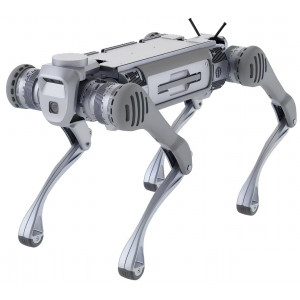
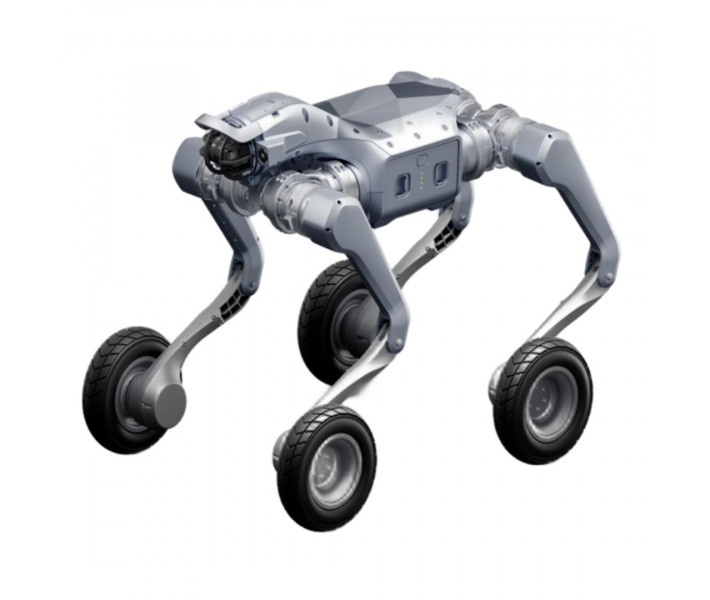
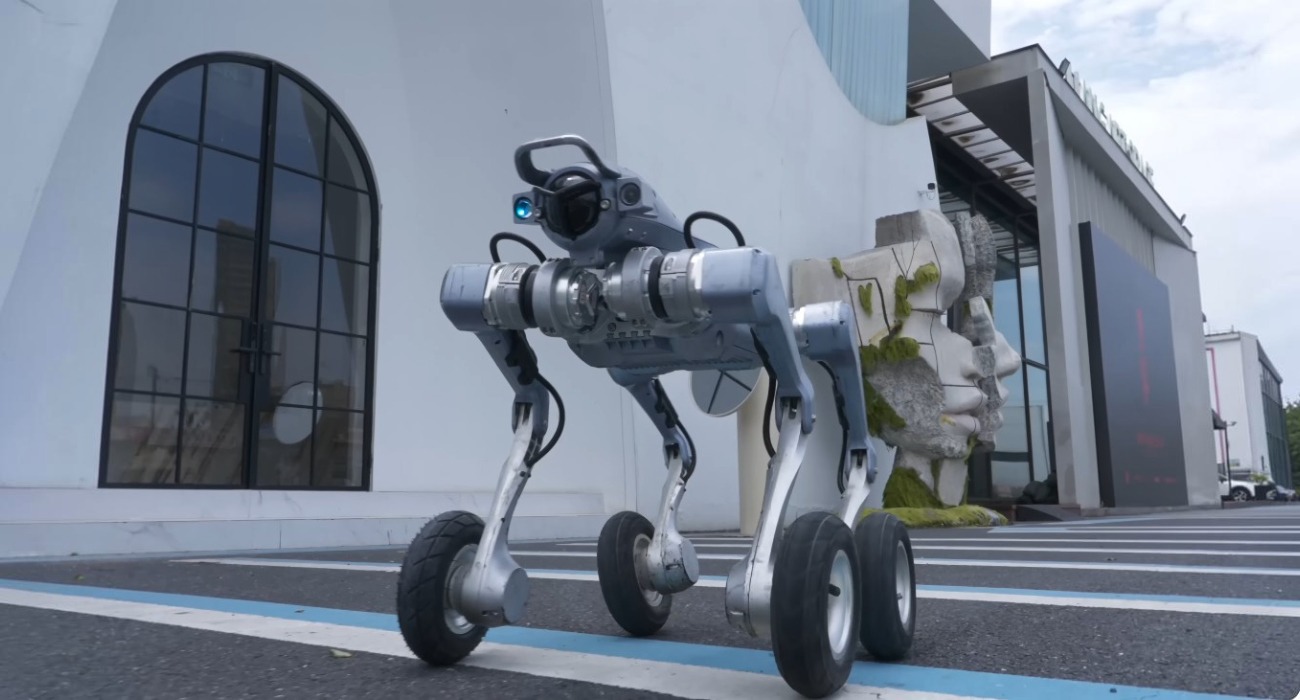
Unitree As2-W Edu Plus is a wheeled robot dog designed for research projects, educational labs, autonomous navigation, and the development of robotic systems. The Edu Plus version features a computational docking station with a performance of 100 TOPS, a depth camera, and a Livox Mid-360 LiDAR with navigation algorithms. The model also supports Secondary Development, simulation in Isaac Sim, and working with AI algorithms.
Advantages of Unitree As2-W Edu Plus
- High performance for complex computational tasks. The docking station with a performance of 100 TOPS provides additional resources for artificial intelligence algorithms, computer vision, sensor data processing, and autonomous navigation.
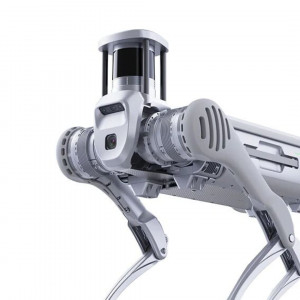
- Advanced navigation and mapping capabilities. The Edu Plus package includes the Livox Mid-360 LiDAR, which is used to obtain spatial data and operate navigation algorithms.
- More accurate distance measurement to objects. The depth camera transmits distance data and helps the system evaluate space and detect obstacles in front of the robot.
- Ability to create custom software solutions. The platform supports additional development of control, navigation, and data processing algorithms.
- Testing algorithms in a virtual environment. The robot models and simulation interfaces support NVIDIA Isaac Sim for scenario verification before launching on the real robot.
- Accurate perception of the surrounding space. The basic industrial 64–128-line LiDAR works together with other sensors to obtain spatial data.
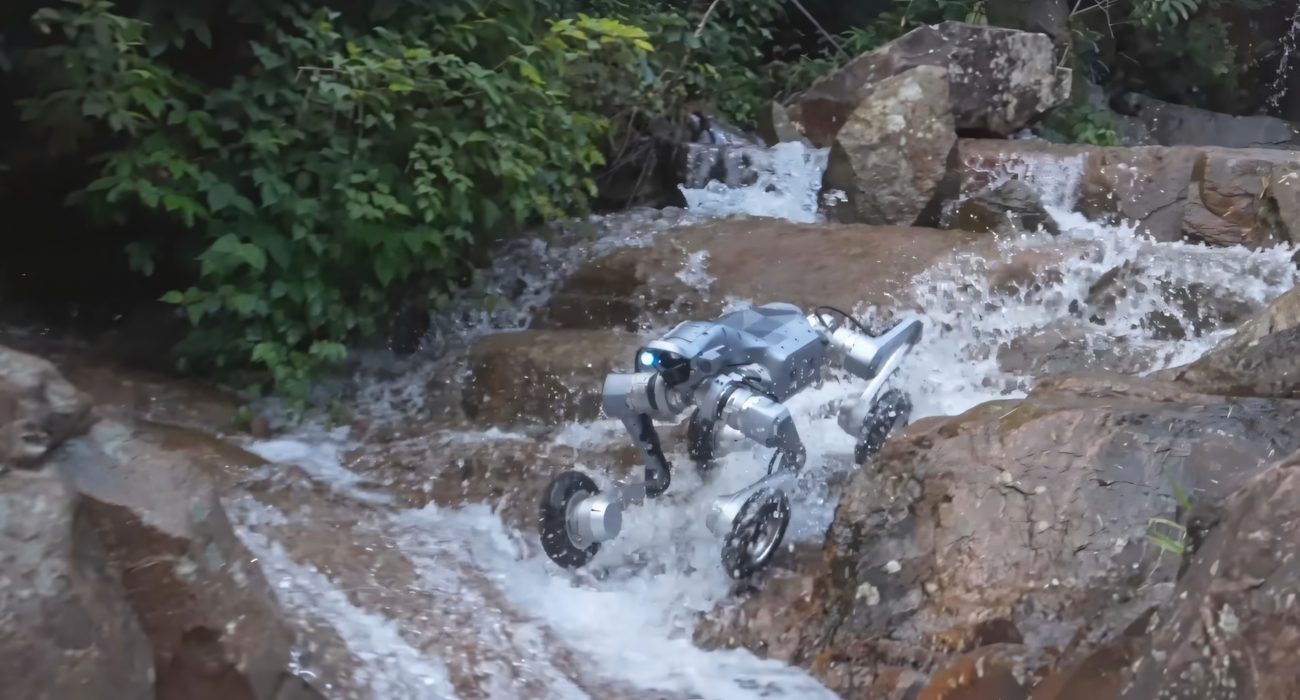
- High mobility on uneven terrain. 16 degrees of freedom allow controlling the position of the body and limbs during movement and overcoming obstacles.
- Fast movement in open areas. The operating speed is 0–3.7 m/s, and the peak can reach about 6 m/s.
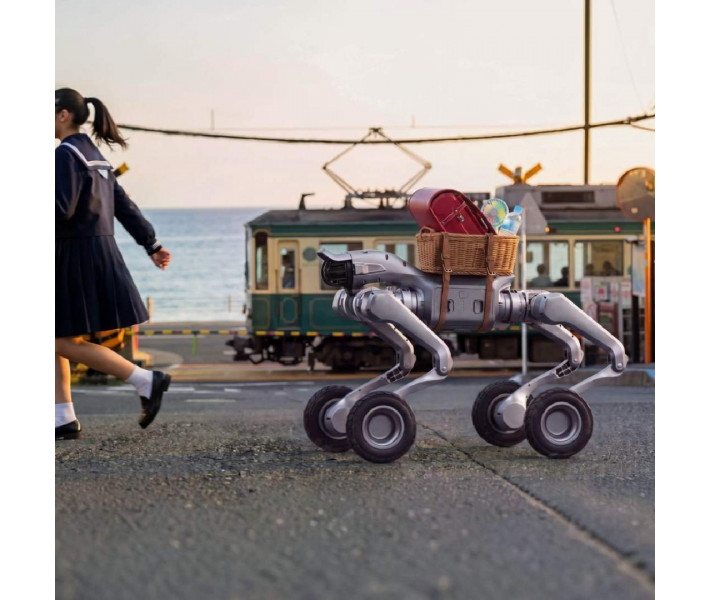
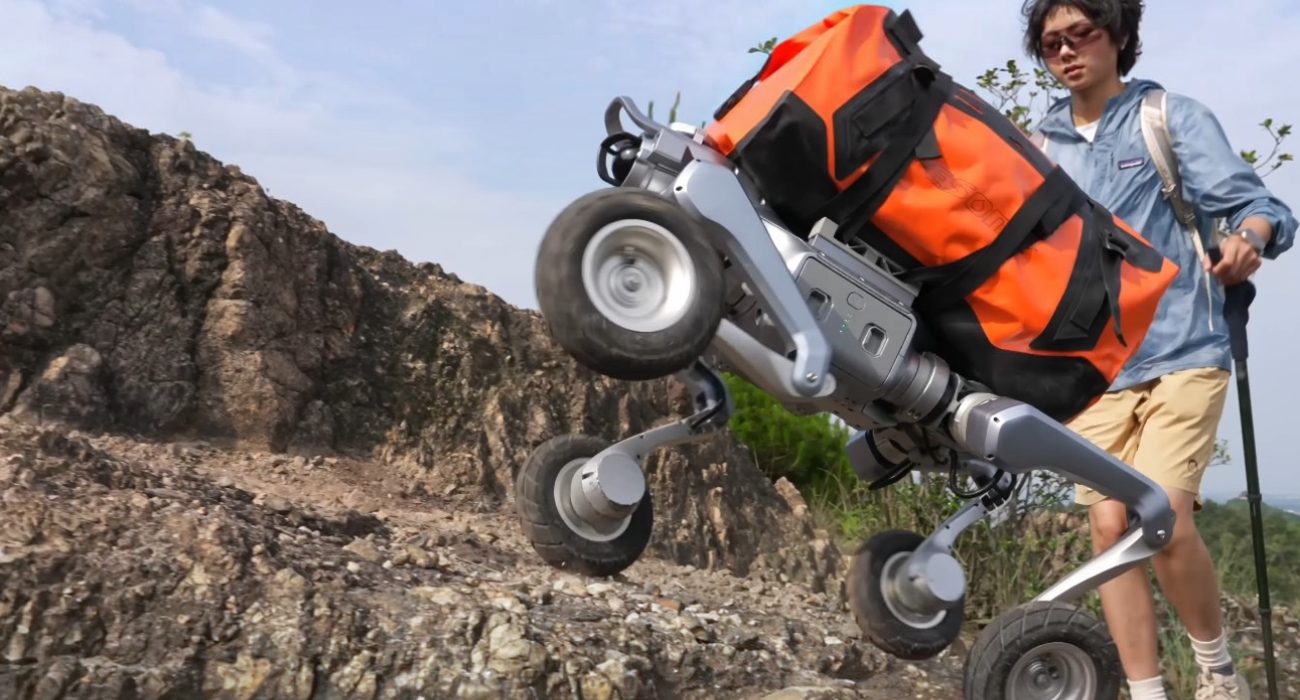
- Ability to install additional equipment. The permissible load during movement is about 16 kg, allowing the installation of sensors, cameras, and measuring modules.
- Long autonomous operation. The Long-Endurance battery with a capacity of 15000 mAh provides over 3 hours of operation without load and a range of approximately 30 km.
Computational Capabilities and Sensors
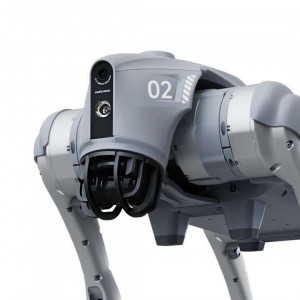
Unitree As2-W Edu Plus is equipped with a computational docking station with a performance of 100 TOPS, which complements the robot's basic 8-core processor. The additional computational resource can be used for processing LiDAR and camera data, SLAM, object recognition, image analysis, route planning, autonomous navigation, and working with artificial intelligence algorithms. The standard package includes a depth camera and Livox Mid-360 LiDAR with navigation algorithms. The sensors provide spatial data acquisition, robot positioning, map building, route planning, and obstacle detection.
Development and Simulation
The Edu Plus package supports the creation of custom software and robot control algorithms. Technical documentation, robot models, simulation interfaces, and technical support for working with artificial intelligence algorithms are provided for developers. The platform supports NVIDIA Isaac Sim and other simulation environments, allowing navigation, movement, and control algorithms to be tested before launching on the real robot. Edu Plus also includes all the features of the Edu Standard package.
Intelligent Features and Support
Unitree As2-W Edu Plus supports ISS 3.0 Intelligent Follow for automatic operator following and route adjustment during movement. The function can be used during test routes, data collection, and scenarios where the robot needs to follow a person without constant manual control.
Wheeled Design and 16 Degrees of Freedom
Unitree As2-W Edu Plus has 16 joint and wheel drives. The drives are equipped with low-inertia high-speed synchronous motors with permanent magnets and an internal rotor. The maximum torque is about 95 Nm. Dual encoders control the position of the drives, and local air cooling provides heat dissipation. Industrial cross-roller bearings are used in the joint units.
Mobility and Load Capacity
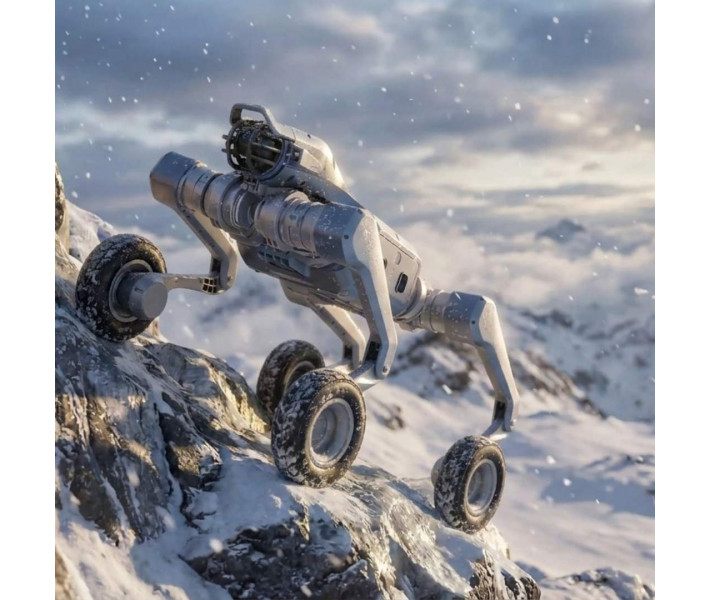
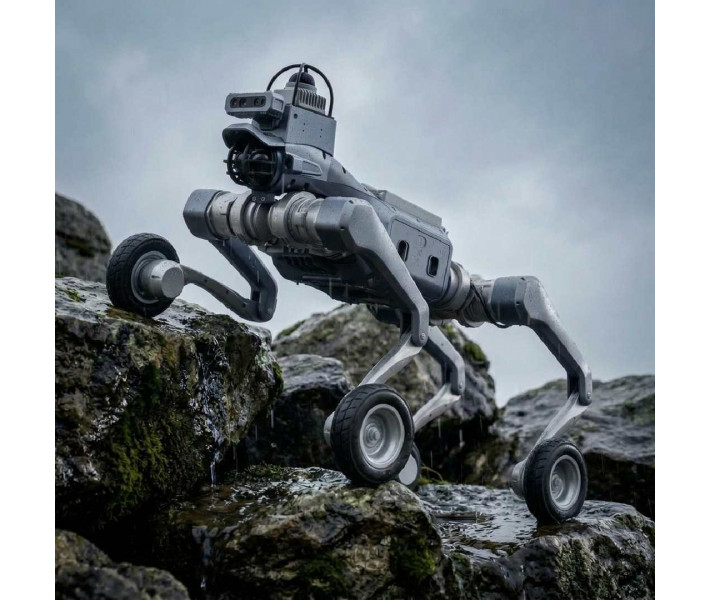
Unitree As2-W Edu Plus reaches an operating speed of up to 3.7 m/s, and a peak speed of about 6 m/s. The robot can overcome slopes up to 45°, steps up to 30 cm high, and obstacles approximately 0.4–0.8 m. The combination of wheels and jointed limbs provides fast movement on flat surfaces and adaptation to complex terrain.
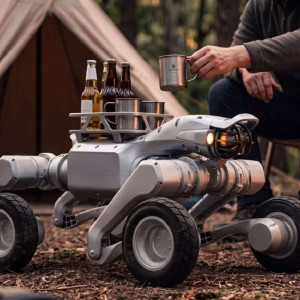
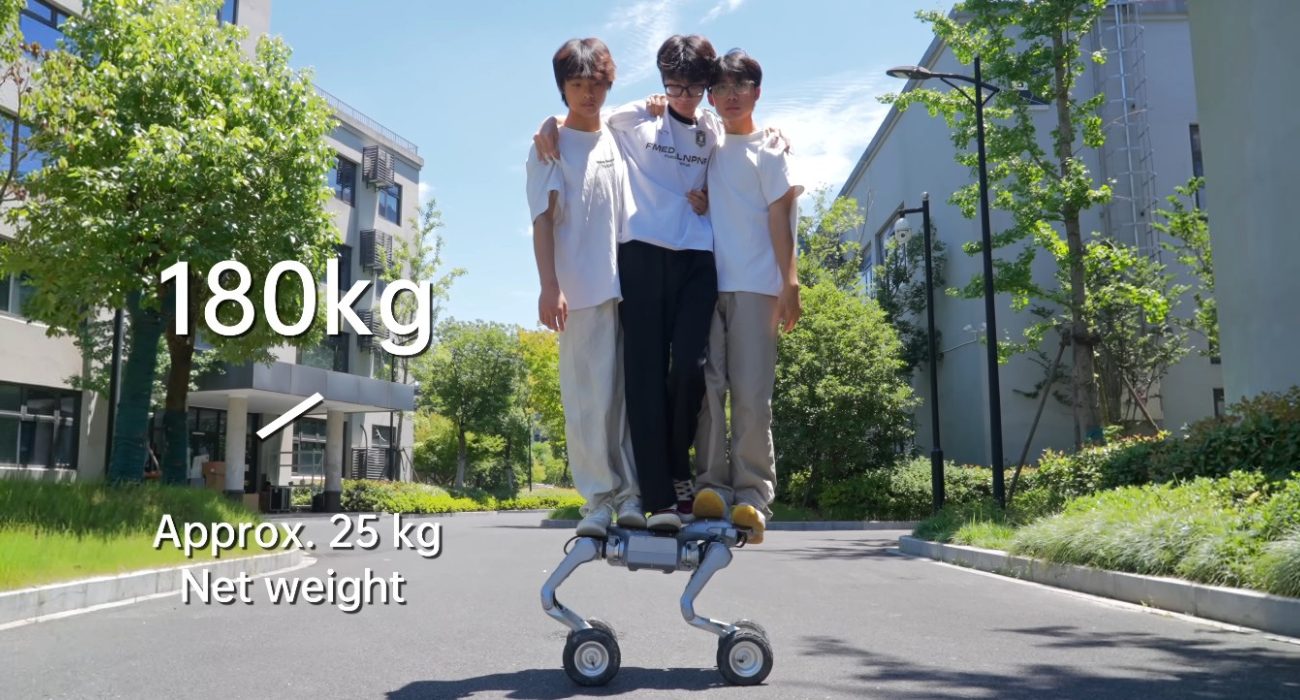
The permissible load during prolonged movement is about 16 kg, allowing the installation of additional sensors, cameras, and computational modules. In a stationary position, the robot can withstand a load of about 150 kg.
Power and Connectivity
Unitree As2-W Edu Plus is equipped with a Long-Endurance battery with a capacity of 15000 mAh. Without additional load, the robot operates for over 3 hours and covers approximately 30 km. A fast charger of 50.4 V / 7.4 A is used for charging. For connecting external equipment, Wi-Fi 6, Bluetooth 5.2, Gigabit Ethernet, SBUS, and BAT power output are supported.
Tasks Suitable for Unitree As2-W Edu Plus
- Autonomous navigation. Map building, SLAM, robot positioning, route planning, and obstacle avoidance.
- AI algorithm development. Testing models on a computational docking station with a performance of 100 TOPS.
- Computer vision. Processing information from the HD camera and depth camera.
- LiDAR navigation. Working with industrial LiDAR and Livox Mid-360 to obtain spatial data.
- R&D laboratory research. Verification of control, navigation, and robotic movement algorithms.
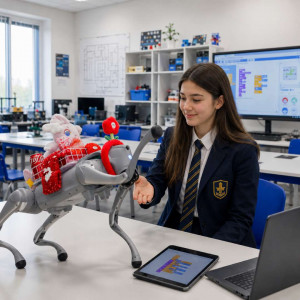
- Robotics training. Practical work with drives, sensors, mapping, and robot programming.
- Simulation of robotic systems. Program verification in NVIDIA Isaac Sim and other compatible simulators.
- Inspection tasks. Installation of additional measuring or sensor equipment within the permissible load.
What's Included in Unitree As2-W Edu Plus
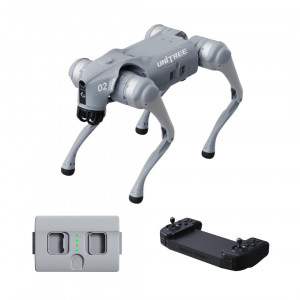
The Unitree As2-W Edu Plus package includes the features and equipment of the Edu Standard version, as well as additional Edu Plus components. The main configuration includes the Unitree As2-W EDU robot, a Long-Endurance battery with a capacity of 15000 mAh, a fast charger of 50.4 V / 7.4 A, a charging docking station, a computational docking station with a performance of 100 TOPS, a depth camera, Livox Mid-360 LiDAR, a remote control, a set of cables, as well as user and developer documentation.
Note: the actual package contents may depend on the delivery region and selected configuration. Please check the package contents with the manager before ordering.
Technical Specifications of Unitree As2-W Edu Plus
Movement Mechanics and Operational Capabilities
| Parameter | Value |
| Body materials | Aluminum alloy, high-strength engineering plastic |
| Degrees of freedom | 16 |
| Motor type | Low-inertia high-speed PMSM with internal rotor |
| Bearings | Industrial cross-roller |
| Feedback | Dual encoders |
| Maximum torque | About 95 Nm |
| Motion angles | Body: −45°…+45°; thigh: −115°…+200°; shank: −159°…−47° |
| Operating speed | 0–3.7 m/s |
| Peak speed | About 6 m/s |
| Maximum step height | Up to 30 cm |
| Obstacle height | About 0.4–0.8 m |
| Load | During movement: 16 kg; static: 150 kg |
| Operating temperature | From −20 °C to +50 °C |
| Standing dimensions | 721 × 493 × 521 mm |
| Folded dimensions | 768 × 602 × 211 mm |
| Wheels | Diameter 178 mm, width 50 mm |
| Weight with battery | About 25 kg |
Perception and Development Systems
| Parameter | Value |
| Processor | 8-core processor |
| Computational docking station | 100 TOPS |
| LiDAR | 64–128-line industrial LiDAR, Livox Mid-360 |
| Cameras | HD camera, depth camera ×1 |
| Audio and lighting | Microphone array, speaker, lighting |
| Navigation | Navigation algorithms, ISS 3.0 Intelligent Follow |
| Development | Support for custom development, robot models, simulation interfaces |
| Simulation | NVIDIA Isaac Sim and other compatible environments |
| Support | Technical support for artificial intelligence algorithms |
| Software features | UniStore, Smart OTA |
Power and Connectivity
| Parameter | Value |
| Battery | Lithium Long-Endurance |
| Capacity | 15000 mAh |
| Voltage | 36–50.4 V |
| Autonomy without load | Over 3 hours |
| Distance without load | About 30 km |
| Charger | 50.4 V / 7.4 A |
| Charging docking station | Included in the package |
| Wireless communication | Wi-Fi 6, Bluetooth 5.2 |
| Interfaces | Gigabit Ethernet, SBUS |
Practical Recommendations
- Control the weight of additional equipment. For prolonged movement, the total useful load should not exceed about 16 kg.
- Monitor the placement of modules. Cameras, LiDAR, and other equipment should be installed so as not to disturb the robot's balance or restrict joint movement.
- Clean optical sensors. Before starting, check the HD camera, Depth Camera, industrial LiDAR, and Livox Mid-360 for dust and dirt.
- Test algorithms in the simulator. New control and navigation algorithms should be preliminarily tested in Isaac Sim or another compatible simulator.
- Consider battery load. The operation of the computational docking station, multiple LiDARs, and additional modules may reduce the actual battery life.
- Check the route before autonomous launch. During initial navigation tests, monitor the operation of obstacle avoidance algorithms and the accuracy of sensor data.
Order Unitree As2-W Edu Plus
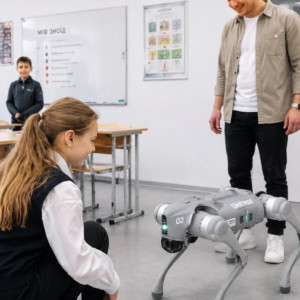
Unitree As2-W Edu Plus is aimed at university labs, research centers, R&D teams, and system integrators working with autonomous navigation, mapping, computer vision, and artificial intelligence algorithms. Our specialists will help select the configuration, place an order, and provide technical consultation on the robot's capabilities and integration options.