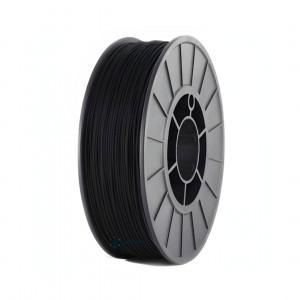
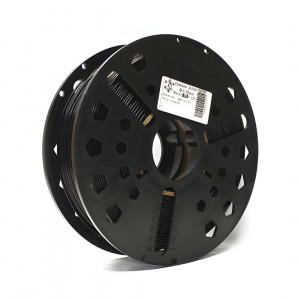
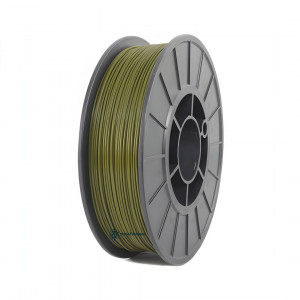
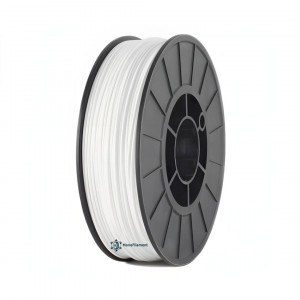
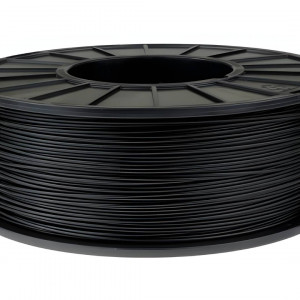
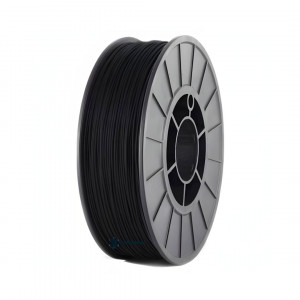
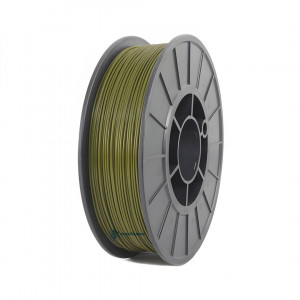
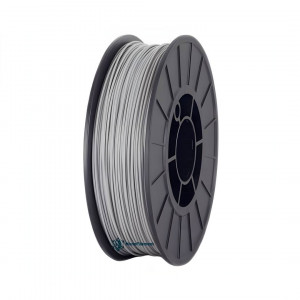
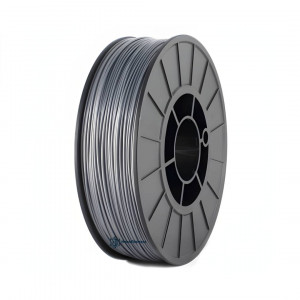
PLA Plastic Bambu Lab 1.75 mm Black for High-Speed 3D Printing
Bambu Lab PLA plastic is a modern filament specifically designed for use in next-generation high-speed FDM 3D printers. Thanks to its optimized chemical formula, the material ensures stable extrusion at speeds up to 258 mm/s without losing surface quality, detail, or model accuracy. Unlike standard PLA, Bambu Lab filament demonstrates improved interlayer adhesion, high rigidity, and increased impact toughness. This allows the filament to be used not only for rapid prototyping but also for manufacturing strong casing parts, decorative elements, organizers, and complex models. The polymer is based on polylactic acid (PLA), which practically does not emit odor during melting and is safe for use at home, in offices, or educational institutions.
Eco-Friendly and Economical Solution — Filament Without a Spool
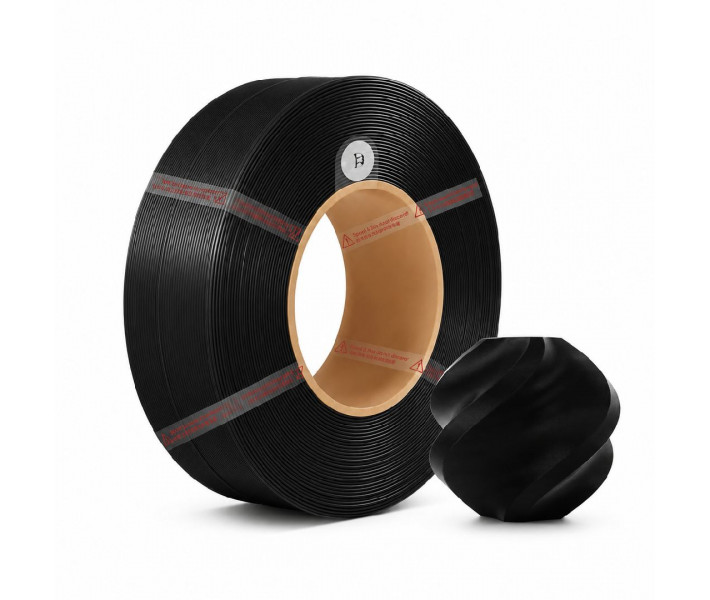
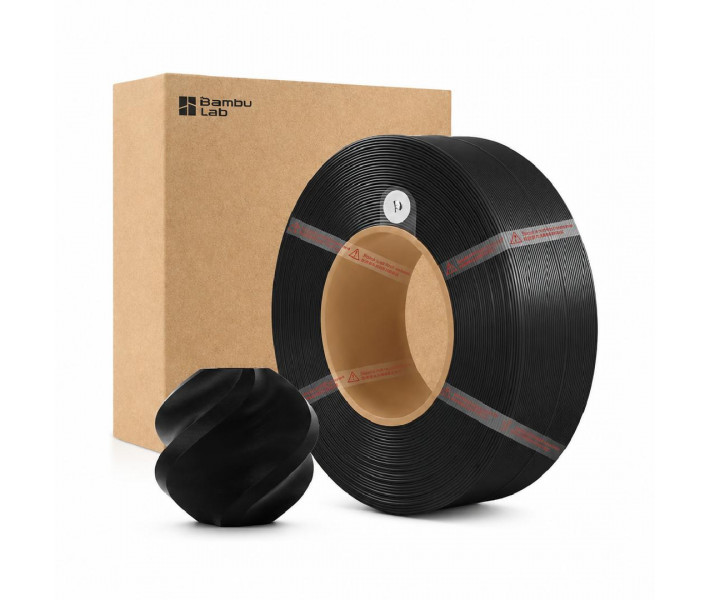
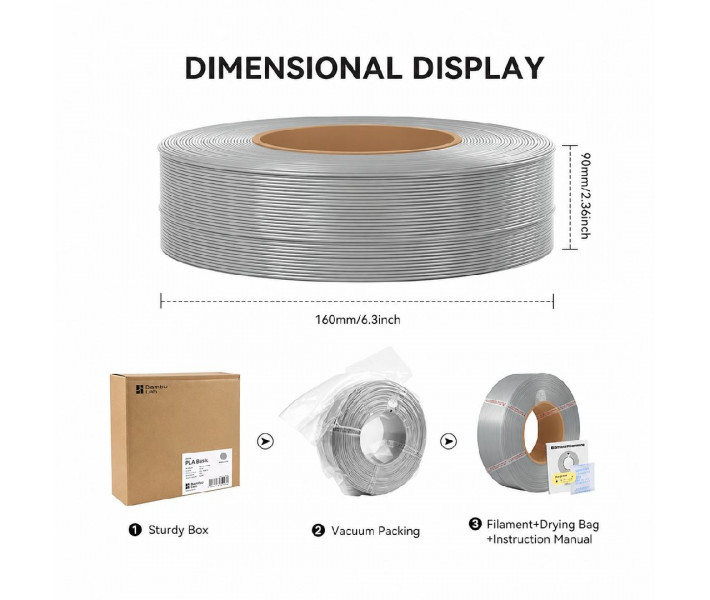
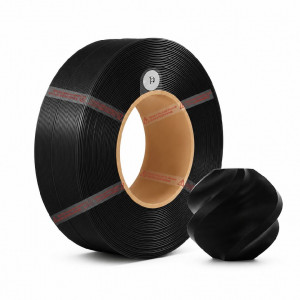
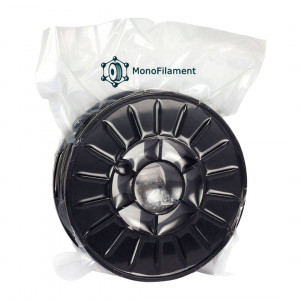
This item is supplied in a refill version — that is, in the form of a replaceable frameless filament coil. Important: You will need a branded Bambu Lab Reusable Spool or another compatible reusable spool of the appropriate type. The refill version concept helps reduce plastic waste, preserve the environment, and significantly optimize your consumable costs.
Note: The reusable spool is not included and must be purchased separately.
Main Advantages of Bambu Lab PLA Plastic
Optimized for high speed. Stable and high-quality printing at speeds up to 258 mm/s.
Increased Z-axis strength. Improved layer sintering prevents delamination of the finished product under load.
Minimal shrinkage. Ensures stable model geometry and allows confident printing of large objects without deformation.
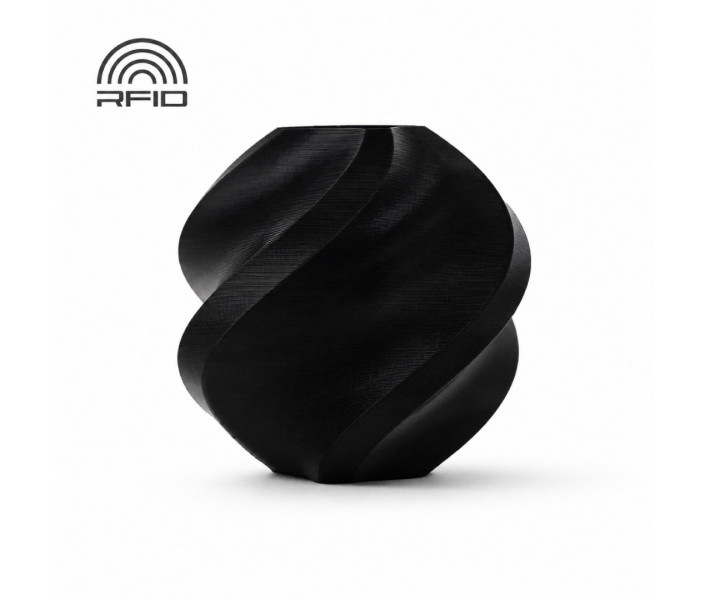
Integration with the AMS system. The presence of a built-in RFID tag ensures automatic detection of the type and color of the material in Bambu Lab 3D printers.
Chemical resistance. Finished products demonstrate resistance to most oils, fats, and household chemicals.
Comfort in work. The material is biodegradable and does not have a strong odor during printing. (certification can be added)
Compatibility and Application in 3D Printing
The material is fully optimized for the Bambu Lab printer ecosystem of the X1, P1, and A1 series. Thanks to radio frequency identification (RFID) technology, AMS and AMS Lite systems automatically read filament parameters and select appropriate printing profiles in Bambu Studio software. The filament also demonstrates stable results on other open and closed-type FDM 3D printers that support 1.75 mm filament diameter.
The recommended operating temperature of finished products —up to 50 °C.
Technical Specifications and Printing Setup Recommendations
Compatible surfaces: Cool Plate, High Temperature Plate, or Textured PEI Plate. To improve the adhesion of the first layer and easily remove the part, it is recommended to use special 3D printing glue.
Storage tip: In conditions of high humidity in the room, it is advisable to dry the filament in a dryer or thermal cabinet at a temperature of 50 °C for 8 hours before use.
Parameter
Value
Printing Technology
FDM
Type of 3D Printer
Open / Closed (with chamber ventilation)
Extruder Temperature
190–230 °C
Printing Speed
up to 258 mm/s
Platform Temperature
35–45 °C
Model Cooling
Enabled
Nozzle Diameter
0.2 / 0.4 / 0.6 / 0.8 mm
Retraction Speed
20–40 mm/s
Retraction Length
0.6–1.0 mm
Chamber Temperature
25–45 °C
Maximum Overhang Angle
55°
Maximum Bridge Length Without Supports
30 mm
Mechanical and Thermal Characteristics
Parameter
Value
Melting Temperature
160 °C
Glass Transition Temperature
60 °C
Vicat Softening Temperature
57 °C
HDT Thermal Deformation (1.8 MPa)
54 °C
HDT Thermal Deformation (0.45 MPa)
57 °C
Operating Temperature
up to ~50 °C
Tensile Strength (X-Y)
35 ± 4 MPa
Tensile Strength (Z)
31 ± 3 MPa
Tensile Modulus (X-Y)
2580 ± 220 MPa
Tensile Modulus (Z)
2060 ± 170 MPa
Flexural Strength (X-Y)
76 ± 5 MPa
Flexural Strength (Z)
59 ± 6 MPa
Elongation at Break (X-Y)
12.2 ± 1.8 %
Elongation at Break (Z)
7.5 ± 1.3 %
Charpy Impact Toughness (X-Y)
26.6 ± 2.8 kJ/m²
Moisture Absorption
0.43%
Physical Characteristics
Parameter
Value
Filament Diameter
1.75 mm
Diameter Tolerance
±0.03 mm
Density
1.24 g/cm³
Expert Tips from 3DDevice
Do Not Leave PLA Plastic in Hot Rooms
PLA plastic has relatively low heat resistance:
softening temperature — about 57 °C;
recommended operating temperature of products — up to 50 °C.
Therefore, finished models are not recommended to:
be left in a car in the heat;
be used near heat sources;
be exposed to direct sunlight.
Use Model Cooling
According to Bambu Lab recommendations, it is advisable to use active model cooling during printing for PLA plastic. This helps to:
improve the quality of overhangs;
reduce the likelihood of deformations;
achieve cleaner bridges and small elements.
Consider PLA Limitations
This filament provides good rigidity and detail but is not designed for:
high-temperature loads;
long-term outdoor use;
aggressive organic solvents;
impact loads at the level of technical plastics.
For such tasks, it is better to consider PETG, ABS, ASA, Nylon, or PC.
Place your order for Bambu Lab PLA plastic at the 3DDevice store online or contact our managers for professional consultation. We will help you choose the optimal printing settings and the best materials for the specific tasks of your project. Delivery is carried out throughout Ukraine.
PLA Plastic Bambu Lab 1.75 mm Black for High-Speed 3D PrintingBambu Lab PLA plastic is a modern filament specifically designed for use in next-generat..
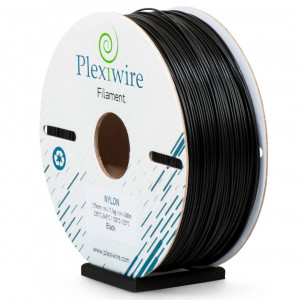
Plastic Nylon PlexiwireNYLON plastic Plexiwire 1.75 mm is a professional engineering filament designed for creating parts that operate under extreme l..
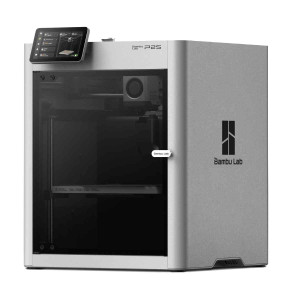
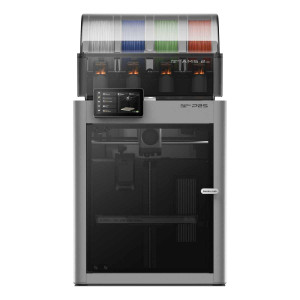
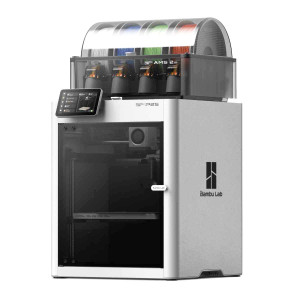
Bambu Lab P2S Combo 3D Printer – Multi-Color Printing Out of the Box!
The P2S Combo model includes the AMS module, which allows printing with differen..
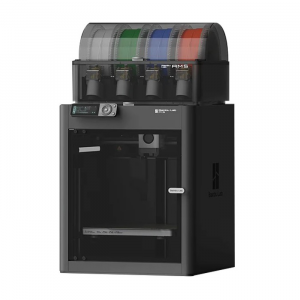
Bambu Lab P1S Combo 3D printer with AMS systemNew 3D printer Bambu Lab P1S Combo buy in Ukraine in the 3DDevice store. High-tech 3D printer with autom..
Bambu Lab H2D Multifunctional 3D PrinterThis is a basic model that is suitable for those who want a reliable and multifunctional device without spendi..
Bambu Lab H2D Pro – High-temperature 3D Printer with 2 Nozzles
The Bambu Lab H2D Pro 3D printer is a new, advanced model for precise printing with var..
Bambu Lab H2C Combo: 3D Printing Multicolor Parts in One LoadThe Bambu Lab H2C Combo 3D printer is the latest flagship in the H-series lineup. It offe..
Bambu Lab H2C Laser Full Combo 10W – Desktop Factory for 3D Printing, Engraving, and Cutting
Bambu Lab H2C Laser Full Combo 10W is a set including a 3..
Bambu Lab H2C Laser Full Combo 40W – Professional 3D Printer with Laser Module
The Bambu Lab H2C Laser Full Combo 40W 3D printer is a versatile profes..
Multifunctional 3D Printer Bambu Lab H2D ComboThe model with the built-in AMS automatic filament feeder is the solution for those who seek convenience..
Bambu Lab H2D 10W Multifunctional 3D Printer
This version expands the functionality of the previous model by integrating a 10W laser module. Now, in a..
Bambu Lab H2D 40W Multifunctional 3D Printer
The flagship model of the range, combining the most powerful features. In addition to the AMS system and ..
Elastan D100 Flexible Plastic MonoFilament 0.75 kg 1.75 mm BlackElastan D100 is a highly elastic structural plastic of medium hardness, developed for ..
Elastan D100 Flexible Plastic MonoFilament 0.75 kg 1.75 mm BlueElastan D100 is a highly elastic structural plastic of medium hardness, developed for 3..
Elastan D100 Flexible Plastic MonoFilament 0.75 kg 1.75 mm GreenElastan D100 is a highly elastic structural plastic of medium hardness, developed for ..
Elastan D100 Flexible Plastic MonoFilament 0.75 kg 1.75 mm KhakiElastan D100 is a highly elastic structural plastic of medium hardness, developed for ..
Elastan D100 Flexible Plastic MonoFilament 0.75 kg 1.75 mm MetallicElastan D100 is a highly elastic structural plastic of medium hardness, developed f..
Elastan D100 Flexible Plastic MonoFilament 0.75 kg 1.75 mm RedElastan D100 is a highly elastic structural plastic of medium hardness, developed for 3D..
Elastan D100 Flexible Plastic MonoFilament 0.75 kg 1.75 mm WhiteElastan D100 is a highly elastic structural plastic of medium hardness, developed for ..
Elastan D100 Flexible Plastic MonoFilament 0.75 kg 1.75 mm YellowElastan D100 is a highly elastic structural plastic of medium hardness, developed for..
Elastan D70 CCF flexible plastic MonoFilament 0.75 kg 1.75 mm Black
Elastan D70 CCF is a composite flexible plastic reinforced with carbon fiber. The ..
We use cookies and other tracking technologies to improve the website, personalize content, and analyze traffic. You can adjust your settings in the settings.
Necessary cookies enable core functionality of the website. Without these cookies the website can not function properly.
Statistic cookies help website owners to understand how visitors interact with websites by collecting and reporting information anonymously.
A set of cookies to collect information and report about website usage statistics without personally identifying individual visitors to Google.
Marketing cookies store user data and behavior information, which allows advertising services to target more audience groups.