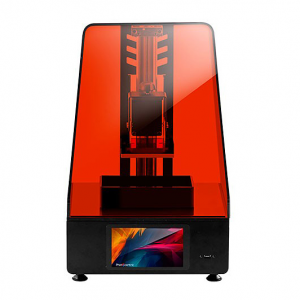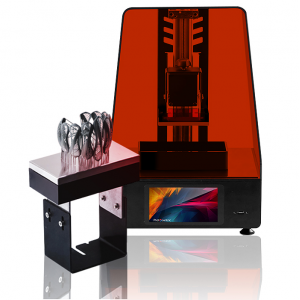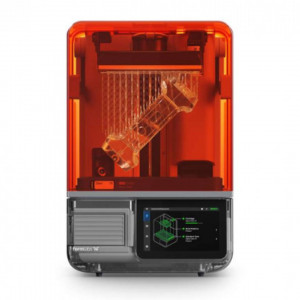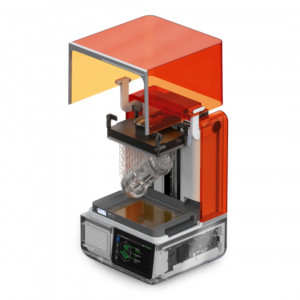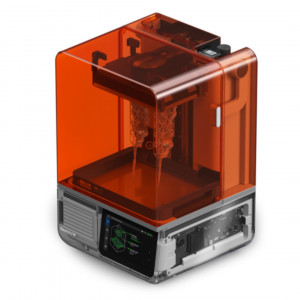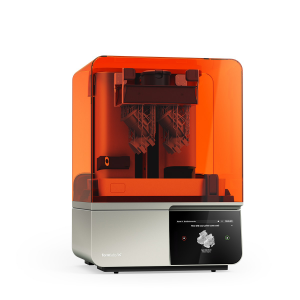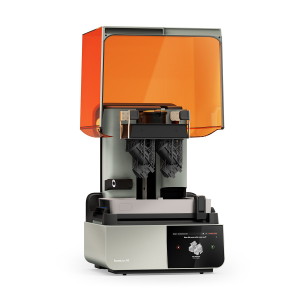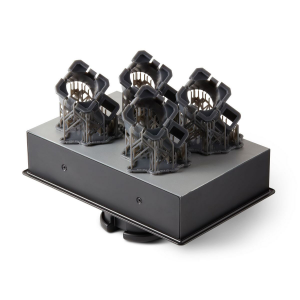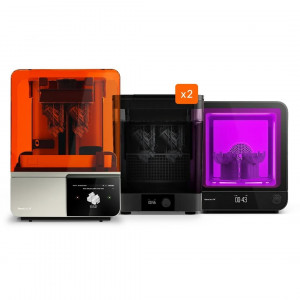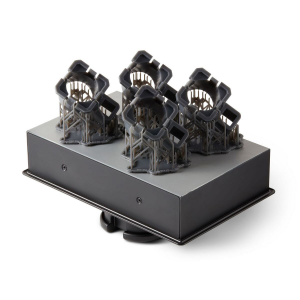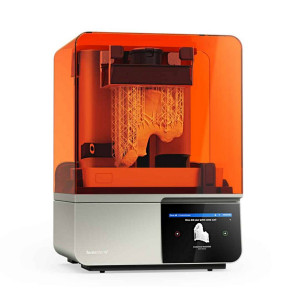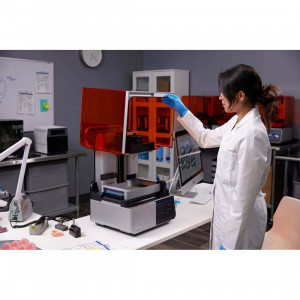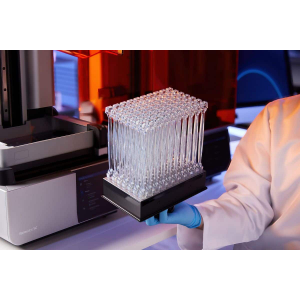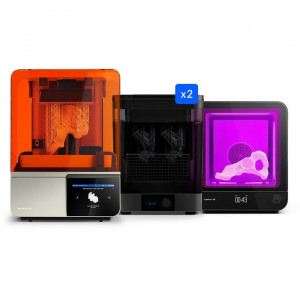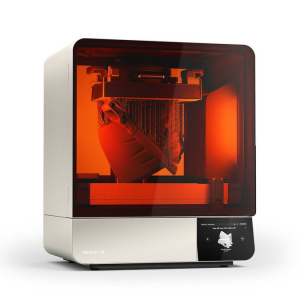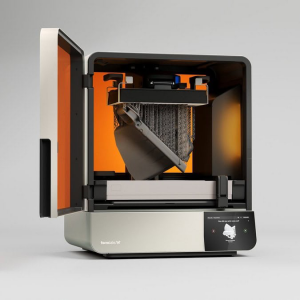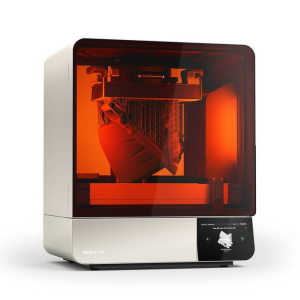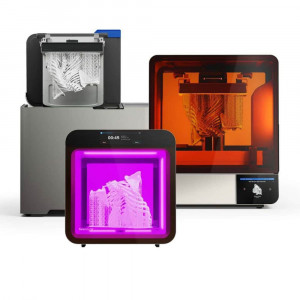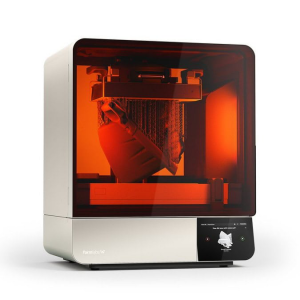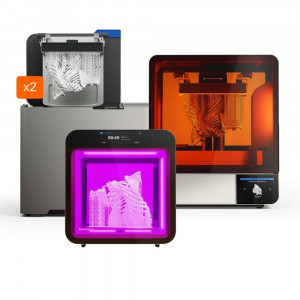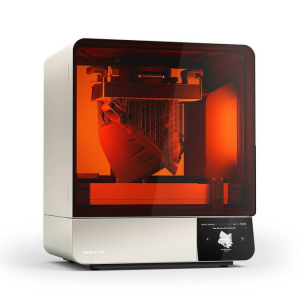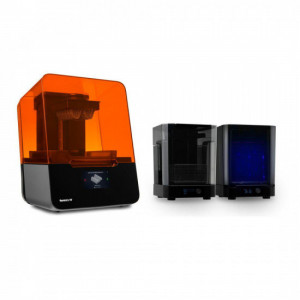
When choosing a photopolymer device, you should focus on three main resin curing technologies: classic Laser SLA, fast LCD/MSLA, and industrial DLP.
Each method has its own design features and advantages, which are important to consider before you order professional 3D printers:
1. Laser SLA (LFS) Technology
- Light Source: UV laser with galvanometric mirrors.
- Key Features and Benefits: Excellent line smoothness, crisp radiuses, and low peel force on Formlabs SLA hardware.
- Applications: High-precision engineering, healthcare, dentistry, and functional prototyping.
2. LCD / MSLA Technology
- Light Source: UV LED matrix + LCD masking screen.
- Key Features and Benefits: Simultaneous layer curing, fast print speeds, affordable hardware cost, and easy maintenance.
- Applications: Desktop hobby printing, basic layout prototyping, and rapid testing.
3. DLP Technology
- Light Source: Digital light projector (DMD chip).
- Key Features and Benefits: Exceptional light source lifespan (over 20,000 hours) and uniform accuracy across the entire build plate.
- Applications: Dental clinics and labs, serial parts production, and jewelry design.
For most commercial applications where dimensional stability, repeatability, and part strength are critical, laser printers featuring LFS technology are preferred. However, if fast production of small parts on a limited budget is your primary goal, it is more practical to consider LCD devices.