
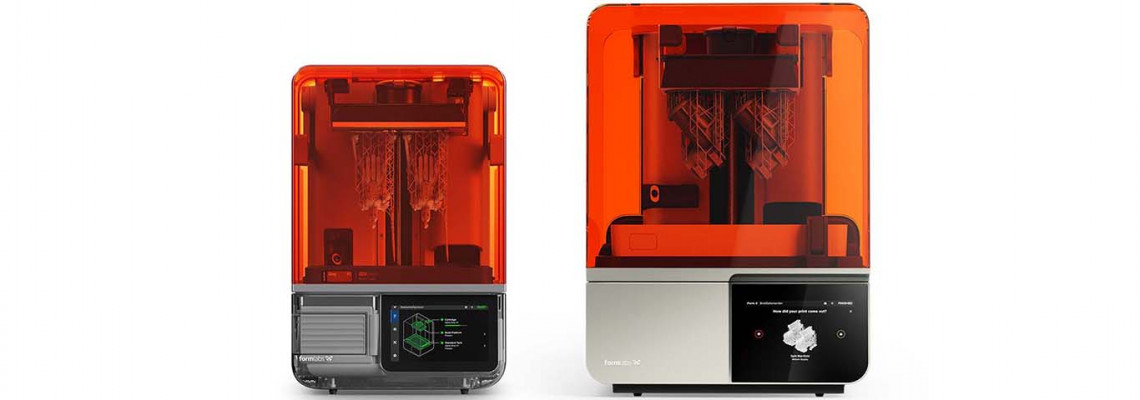
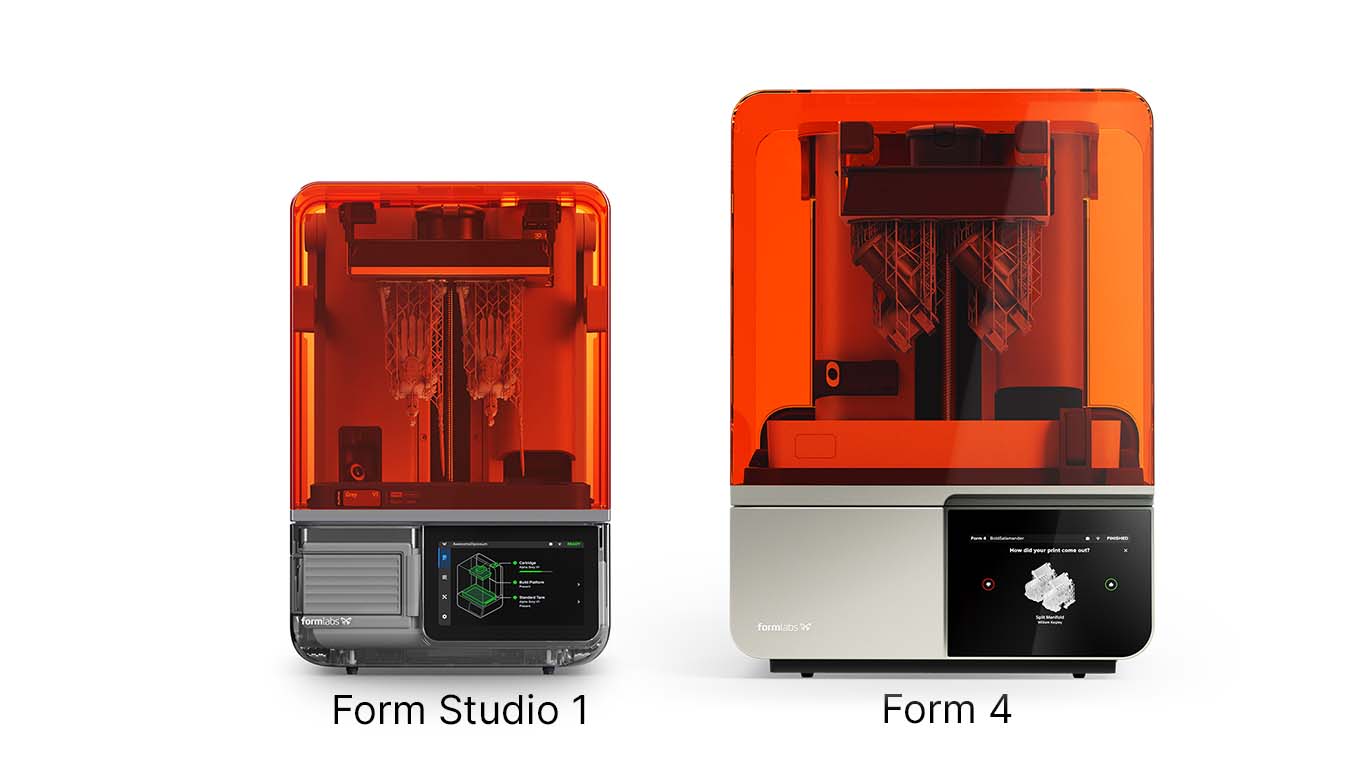
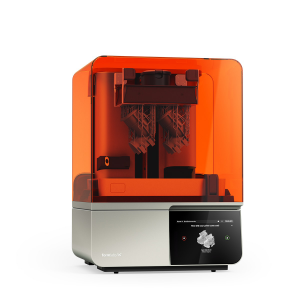
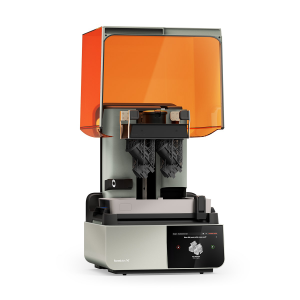
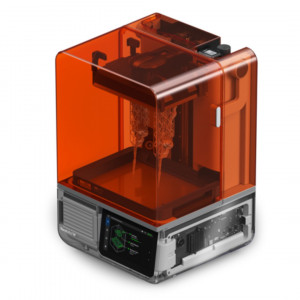
The resin 3D printing industry is undergoing a generational shift: traditional laser stereolithography (SLA) is being succeeded by ultra-fast masked exposure technologies (MSLA and LFD). Formlabs has expanded its product lineup to address two distinct segments: Form Studio 1 — an accessible, compact system for creators and designers, and Form 4 — an industrial-grade flagship built for engineering workflows and production manufacturing.
Below is an in-depth technical comparison covering hardware architecture, optical performance, print speed, material ecosystems, and primary use cases for both printers.
Core Architecture and Optical Engine
Both printers have moved away from galvanometer-driven laser scanning (seen in the Form 3/+ series) in favor of area-wide masked exposure. However, the optical design in each machine is engineered for different objectives.
- Form Studio 1 (MSLA): Features a custom optical system with a precision lens array and 28 high-power LEDs delivering a uniform, highly collimated 6 mW/cm² light field. The native pixel size is 35 µm with fine-tuned subpixel anti-aliasing. Paired with Release Texture V2 and a flexible film resin tank, it reduces peel forces to preserve fine surface details while maintaining an XY dimensional tolerance of ±0.15%.
- Form 4 (Low Force Display™ / LFD): Powered by next-generation LFD technology with the Light Processing Unit 4 (LPU 4) and a dedicated Backlight Unit. Pixel resolution is calibrated at 50 µm with hardware-tuned anti-aliasing. Form 4 sets an industrial benchmark for tight, predictable part tolerances across all scales:
- Features 1–30 mm: ±0.15% (lower limit: ±0.02 mm);
- Features 31–80 mm: ±0.2% (lower limit: ±0.06 mm);
- Features 81–150 mm: ±0.3% (lower limit: ±0.15 mm).
Technical Takeaway: Form Studio 1 delivers a finer native pixel size (35 µm vs. 50 µm on Form 4), making it exceptional for micro-textures, art models, and jewelry prototypes. Form 4 is designed for absolute dimensional repeatability and validated engineering tolerances across medium-to-large multi-part assemblies.
Technical Specifications
| Parameter | Form Studio 1 | Form 4 |
| Print Technology | Masked SLA (MSLA) | Low Force Display™ (LFD) |
| Build Volume (X × Y × Z) | 20.0 × 12.5 × 23.5 cm | 20.0 × 12.5 × 21.0 cm (5.25 L) |
| Maximum Part Length | Not specified (Z height: 23.5 cm) | 27.3 cm (rated diagonal) |
| Layer Thickness (Z) | 25–250 µm | From 25 µm |
| XY Resolution | 35 µm (native pixel) | 50 µm (with anti-aliasing) |
| Average Print Speed | 40 mm/hr (100 µm layer height) | 40 mm/hr (all resins; range 15–100 mm/hr) |
| Maximum Print Speed | 130 mm/hr (Alpha Fast Resin) | 100 mm/hr |
| Printer Dimensions (W × D × H) | 34.2 × 31.5 × 50.2 cm | 40.7 × 47.8 × 84.4 cm |
| Printer Weight | 14.3 kg | 18.3 kg |
| Resin Tank Lifetime | Film V2 (Alpha) / 75 000+ layers (Resin Tank Pro) | 75 000+ layers (~190 print runs) |
| Integrated Camera | Yes (Form Mobile monitoring) | Yes (5 MP, 2592 × 1944, timelapses) |
Despite having a more compact chassis (50.2 cm tall compared to the 84.4 cm vertical clearance required for Form 4), Form Studio 1 provides an extra 2.5 cm of vertical Z-travel. Form 4, with its heavier industrial chassis, supports heavier structural prints up to 27.3 cm along the diagonal.
Both printers outperform earlier laser systems by 2–5x, averaging around 40 mm/hr. When printing with Alpha Fast Resin, Form Studio 1 peaks at 130 mm/hr, while Form 4 consistently achieves up to 100 mm/hr across a much broader library of materials.
Materials: Office Safety vs. Heavy Engineering
The primary architectural differentiator between the two machines is material chemistry and optimization.
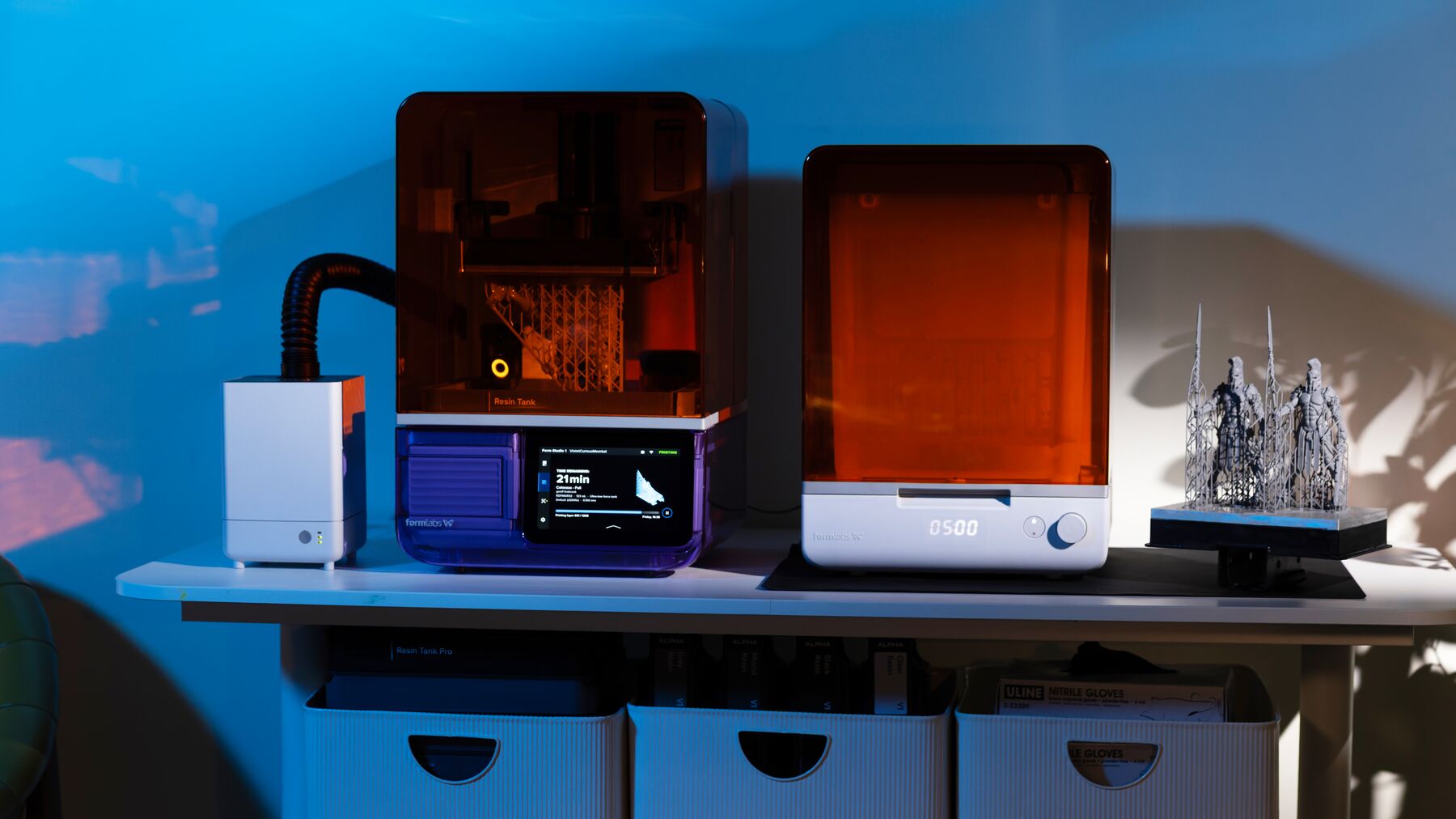
Form Studio 1: Safe, Low-Odor Office Workflows (Alpha Resins)
Form Studio 1 is engineered for open offices, creative studios, architectural firms, and classrooms:
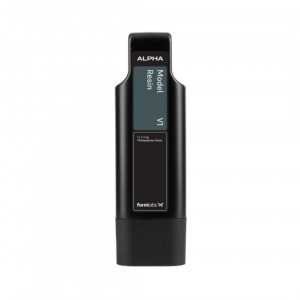
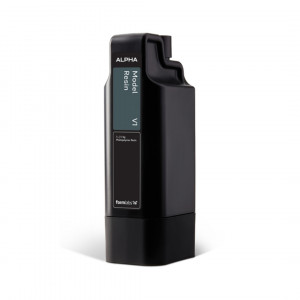
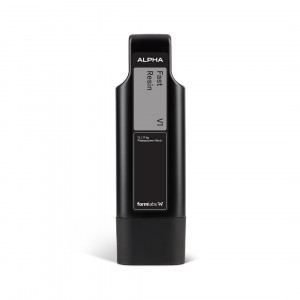
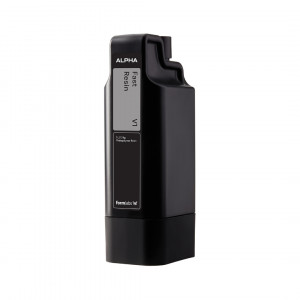
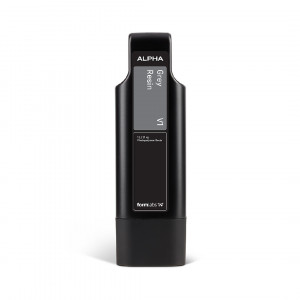
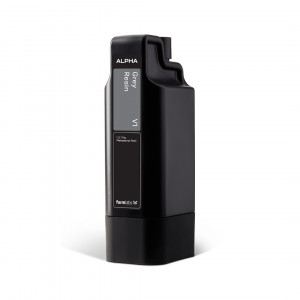
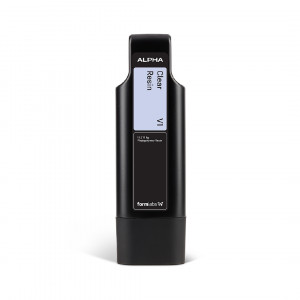
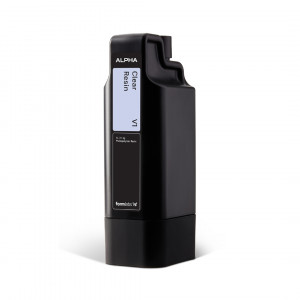
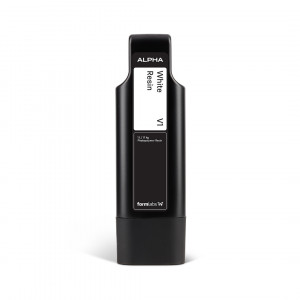
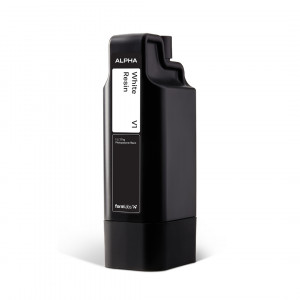
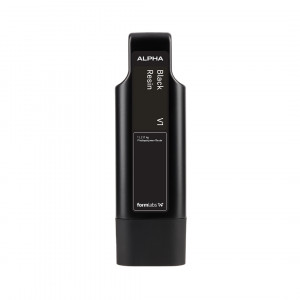
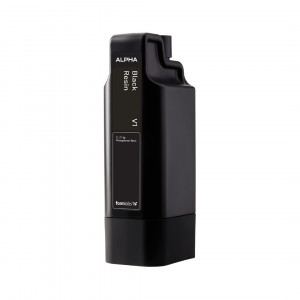
- Alpha Resins Family: Includes Alpha Model, Alpha Fast, Alpha Clear, as well as core shades (Black, Grey, White).
- Certified Safety: The first resins in the industry to achieve UL GREENGUARD Gold certification for low VOC emissions during printing (when paired with the VOC Extractor).
- Biocompatibility & Skin Contact: Uncured liquid resin is validated as non-skin-irritant per OECD 439, and post-processed parts meet ISO 10993 requirements for long-term skin contact (ideal for wearables).
- Open Platform: Supports third-party 405 nm resins with no additional licensing fees.
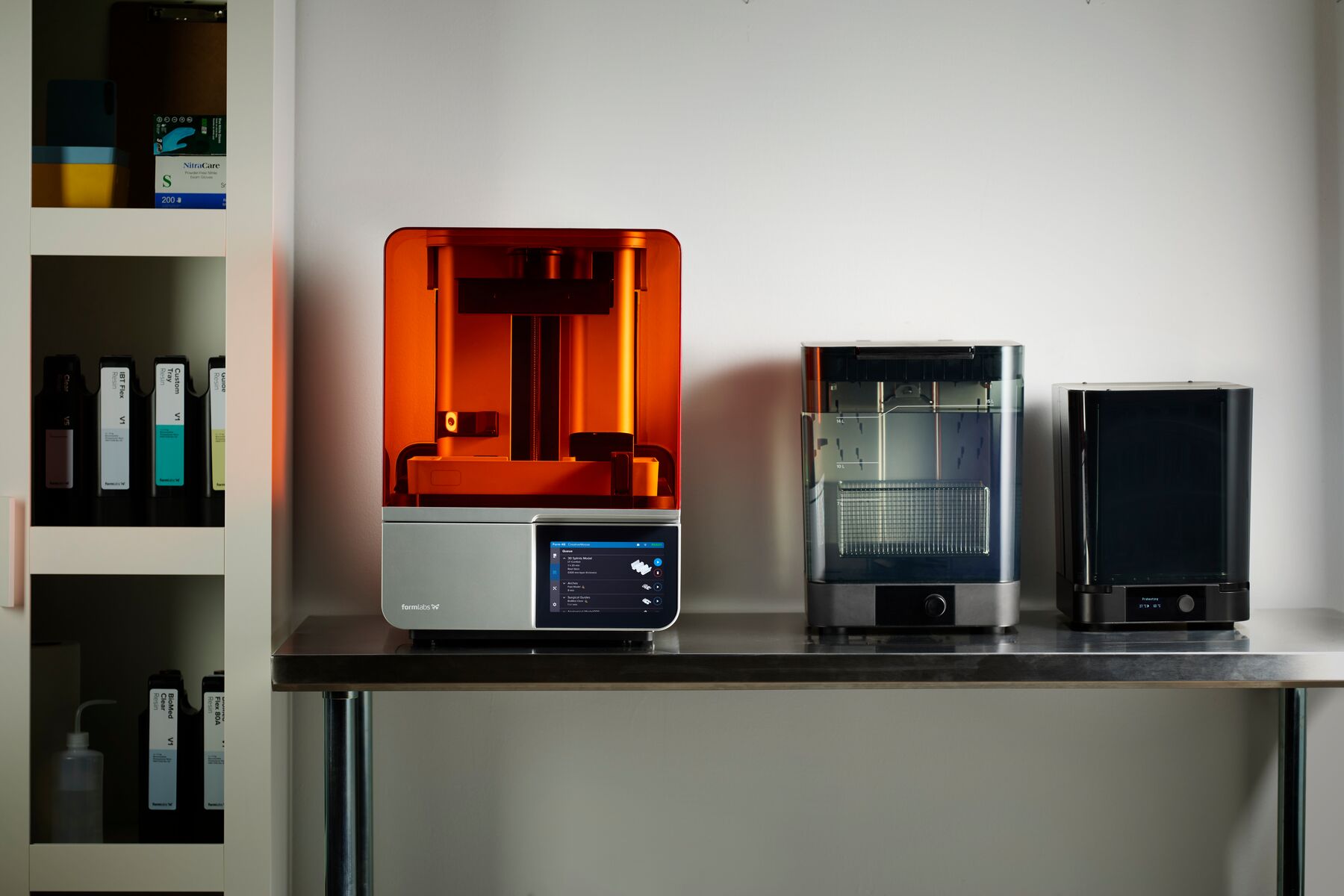
Form 4: Industrial Material Library (23+ Engineering Resins)
Form 4 is designed to rival injection molding and deliver end-use functional parts:
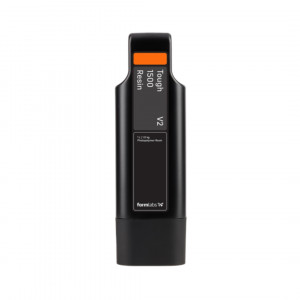
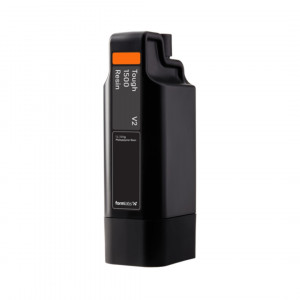
- Expansive Material Ecosystem: Direct compatibility with over 23 Formlabs resins, including Clear V5, Fast Model, impact-resistant (Tough 2000, Tough 1500), high-modulus (Rigid), high-temperature, and flexible formulations.
- Production Economics: Next-generation general purpose resins have been reduced in cost by nearly half compared to previous generations, drastically accelerating ROI in high-volume production.
- Next-Gen Cartridge System: Fills tanks 5–10x faster, generates 63% less plastic waste, and reduces shelf space requirements by 30%.
- Open Material Mode: Full third-party resin compatibility with complete control over layer exposure settings.
Post-Processing Ecosystem
Part quality and mechanical performance in resin 3D printing depend heavily on proper washing and final UV post-curing:
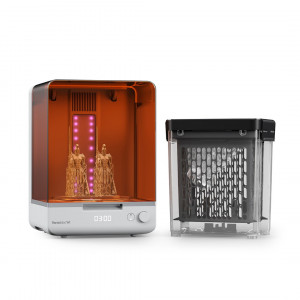
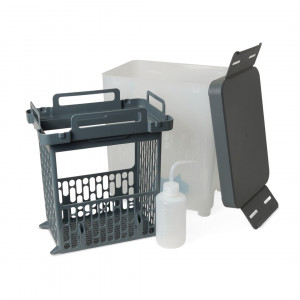
- For Form Studio 1 — «Form Studio Wash+Cure»: A space-saving 2-in-1 unit. Parts quickly pop off the quick-release flex build platform without scrapers, wash thoroughly, and post-cure inside a single desktop footprint.
- For Form 4 — «Form Wash (2nd Gen) + Form Cure (2nd Gen)»: High-throughput industrial workstations. Form Wash 2nd Gen delivers 3x more solvent agitation. Form Cure 2nd Gen reaches up to 100 °C almost instantly, driving full cross-linking in demanding engineering polymers to hit manufacturer-rated yield strengths.
Comparative Analysis: Which 3D Printer to Choose?
| Selection Factor | Form Studio 1 | Form 4 |
| Operating Environment | Offices, design studios, classrooms, and compact desktop workspaces | Machine shops, R&D laboratories, and dedicated manufacturing facilities |
| Target Applications | Rapid visual prototyping, concept validation, miniature sculpting, and wearables | Short-run production, tooling, molding, and high-precision mechanical assemblies |
| Safety & Air Quality | Maximum: UL GREENGUARD Gold certified, skin-safe (OECD 439), ultra-low odor | Industrial grade: requires standard lab ventilation or dedicated air extraction |
| Detail Characteristic | Superior micro-surface fidelity driven by a 35 µm native pixel size | Strict engineering tolerance compliance (down to ±0.02 mm) across full assemblies |
| Material Compatibility | Alpha Resins library, core engineering materials, and open third-party resins | 23+ industrial resins: ceramic-filled, flame retardant, high-temp, and biocompatible |
| Post-Processing Setup | All-in-one Form Studio Wash+Cure unit for minimal footprint | High-capacity Form Wash and high-temperature Form Cure (up to 100 °C) |
| Economic Profile | Low barrier to entry; affordable initial setup for agile small teams | Lowest cost-per-part under daily production thanks to the accessible standard resin portfolio |
Quick Summary:
- Choose Form Studio 1 if your printer will sit directly next to your desk in an office, air quality and low odor are paramount, you want seamless all-in-one post-processing, and your models demand razor-sharp 35 µm surface detail.
- Choose Form 4 if your workload requires round-the-clock manufacturing with specialized engineering resins, strict assembly tolerances, or heat deflection temperatures exceeding 100 °C.
Summary
Form Studio 1 lowers the threshold for professional resin printing, combining high print speeds, sharp 35 µm optics, and certified office-safe materials in an accessible package.
Form 4 remains the definitive benchmark for industrial prototyping, engineering departments, and commercial production lines where broad material versatility, dimensional repeatability, and low cost-per-part are non-negotiable.
Leave a Comment